Director(s): Sam Raimi
Country: United States
Author: Damian Shannon, Mark Swift
Actor(s): Xavier Samuel, Chris Pang, Edyll Ismail
Written by Tom Augustine
Recently, critic Adam Nayman pointed me in the direction of A Perfect Getaway, a little-remembered but expertly constructed thriller starring Milla Jovovich from 2009. Nayman’s defense of the film, which is gleefully violent and rarely subtle, made the case that A Perfect Getaway was an example of the kinds of films we don’t get very often anymore — modestly budgeted films that tell a single, self-contained story, not connected to odious notions of IP furtherance or other modern, CEO-driven concepts. A Perfect Getaway is a very satisfying film, one with a puzzle-box construction that folds back in on itself over and again. It’s popcorn entertainment with a brain, but a kind of modesty, too — it doesn’t need to be an all-time box office achievement or a major award winner, just a damn good time at the movies. Another film that came out in 2009, and told a similarly self-contained story (one which offered no chance of a sequel) was Drag Me to Hell, directed by Sam Raimi. That gooey, nasty PG-13 horror holds a peculiar distinction — before this year’s Send Help, it was the last time Raimi was given the bandwidth to tell a non-IP-driven story. The landscape has changed a lot since 2009 — in the interim, Raimi stepped up to telling big-budget blockbuster stories of the kind he had helped usher in with his still exemplary Spider-Man films. Telling corporately-mandated stories didn’t sit especially well with Raimi’s style, though, in spite of his being one of the more hyperactive and downright cartoonish working filmmakers. His Oz the Great and Powerful was a woeful, Tim Burton-aping mess; Doctor Strange in the Multiverse of Madness was much better, allowing some of Raimi’s trademark stylisation to wriggle its way into the iron maw of Marvel’s post-Endgame shenanigans, and wringing an excellent performance out of Elizabeth Olsen in the process. But the feeling was always the same — this was Raimi leashed and muzzled. There was no longer latitude to really let the freak flag fly.
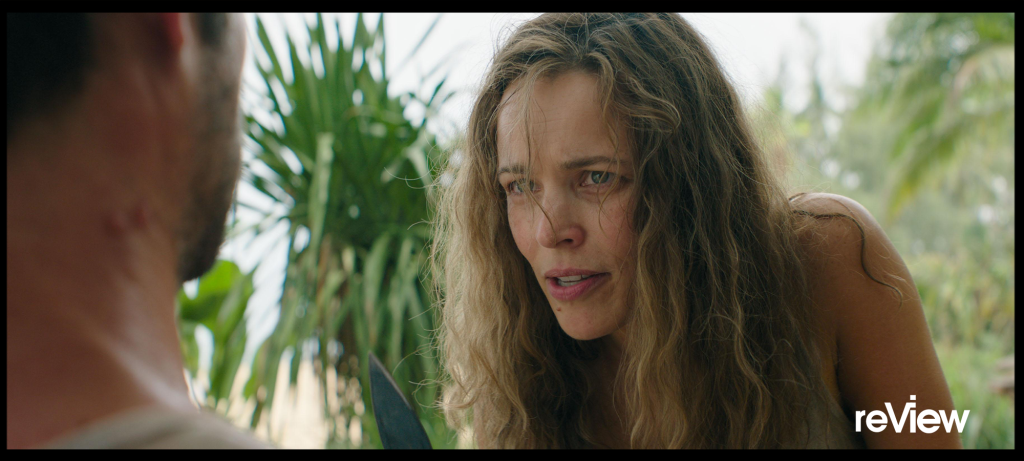
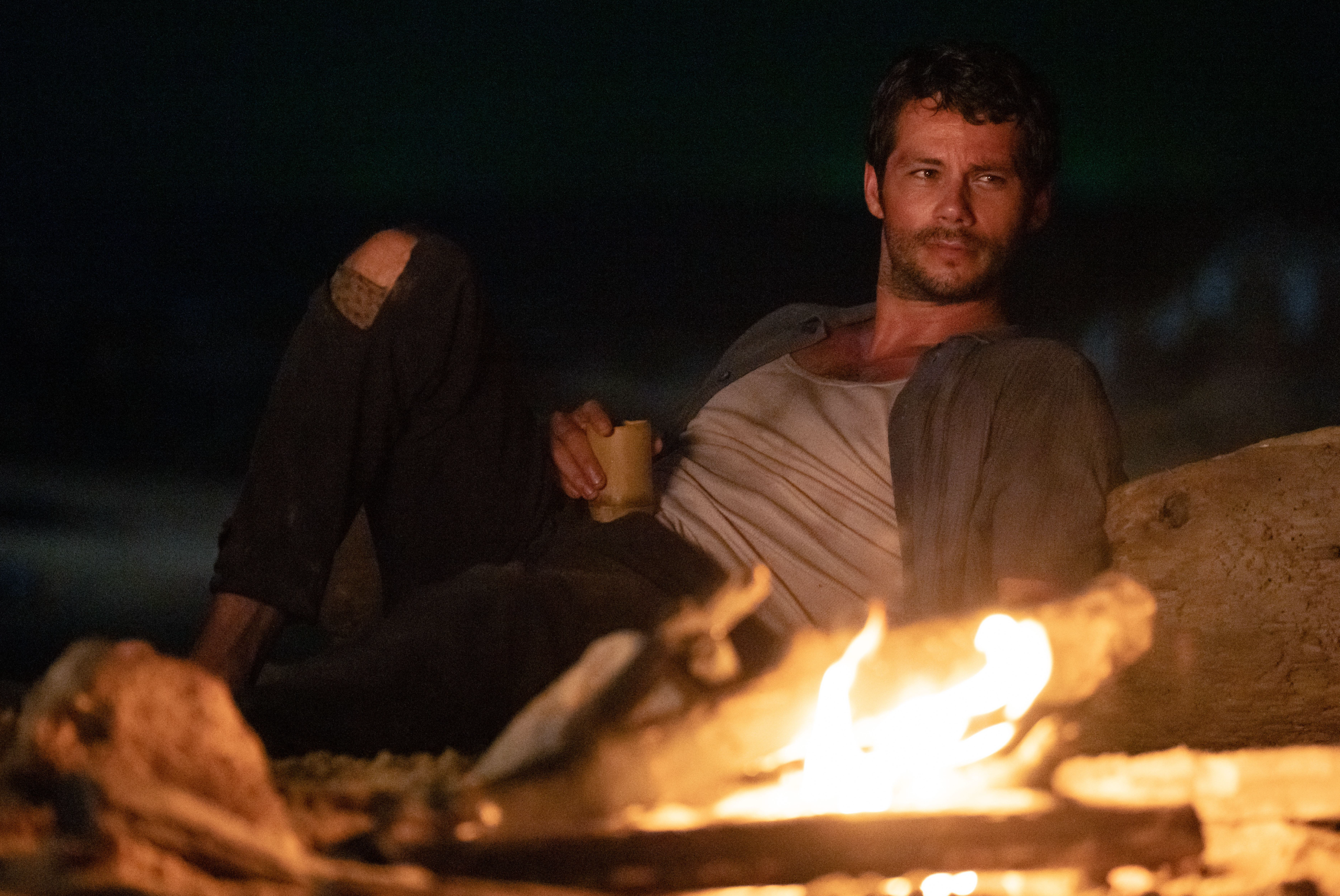
Thank God, then, for Send Help. This is a Raimi film through and through, one with a number of similarities to both A Perfect Getaway and Drag Me to Hell — the island setting and twist-filled plot of the former, and the gnarly hyperviolence of the latter. Like both films, it tells a self-contained story unlikely to spawn sequels — and is one hell of a good time at the movies. For this project, Raimi has secured the presence of two of the most consistently underrated actors in Hollywood — Rachel McAdams, who has elevated every project she’s been attached to, but doesn’t hold the same kind of box office draw as many of her (less talented) contemporaries; and Dylan O’Brien, the one-time child star whose heart-rending performance in last year’s Twinless was, simply put, one of the best of the year. McAdams plays Linda Liddle, a role that immediately lands in the pantheon of great characters of the decade. Liddle is a browbeaten and put-upon worker bee in a faceless corporation. You probably know someone like her if you know office culture — the kind of person, usually a woman approaching middle age, who keeps the company afloat but lacks the ‘social skills’ (AKA the penis) to rise up the corporate ladder. Lonely and underappreciated, she’s shocked when the company’s VP position, promised to her by the one-time CEO, is denied by that man’s son Bradley (O’Brien), who has taken over following his father’s death. Instead, that role has gone to one of his old frat brothers Chase (Xavier Samuel). Linda remains a punching bag for the lads on top until, as the company team flies to Thailand for a conference, the plane crashes in the ocean. Linda and Bradley are the only survivors, washing up on a deserted island with little chance of rescue.
Sick, twisted and deliriously enjoyable, Sam Raimi’s desert island thriller is a reminder of the Spider-Man and Evil Dead mastermind’s peculiar genius. Modest in budget and scope, if not in bloodletting, the film also serves as a superb reminder of the brilliance of star Rachel McAdams.
Speaking of survivors — Linda is an avid fan of the show of the same name, Survivor, as well as a long-time fanatic of survival tales. Because of this, she has amassed a heretofore unknown repertoire of skills that mean she quickly flourishes on the island, undergoing a kind of metamorphosis in which she discovers her true self. These kinds of stories of remote self-discovery (for better or worse) are common, but often reserved for men — think John Locke in Lost, or Tom Hanks’ Chuck Noland in Cast Away. Self-discovery films focussed on women are more likely to put one in the mind of travelogue pictures like Under the Tuscan Sun or Eat, Pray, Love. There’s a reason for Linda’s obsession with being prepared to survive — revealed in a stunning mid-film monologue, perfectly pitched between sadness and menace by McAdams — which ultimately contrasts with Bradley, a pampered failson accustomed to taking his ample privilege for granted. O’Brien proves a devilishly committed foil for McAdams, wisely ceding the spotlight to her savage, top-of-the-line performance when necessary, but crafting a character that is by turns foolhardy, boorish, cruel, heartbreaking and frequently very funny. Both performances elevate Send Help by a number of degrees, bringing genuine depth to characters that may have felt thinly sketched on the page. The other big comparison one feels naturally drawn to with Send Help is Rob Reiner’s Misery. The outlines are roughly the same — a dowdy nobody with a bone to pick finds herself with the physical upper hand after the man they both revere and despise is gravely injured.
What sets Send Help apart is the gratifying sense of wish-fulfilment: the audience I was in cheered, hooted and hollered as Bradley and his cohort received their bloody just desserts. It’s not hard to draw a link here — Bradley is an ideal stand-in for the fratty, tech-bro numbskulls who have by means of greed and cruelty made the world their plaything. Everyone who watches an Elon Musk or Martin Shkreli know that without their money, with the playing field levelled, these charlatans would be rendered utterly helpless. This subtext remains classily below the surface — Raimi is too great a filmmaker to browbeat his audience with pained moralising. Instead, he’ll preoccupy us with concerns of castration, both physical and metaphorical. One of the great joys of Send Help is the shifting balance of power between the two — a genuine battle of the sexes. There is no forgetting Bradley’s physical and financial dominance over Linda, but he’s also aware of the way submissiveness can be its own strength. There are many twists in the tale to come, all expertly laid out by Raimi. Like A Perfect Getaway, Raimi is aware his film is unlikely to win awards (though I’d happily campaign for an actress prize for McAdams) or break the box office — it is too violent, too cheaply made (ignore the shoddy VFX as much as possible to boost your enjoyment), too feminist to draw, say, F1 crowds. What he can provide is rock-solid genre filmmaking, a full meal. Here, he is in Drag Me to Hell mode — pure, visceral thrills of the violent and humorous type. If there is a closer-to-surface theme running through Send Help, it’s that the modern world offers no quarter for the weak or the helpless, particularly if you’re a woman. Liddle sums it up beautifully in her final line, delivered to camera (and which I won’t spoil here). Suffice to say — Send Help may just be the most crowdpleasing, feel-good movie of the year to also prominently feature a boar’s decapitated head.
Send Help is in cinemas now.