






RATING
Director: Lance Oppenheim
Country: US
Writer: Ajon Singh, Luke Dittrich
Actors: Robert Pattinson, Merritt Wever, Skyler Gisondo, Phoebe Bridgers
Written by Tom Augustine
Dominated by a go-for-broke Robert Pattinson performance, documentarian Lance Oppenheim’s first foray into narrative features is a seedy and meticulous recreation of noughties reality sleaze that doesn’t quite pave over glaringly unfocused storytelling. Though there is no shortage of directorial verve on display, Primetime is too unsure of its purpose to make a genuine impact.
Who remembers the mid-2000s kindly? It truly is one of the few periods in time — matched in the modern era only by the early-2020s — where it’s hard to imagine anyone reflecting with happiness about what transpired. The only ones who do, I’d imagine, are the ones who strain the limits of humanity to the furthest edge: the war dogs, Epstein clientele and, of course, the reality television creators. These days, we are shocked by the cruel and bizarre excesses of the reality TV of this period, from the fascistic undertones of The Biggest Loser to the Cronenbergian horror of The Swan, the reputation laundering of The Apprentice and The Kardashians and the id-trawling darkness of To Catch a Predator. To grow up in this era is to have been exposed to an unholy level of avarice and giddy schadenfreude, whose impact lingers on in the way we experience the Trumpian age. We look back and we shake our heads — but we were the ones who watched it. We enjoyed it. We made America’s Next Top Model and Keeping Up With The Kardashians our appointment viewing. We still do: is there much difference between these shows and Married at First Sight or, God forbid, Love Island, beyond the barest sheen of therapy-speak respectability? How dare we look with derision on these series when we allowed this world to reflect the spirit of cruelty embedded in them? Their like is our ancestry — our present is moulded in their image.
What Chris Hansen’s To Catch a Predator left to us, specifically, was a prophetic vision of the way in which fears both real and unjustified of child sexual predation would come to dominate our political and social spheres. It was a real precursor of the modern period, in which our outrage, and our predilection for citizen-surveillance, are ultimately selfish and spectacle-based — we have no real interest in supporting victims or preventing future harm, but rather in punishing the monsters who continue to move among us. When the rubber meets the road, we don’t want to do anything to change our situation, we just want to watch, judge, and move on. It’s a dissonance that allows right wingers to decry the supposed dangers to children in giving transgender people or drag queens basic human rights with a straight face, while those in the Epstein files sit in the highest offices in the world. Dissonance and deflection. The emergence of the Epstein scandal is one of the most ground-shaking in modern American history, for the suspicions it confirmed and the in how it exposed our inability to act on undeniable criminality. That it documents crimes that took place during the To Catch a Predator era is no great surprise, and this context serves as significant thematic underpinning for Lance Oppenheim’s Primetime, the second recent film to examine the series by looking back through a modern lens. The earlier, superior film is David Osit’s nauseating Predators, which itself is imperfect in the way it approaches this subject matter but nevertheless manages to thread the line between Hansen’s justifications for his actions to modern, even-less professional Youtube ‘predator-catchers’. What makes Predators work is the overwhelming sadness at its heart: the series produced so much suffering, and no one, save Chris Hansen, is better off for it — not the predators, of course, but neither the victims, nor the rest of us, who have learned nothing.
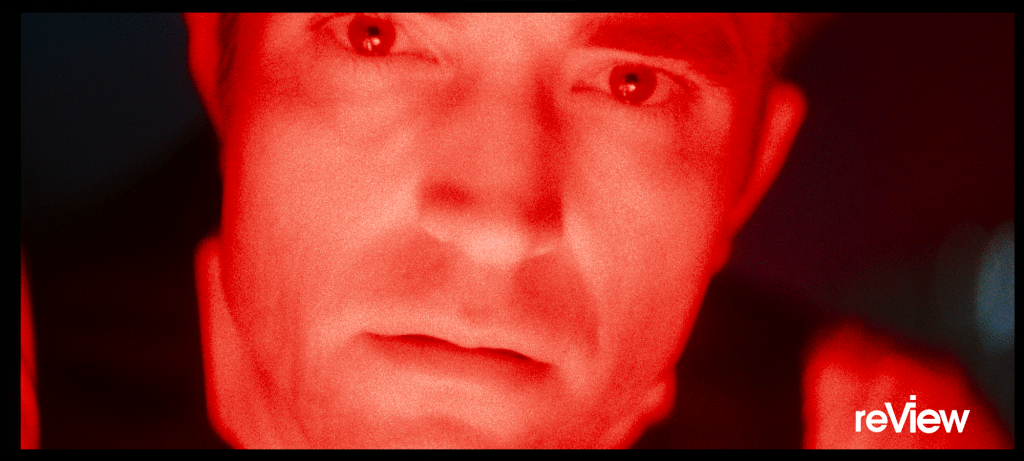
If there’s one thing that Oppenheim’s Primetime nails, it is the way it details how Hansen’s televisual persona was constructed, built, rehearsed to within an inch of its life. As Hansen, Robert Pattinson declares that nothing about him is an act, which inspires laughter in the audience. We’ve seen him rehearsing his delivery of certain lines of pedophilic predation to throw in his targets’ faces, or micro-adjusting his cadence while delivering voiceovers ad nauseum in a recording studio, much to the chagrin of his put-upon producer Andie Bender (Merritt Wever). There’s a thrill in seeing this in action, as there is an undeniable thrill in watching Hansen operate on the original Predator, a true showman whose natural instincts for charm dealt society at-large a terrible hand. Primetime utilises the nexus point that is the Hansen persona (magnanimous, authoritative, unflappable) as a tool for colouring the world we see in the film — captured in varying lo-fi visual and directorial flourishes, Oppenheim and Pattinson’s Hansen wields an otherworldly impact on the very textures and colours we witness. It is subjective and expressionistic to a fault, leading to an unfortunate sense of dissonance when the film refuses to take any confronting stance beyond distancing and ‘look how bad it was!’ judgments. Where Predators was schematic, workmanlike, a little over-reliant on true crime tropes, Primetime is all sensation, a meticulously composed period piece that flows with a seriousness of ambition that apes the work of Magnolia-era Paul Thomas Anderson. It is sexy, Movie-Movie filmmaking: it feels cinematic. The undeniably effective trailer, which captures the excitement and energy of the film itself, trades in the same spectacle the show did: not necessarily a bad thing, but something you’d expect the resultant film to examine, which Primetime doesn’t.
The film is a triptych, roughly segmenting its time between three key players: Hansen, Bender and Dan Plum (Skyler Gisondo), a young wannabe actor who takes a role as bait on Predator, becoming known as ‘Decoy Dan’, a frontline footsoldier for Hansen’s mission alongside the more experienced Del (Phoebe Bridgers), a sexual assault survivor who is a true believer in the mission. As these three storylines converge, eventually leading to the well-known disaster that effectively ended Predator’s run, the somewhat formless early stretches of Primetime detail the methods by which Hansen, with the help of watchdog association Perverted Justice, would lure potential predators into a Sopranos-esque McMansion to meet with adolescents, only to instead encounter Hansen and a police unit hungry to make an arrest. On the surface, this three-pronged approach makes sense, providing an across-the-board point of view of Hansen’s infernal machine, and tracking the way it served as a Rosetta stone for any number of other social problems, from sexism in the workplace to the lack of protections for vulnerable young workers. The reality, though, is a little underwhelming: a film that is scattershot in the way it aims at soft targets and unfocused in what it is actually trying to say about its subject matter. Oppenheim and company understand the excesses and ugliness of the era, well enough to recreate them with exacting finesse, but fail to wring much juice from it — what Oppenheim actually feels this has to say about us, about Hansen, or anyone else involved, is left unclear.
The film’s most successful strand, and the one Oppenheim seems the most interested in, is the Dan Plum storyline. It is certainly the most unique — an actor whose Faustian bargain for fame (and a Screen Actors Guild membership) comes at the cost of his soul. Gisondo’s is the film’s most surprising performance, as the youthful Dan is infantilised by the cynical operators of the Predator team while simultaneously being put directly in the sightlines of the show’s most dangerous targets. It is one of the clearest examples of Oppenheim’s intentions, contrasting the predations of the show’s perverts with the predations of its crew. One of the standout scenes of the film follows the wayward Dan’s first day on the job, immediately being subjected to a traumatising encounter with a target, then soothed and drugged by Merritt Wever’s Svengali-like massager of egos. Gisondo plays it perfectly — he doesn’t understand what has happened, but he knows it will be with him for the rest of his life, as tears fall from his eyes unbidden. The other two thirds of the film are less successful, though not for lack of effort on the performers’ parts. Both Pattinson and Wever are expectedly superb here, Pattinson’s cagey (and Nic Cage-y) turn capturing Hansen’s Messiah complex and deep insecurity with cartoonish grandeur. We’ve seen Wever, one of her generation’s very best actors, in roles like this before, but there is pleasure in watching her chew through what she’s given with ease. They’re bolstered by a murderer’s row of character actors in fine form, from Bokeem Woodbine as a gung-ho Texas sheriff to Matthew Maher as Perverted Justice’s frightening, amoral pervert hunter to Alex Winter as the film’s elusive ‘whale’, a predator operating in the spheres of governmental power. Surprisingly, though, it is Bridgers who emerges as the film’s MVP, capturing the character’s position as the show’s moral compass — that is, until it all becomes too compromised for her to bear.
Naturally, as the film has been rolling out, the still-working Hansen has been commenting on it, at first with outrage, then with a kind of subdued respect for what he saw. Surely that is a devastating mark against Primetime, a film that has in its hands one of the most monstrous figures of the post-9/11 era of reality TV, but pulls back from delivering a killing blow. At its worst, Primetime deploys a holier-than-thou lens to its nostalgia: it can’t bring itself to reckon with the fact that everything in the era it depicts still exists — indeed, it exists more powerfully and prominently than ever — and has simply evolved in order to flourish. The film’s dashes of humour are welcome, but I didn’t identify any invitation for audience self-reflection, or implication. Rather, the film’s many (highly accomplished) directorial excesses seem intended to reward an audience with comforting distance from the abuses depicted, aligning Primetime with a brand of safe-margins historical Civil Rights flicks, albeit reinterpreted via a chaotic visual language indebted to the Anderson and the Safdies. For all the times the film’s characters directly relay the themes of the movie to each other, particularly in Pattinson’s various proselytising monologues to the manipulatable Dan, there’s an abdication of accountability here that no amount of aesthetically pleasing imagery can mask. I can’t help but wonder how many viewers may still emerge from Primetime with an admiration for Hansen, television’s most high-profile social executioner, as the film gifts him with a humanising crisis of conscience in the third act, while failing to consider the way the tendrils of his actions echo into today. The great irony of Primetime is that it is unsettlingly close to Predator in the way it transforms the evils of this period into entertainment, a distraction — a chance for us to tut, shake our heads and laugh mirthfully at an era of casual surveillance and pedophiles run amok, ignoring the wolves at the door all along.
Primetime opens in cinemas 29 October.