

RATING
Director: Curry Barker
Country: United States
Writer: Curry Barker
Actor: Michael Johnston, Inde Navarrette, Cooper Tomlinson
Written by Tom Augustine
Youtuber Curry Barker’s big screen debut is perhaps the strongest offering from this burgeoning crossover scene yet: a brutish, unsettling reimagining of the Monkey’s Paw story for an era of ‘Nice Guys’ and incels. Though stronger in direction than in script, it excels thanks to moments of skin-crawling horror and a go-for-broke performance from newcomer Inde Navarette.
It is — rightfully — fraught territory for a young, white, cisgender male filmmaker to attempt to tackle the subject of rape culture: as the inarguable ultimate benefactors of said culture, the attempt to critique from ‘on high’, as it were, gives one plenty of room to topple in the pursuit of well-meaning (but frustratingly defensive) folly. Consider the contrasting way rape and sexual coercion have historically been handled by men and by women to see where the divisions lie — on the part of men, namely the apparently subconscious urge to fetishise, even to sexualise the person to whom said assault is happening. A recent example, Andrew Dominik’s relentless, grimly fascinating misfire Blonde, seemed intent on extracting as much glorified suffering from its subject, Marilyn Monroe, while simultaneously maintaining a kind of condescending distance from her. Equally uncomfortable was the handling of a real-life serial rapist and murderer in Ali Abassi’s Holy Spider, with its needless and frankly masturbatory provocations. Critic Elena Lazic drew attention to Francis Lawrence’s now mostly-forgotten Jennifer Lawrence vehicle Red Sparrow, and the way it squanders an interesting pathological exploration of its character in favour of cheap plot twists involving sexual violence, while also linking this to the use of rape as a cudgel by filmmakers both hack and auteur (two terms that overlap from time to time). ‘Auteurs from Bertolucci and Polanski to Lars von Trier and Michael Haneke have built their careers around making films dealing with sexual violence, particularly against women,’ she writes. Contrast this with the handling of the same topic by women directors: Akerman’s Jeanne Dielman, Kent’s The Nightingale, Jennifer Fox’ The Tale, Kusama’s Jennifer’s Body — films that are bracing in their lack of sentiment, but filled with an empathy that is enhanced by shared experience, not of sexual assault, but of being a woman in the world.
I speak in broad generalisations, of course — there are films by men which handle this topic with a certain nuance and grace (Twin Peaks: Fire Walk With Me, Thelma and Louise, Elle) and films by women that seem to wade well beyond their depth (Promising Young Woman), but one senses the vast divide in overall sensibilities toward this most tender of subjects, nonetheless. In this light, Curry Barker’s debut, Obsession, is a fascinating, thorny, contradictory work, one that utilises one of the most infamous modern fables of our time — the Monkey’s Paw archetype — to pose intriguing questions, even as it struggles to dig deep enough to find satisfying resolutions.
Barker is one of a roster of new filmmakers whose early forays on Youtube have translated to big-screen opportunities. Following the blistering success of the Philippou Brothers’ Talk To Me, we’ve had an influx of these titles in just the last year or so: Mark Fischbach’s Iron Lung, Chris Stuckmann’s Shelby Oaks, the Philippous’ own Bring Her Back, not to mention the forthcoming Backrooms, from 20-year-old Kane Parsons. These films share a certain aesthetic of which the Philippou Brothers’ work is inarguably the most famous — intense, transgressive violence, dim and gloomy Fincher-esque cinematography, low-budgets, and an adjacency to the phenomenon that is creepypasta, a catch-all term for horror content that lives in the dark corners of internet chatboards. Barker is one of the more accomplished of this motley crew — his viral video sensation Milk and Serial, available on Youtube, is a clever hour-long deconstruction of the idiocy and cruelty of the modern ‘prank video’ trend. Obsession, his debut, is an immediately intriguing proposal — a heady mix of fantastical horror archetypes and of-the-moment discussions of consent and male entitlement. Barker arguably has bitten off more than he can chew here, but the film is potent and frightening enough to cling to the corners of your mind, even as numerous faults cry out to you to take notice.
As with any good retelling of W. W. Jacobs’ classic horror short story, the opening sequences of Obsession present the discerning viewer with any number of ‘off-ramps’, opportunities for our subjects to save themselves instead of attempting to interfere with the course of fate. Naturally, they fail to do so; such is the case with Bear (Michael Johnston), a handsome but schlubby go-nowhere with a hangdog expression and a wardrobe of hoodies. Hopelessly infatuated with friend Nikki (Inde Navarrette), Bear is continually trying to muster the courage to say something to her, only to be interrupted or pulled back by his friend group, primarily comprised of boorish bestie Ian (Cooper Tomlinson) and Sarah (Megan Lawless), who herself holds a candle for the oblivious twenty-something.
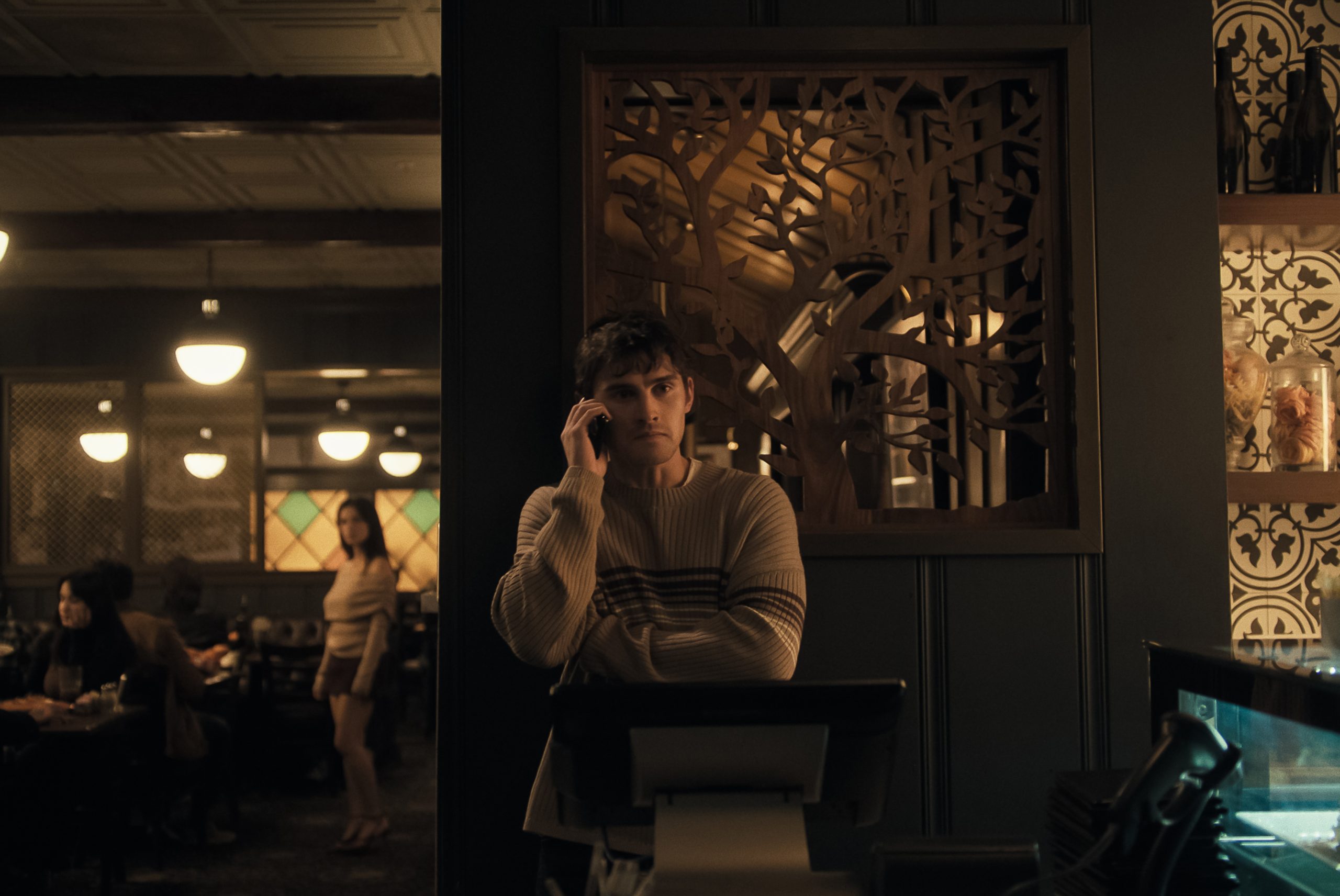
The off-ramps here are interrupted by casual male ignorance and even more casual, subtle misogyny, as Bear’s limp ‘Nice Guy’ routine is undermined by his inability to see or even genuinely respect Nikki’s wants or needs. In the opening scene, Bear rehearses a speech in which he rehearses pouring out his feelings to Nikki on a well-meaning waitress, only to have his earnestness immediately shot down by Ian, who watches on with derision. Bear immediately retreats back into his resentment and shyness as Ian imperiously dismisses the waitress, who, tellingly, is moved by, and encouraging of, Bear’s open-hearted plea. This is just the first of a range of safer conclusions that are cut off by Bear’s myopia — as well as Nikki clearly seeing Bear as just a friend, there is an ongoing flirtation with Sarah, not to mention Bear’s own stooping and bowing whenever Nikki is around, unable to just come out and say what he means.
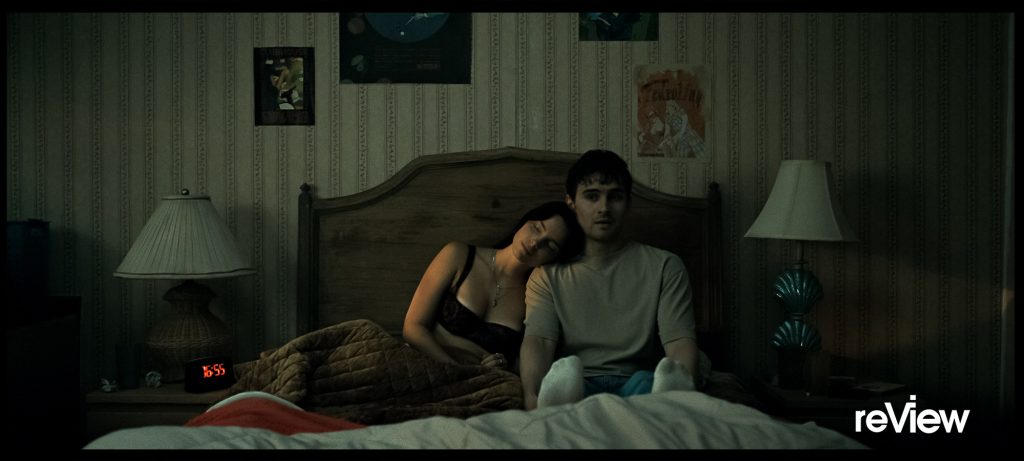
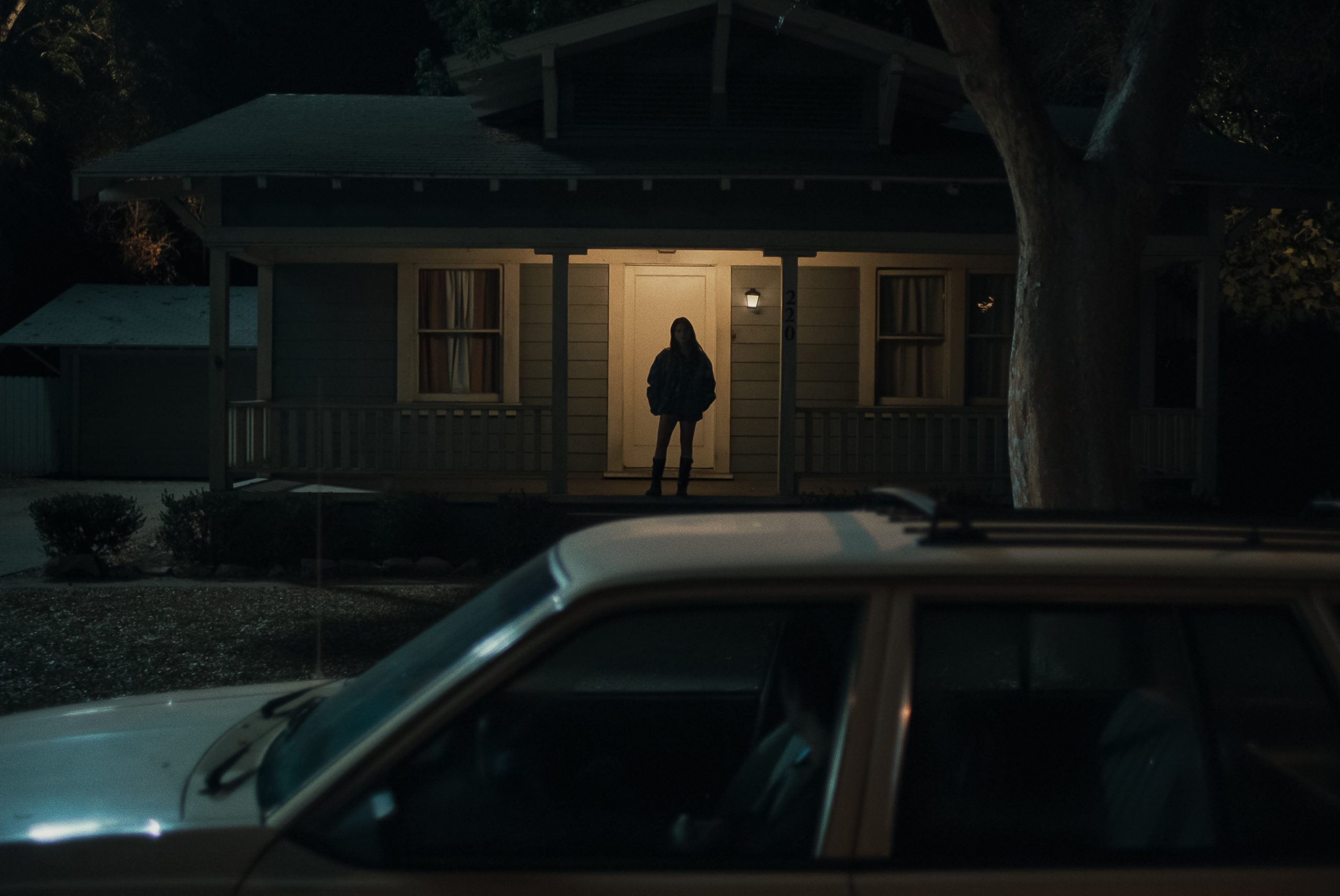
Searching for a replacement for a crystal necklace that Nikki has lost, Bear wanders into an apothecary, where he is drawn to a display for the ‘One-Wish Willow’, a gimmicky toy that promises to grant each person a single wish. Unsurprisingly, Bear wishes for Nikki’s undying and endless love. In a twist that aligns Obsession with the likes of Pet Sematary, the wish actually works, but Nikki comes back different: she’s now infatuated with Bear, but at the expense of all else, oscillating between desperation, longing, jealousy and aggression at the drop of a hat, plunging deeper and deeper into a mad, all-consuming need for the young man. Barker has a natural talent for frightening images and suggestive framing, particularly when it comes to the new Nikki, often framing her semi-eclipsed by shadow, and allowing her eyes to deepen to shades of black that are illuminated by ghostly pinpoints of light.
It helps that Navarrette, as Nikki, is a total revelation: in a breakout turn, she is funny, frightening, heartbreaking: a manic pixie nightmare girl who cannily weaponises all the things men seem to hate about their girlfriends — clinginess, envy, acts of service, need for time and attention — to create a truly fearsome monster of Bear’s own making. Johnston, as Bear, is a fine young actor perhaps slightly miscast. His boyish good looks and chiselled jawline are only slightly obscured by his slacker presentation. Though he is the lens through which we see this world, he is very much the true monster of it too, a rapist and misogynist whose love for Nikki is in fact a desire for possession. Take a late-breaking scene in which Nikki, in a sudden moment of clarity, begs Bear for death. ‘Is being with me that bad?’ he scowls. This is a menacing undercurrent that Barker does well to illuminate, but which needs the accentuation of an actor more suited to this kind of role — while incels and abusers of course take many forms, the movie star charm of Johnston feels like a missed opportunity.
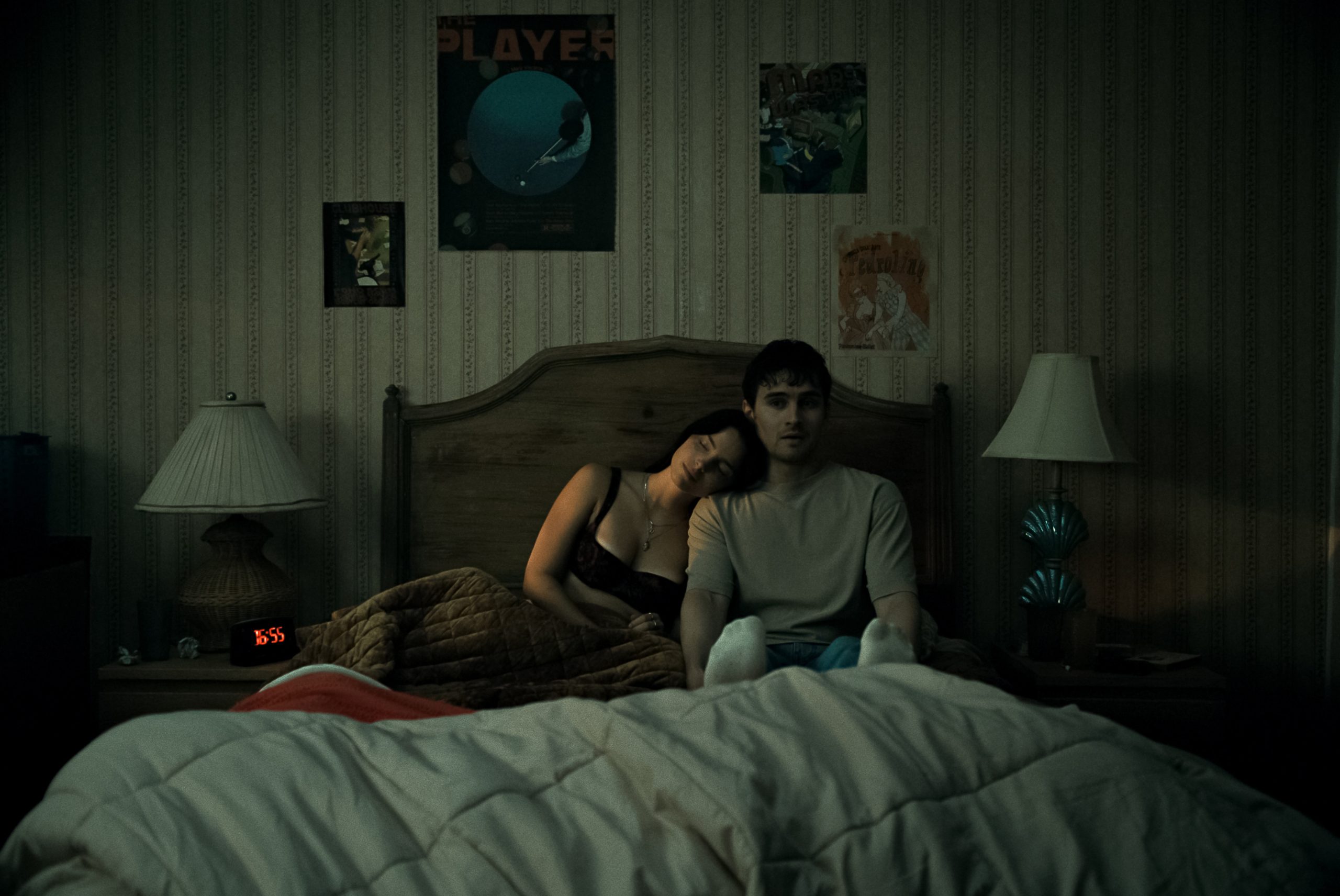
As with most of these buzzy modern horrors with A24 inflections, the film is ultimately a better showcase for Barker’s skill as a director than a screenwriter — it is a film of numerous genuinely frightening passages, but also plenty of plotholes and story gaps that feel less like intentional ambiguities than the need for more drafting. The gold standard for this kind of horror is one that arguably kicked off much of what is now trendy — David Robert Mitchell’s It Follows, which similarly channeled modern anxieties around sex and consent into a terrifying supernatural ordeal, but whose missing pieces largely felt intentional, and within the grasp of its creator. Barker’s debut is no It Follows: its internal logic only flows in bursts and starts, taking its subject matter seriously but occasionally indicating that Barker may not be entirely up to the task (while the film’s sex scenes are appropriately gross and shiver-inducing, Navarette’s Nikki is methodically stripped of clothing, playing out the climax of the film in scant attire, while the corpse of another woman is positioned nude in a provocation that the film has not earned). As a relentlessly cruel scare machine, Obsession delivers — there is some inspired movement work here that echoes Kiyoshi Kurosawa’s masterpiece Pulse in its ability to conjure the heebie-jeebies, and the film is blessedly not over-reliant on jump scares — but Barker is better at gesturing at the intriguing notions his concept generates than unravelling them entirely. The film is arguably the best from the Youtuber generation, one whose flaws feel less fatal than, say, Talk To Me. It is a notable debut, one that suggests that the internet may yet have the capacity to birth great artists. We’ll have to wait and see.
Obsession is in cinemas now.