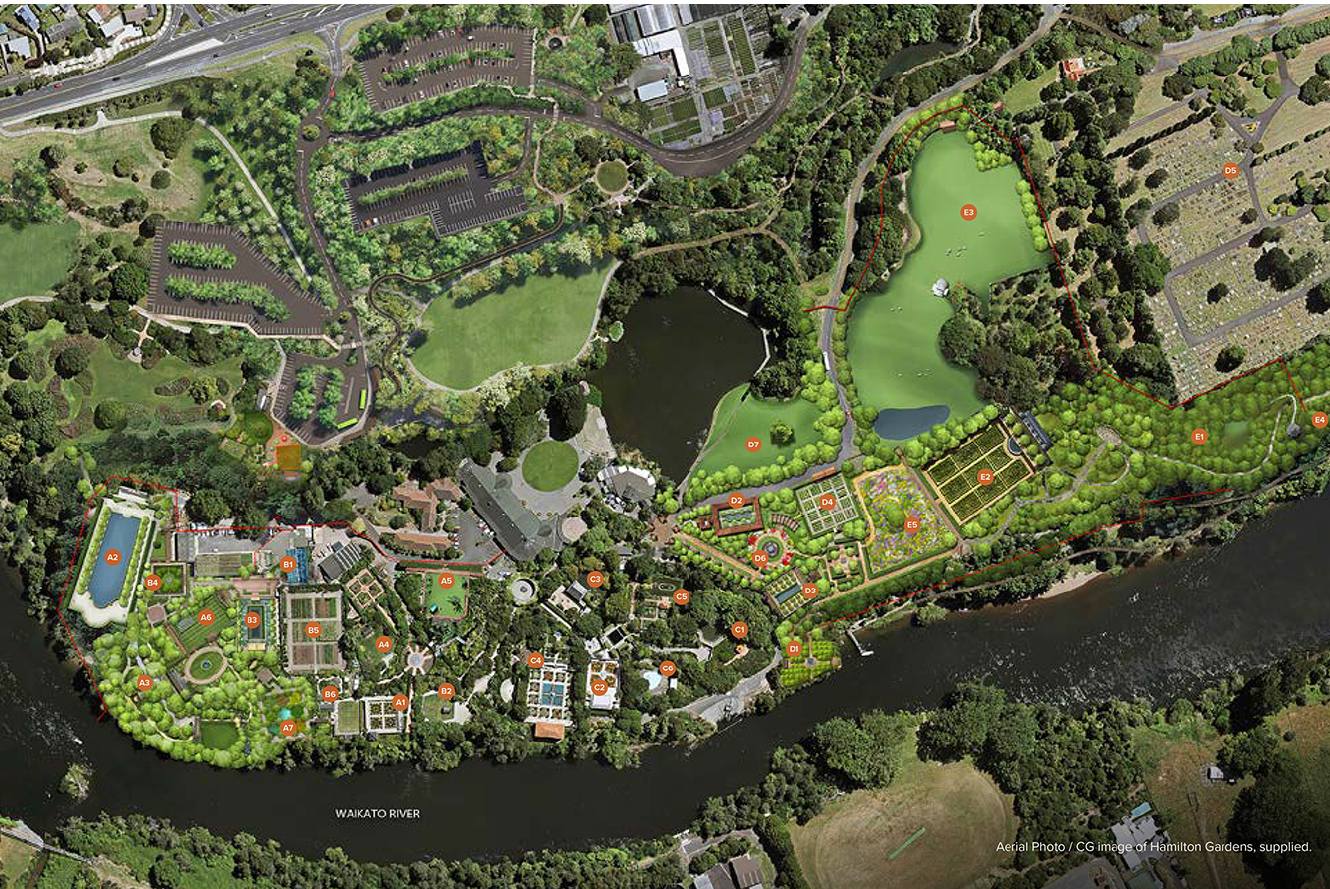
It begins, as all good stories should, with something faintly disreputable-a rubbish dump.
Not the sort of origin one associates with grandeur, let alone with a place now spoken of in the same breath as the great gardens of the world. And yet, transformation, as filmmaker Grant Sheehan reminds us, is hardly unusual. Even Eden Park was once marshland. History, it seems, has always had a flair for reinvention.
“It’s a total gift for both the film’s opening and the storyline.”
But Hamilton Gardens is something else entirely. It does not merely transform land-it transforms time.
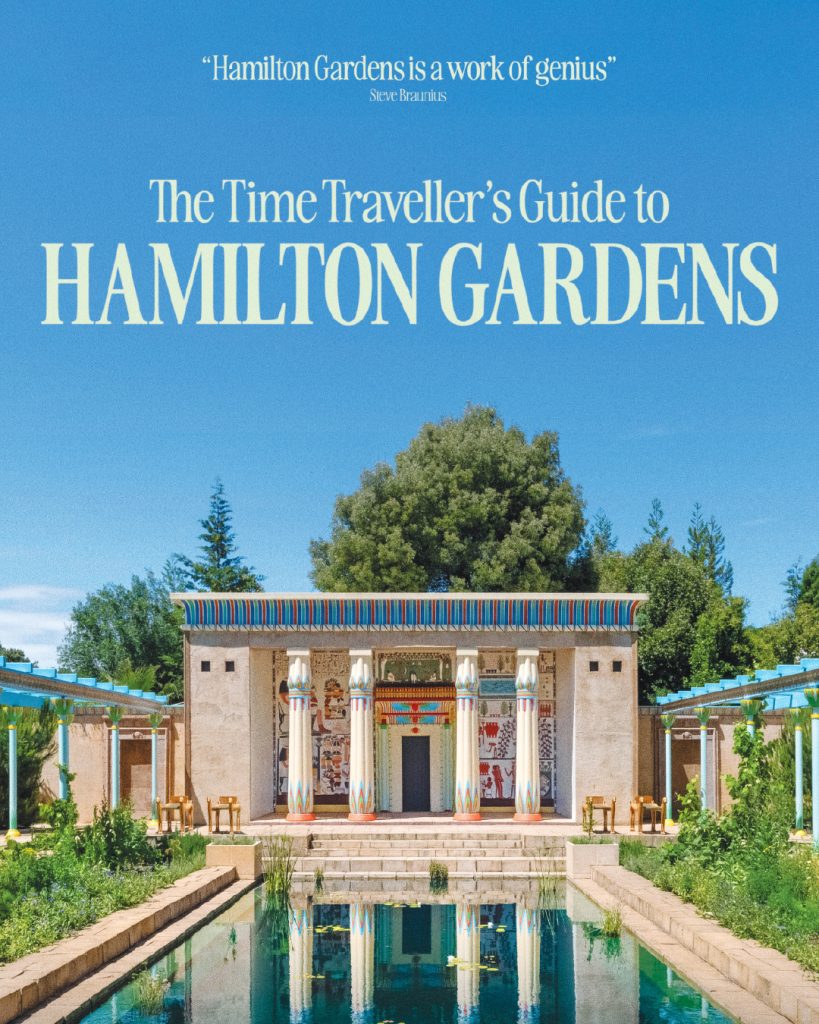
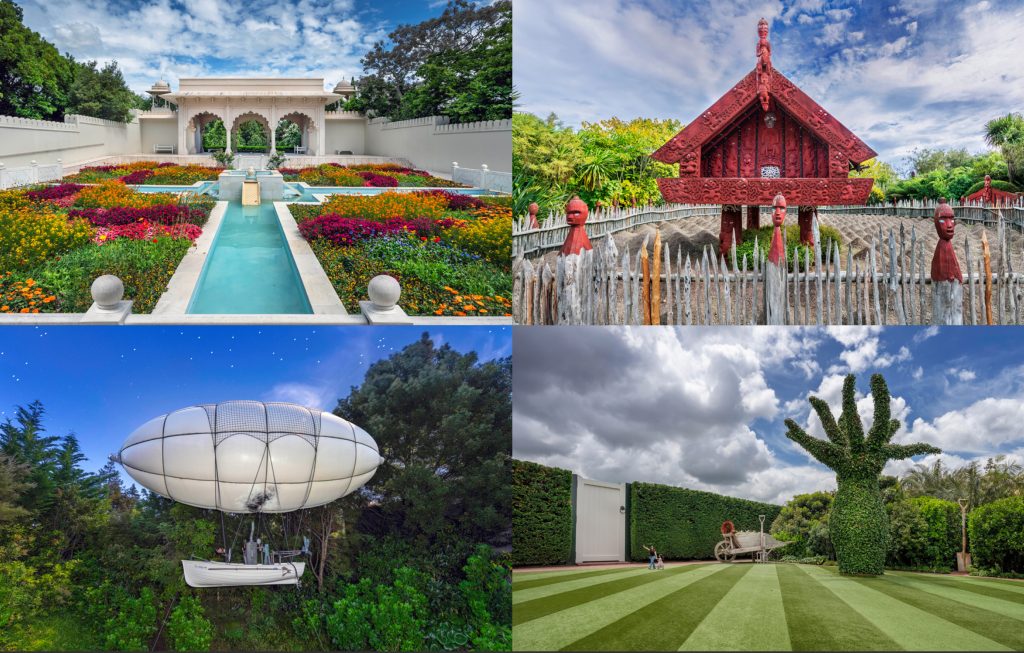
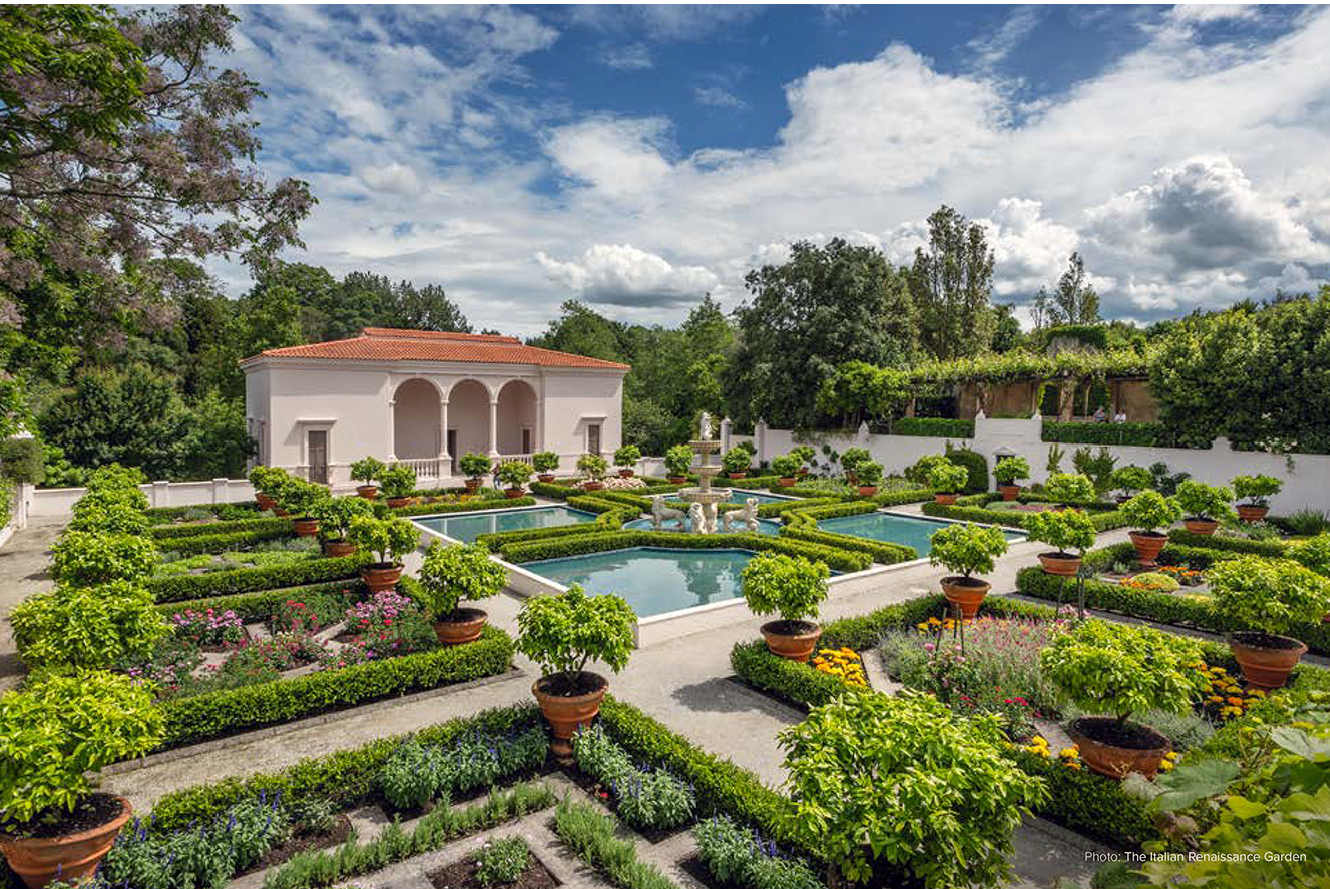
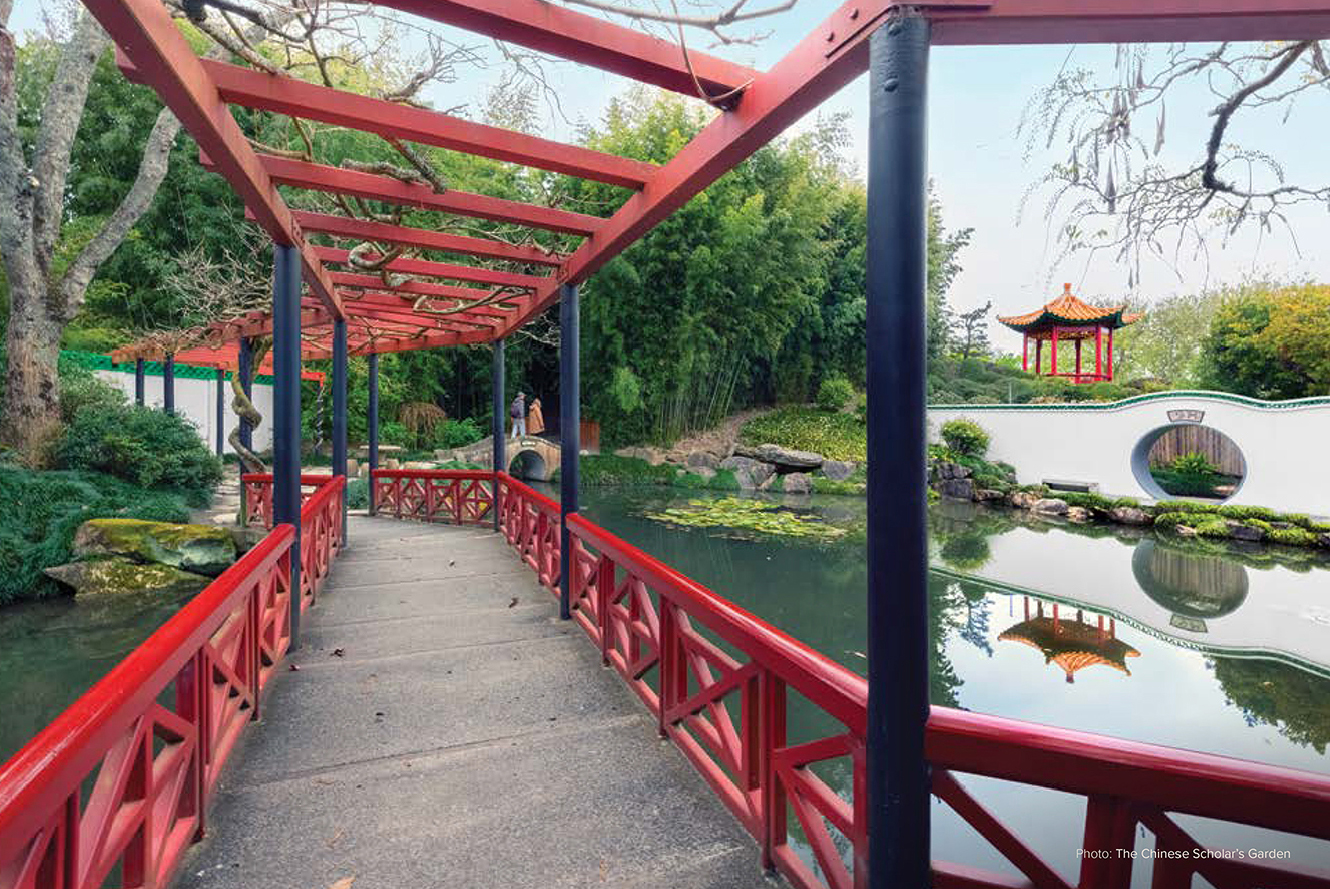
Egypt leans into China; Renaissance Italy brushes shoulders with futures not yet realised. It is less a garden than a proposition-a museum of humanity disguised as leisure. A place where belief systems are planted, cultivated, and quietly performed.
Sheehan arrives at this world not as a casual observer, but as a man already attuned to its textures. Having photographed the gardens extensively, his transition to film feels inevitable-an evolution from still image to moving dream.
“All this… contributed to a sense of ‘dream state’ at times.”
And dreamlike it is.
Layer upon layer unfolds: history, architecture, ideology-each garden a vignette, each path a passage between centuries. There is a subtle orchestration at play, guided by the mind of Peter Sergel, who appears less a designer than a kind of temporal conductor.
Visionary. Obsessive. Practical. Perhaps even, as Sheehan suggests with a wink, a traveller from another world entirely.
“He quite probably is a time-traveller… quietly obsessive, as well as practical and considered.”
Because ambition, here, is not hidden-it is cultivated.
Nothing is “authentic,” and yet everything convinces. The illusion is meticulous, the detail exacting. One knows the temples are constructed, the histories curated-but belief arrives anyway, uninvited and entirely welcome.
The camera, Sheehan admits, walks a fine line: between presenting reality and heightening it. Between documentation and romance.
“There seemed a fine line between presenting each garden as ‘real’… and a romanticised elevated tone.”
There are moments when the film allows itself to play.
The surreal gardens, the modernist gestures, the saturated theatrics of Egypt-these spaces seem to invite a certain looseness. Elsewhere, something stranger flickers. In the Japanese Garden of Contemplation, in the Chinese Scholar’s Garden, one half-expects a figure from another century to pass quietly through frame.
A touch of theatre. A hint of mischief.
“A historic visitor or two might briefly appear…”
And yet, beneath the spectacle, something grounded persists.
Yes, these gardens echo histories of power-Tudor courts, Renaissance elites, sacred temples. But here, they are counterbalanced by working gardens: sustainable plots, kitchen beds, spaces that feed communities as much as imaginations.
It is, in its own way, a democratisation of beauty.
“The power gardens are balanced out by working gardens… some food going to Hamilton communities.”
Which brings us to the quiet miracle of its existence.
Not miracle, perhaps-but foresight. What began as a civic initiative has grown through community will, donor support, and collective belief. A shared act of creation.
“My success is not mine alone, but comes from the strength of many.”
And so we arrive at the question that lingers.
Are these gardens illusions? Or are they, in their careful reconstruction, something closer to truth?
Sheehan offers no neat resolution. They are both. They exist-physically, presently-anchoring memory even as they recreate it. A reality, not virtual, but lived.
“These detailed replicas do exist in the present tense… giving them a reality value.”
Which leaves us with an unsettling, rather beautiful thought:
That we are all, in some quiet way, constructing our own gardens-assembling fragments of the past to make sense of the present.