Director: Christopher Nolan
Country: United States
Writers: Christopher Nolan, Homer
Actors: Matt Damon, Anne Hathaway, Tom Holland, Zendaya, Robert Pattinson, Charlize Theron, Samantha Morton
Written by Tom Augustine.
One of the most frustrating aspects of Christopher Nolan’s body of work has been his stubbornly monochromatic approach to the peculiarities of existence. A filmmaker possessed of remarkable ability to translate ambition of scale into big screen bombast, there is nevertheless a prescriptiveness to the contours of his immense images, an obsession with how it might ‘really happen’ — there is focus on how something is achieved, rather than why. Cinema is a space where the line between reality and our wildest dreams converge, but too often Nolan feels compelled to put walls around the possibilities offered by the form. It is telling that the Nolan film du jour, his 2010 hit Inception, conceives of dreams in structured, rigorously architectural terms, a space of one-to-one emotions and objectives. Rarely is this what I look for in cinema (though I do like Inception), and it is this that made me nervous to witness Nolan’s take on the ancient Homeric text The Odyssey, a wild and ragged tale rife with obscenities, horrors and godly intervention. How would Nolan take on the manipulations of witch Circe, the administrations of nymph Calypso, the monstrosity that is the Cyclops? Hot off the Oscar sweep for Oppenheimer, and with genuinely unimaginable resources at his disposal, the answer appears to be with some element of self-awareness: the opening scrawl reads ‘A Time of Apparent Magic’. Nolan has presented himself with a challenge, not just in how to achieve the oddities of this tale, but in how to accept their presence in his self-restricted worldview.
It is this self-awareness, perhaps uncertainty, that ensures The Odyssey is one of the most artistically robust works of Nolan’s career, a film that wrestles with the uncanny through agape, unbelieving eyes, resulting in a film that tackles an ancient work with a bracingly anxious spirit. It is remarkable just how unsettling The Odyssey is for much of its three-hour runtime, barely stopping to breathe, galloping back and forth in time in Nolan’s customary fashion. Much of the film is genuinely frightening, the trials that Odysseus and his doomed cohort encounter more frequently taking on a pose of horror than action, while dense political intrigue plays out at home in Ithaca. On reflection it is obvious, and yet rarely had I considered just how purgatorial Odysseus’ long voyage home really is, as Nolan’s film calls to mind the labours of Sisyphus, Waiting for Godot and Alice in Wonderland in equal measure. In wrestling with his disbelief, Nolan delivers images of stunning strangeness, his limitless playbox combining gratifyingly with his fealty to achieving things practically, resulting in one of the most tactile and textural blockbusters since Mad Max: Fury Road.
Sprawling, freakish and frenetic, Christopher Nolan’s latest epic is one of his finest films. In repurposing and reshaping the ancient Homeric tale, Nolan’s fascination with time and memory has rarely felt more thrilling, purposeful or tactile.
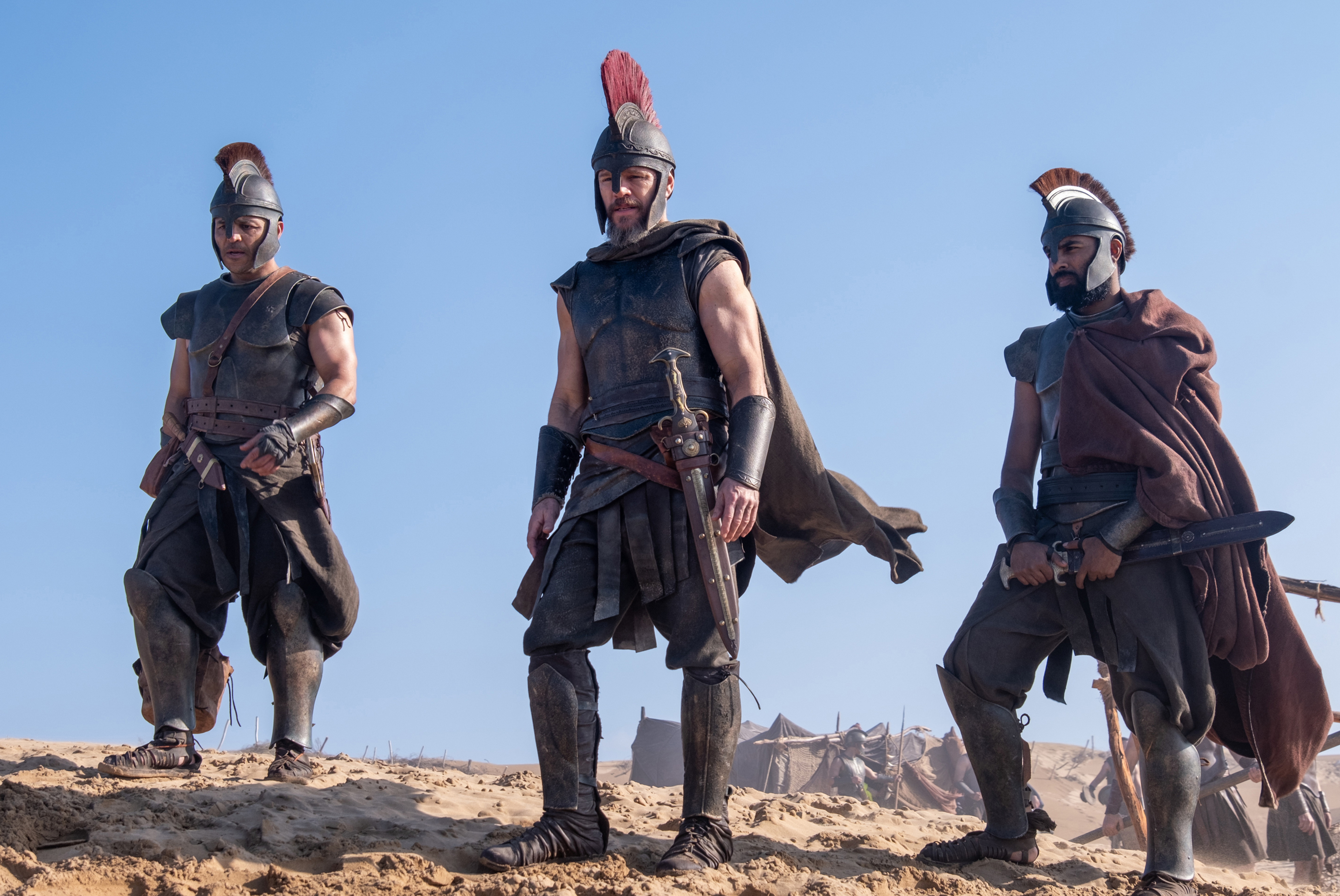
Technically, the film is at once astonishing in scale and fascinating for the challenges the team behind The Odyssey make no bones of having struggled with — filmed entirely on IMAX film cameras, it is bracing to see how the technology’s imperfections make their presence known in the film, how rarely Nolan attempts to mask them. If The Odyssey’s key touchstone is Lawrence of Arabia, it is these imperfections that vault the film into good company — there are inconsistencies in lighting between shots, struggles to capture the entire image in low light, and frequent moments that play in soft focus, particularly when attempting to rack focus from one plane to another within a single shot. In an age of glossy, plastic computer images and ghoulish AI, in which the ‘perfection’ of images ironically delivers them into unfeeling anonymity, this handmade approach feels like a timely rebuke — this tale of fallible, mistake-prone humans could only have been made by fallible, mistake-prone humans.
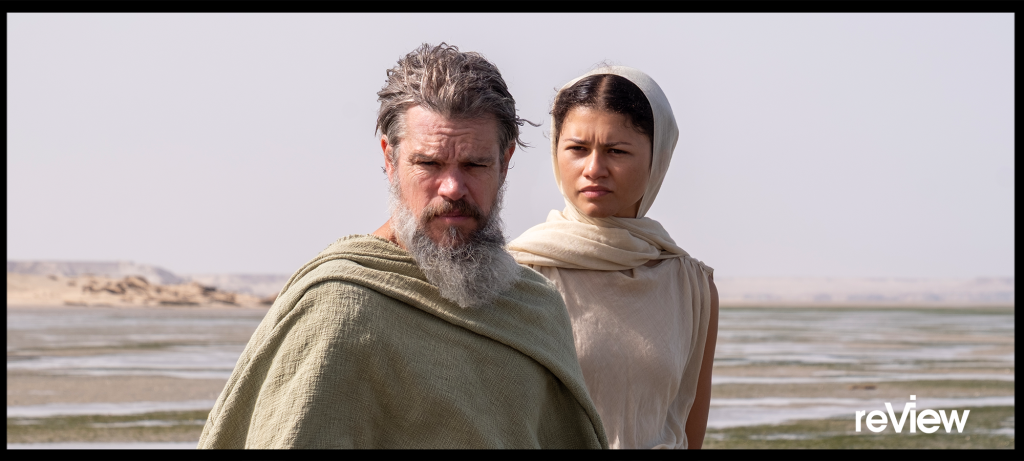
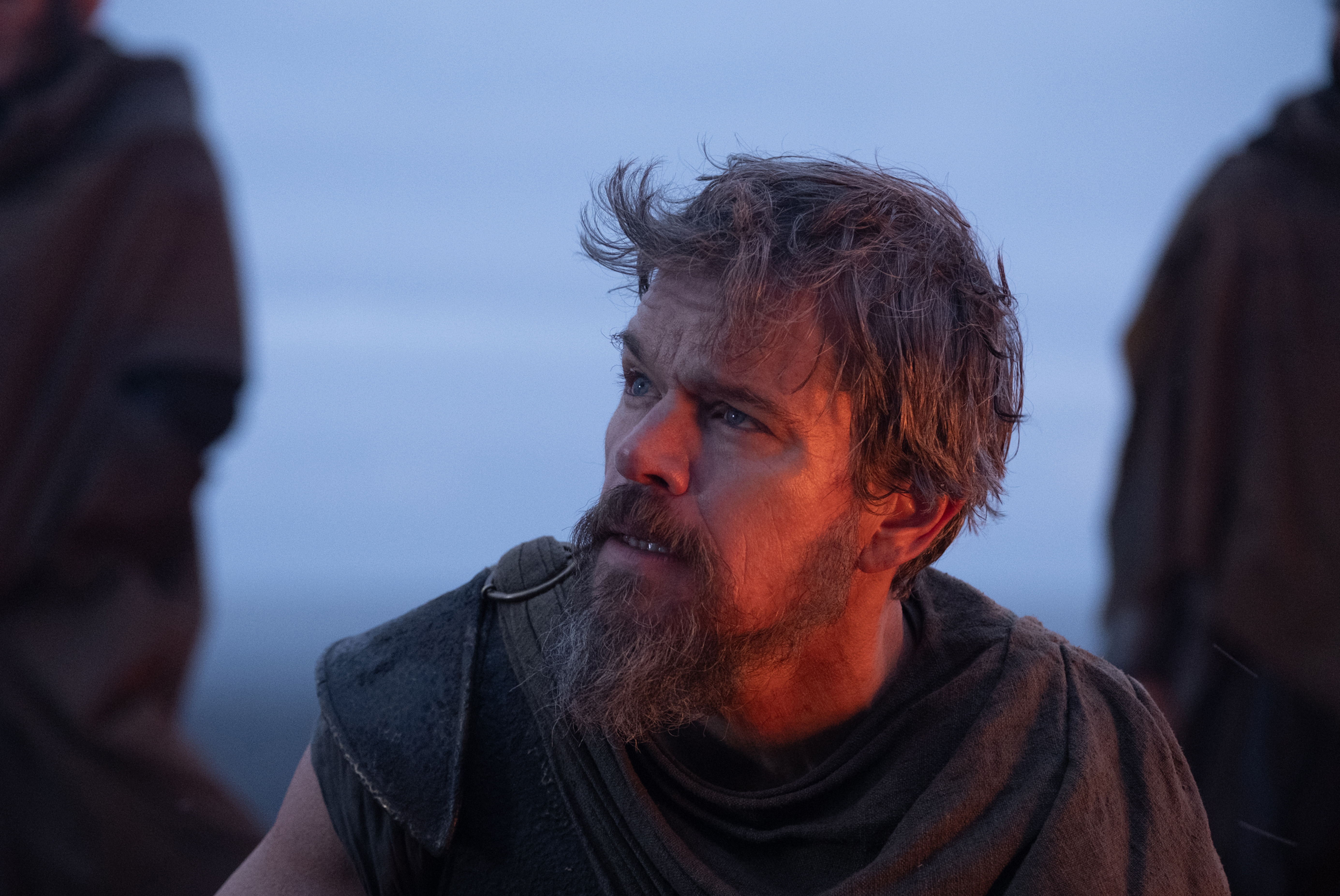
An enormous cast has been wrangled to bring The Odyssey to life, all revolving around Matt Damon’s remarkable turn as Odysseus. Bold decisions must be made to actualise a character whose contradictions are part and parcel with the original telling, a proto-Christlike sufferer that presents a compelling challenge to any actor attempting to tackle him. Damon’s conception is to make a figure who front foots humility to mask an inner egotism, a man wrestling with the far-reaching consequences of his actions as the man who conceived of the war-winning Trojan Horse scheme. Comparisons to Oppenheimer, which also told the story of a man whose particular brilliance ended a war but cost countless lives, abound to such a degree that The Odyssey almost functions as a kind of companion piece. Where Oppenheimer was, ultimately, bound to the strictures of history, The Odyssey is amorphous enough (Nolan also ties in other elements not present in the Homeric text, some cribbed from The Iliad, others from Virgil’s Aeneid) to allow for an arguably stronger dramaturgy, at once more emotionally violent and more mysterious, nuanced.
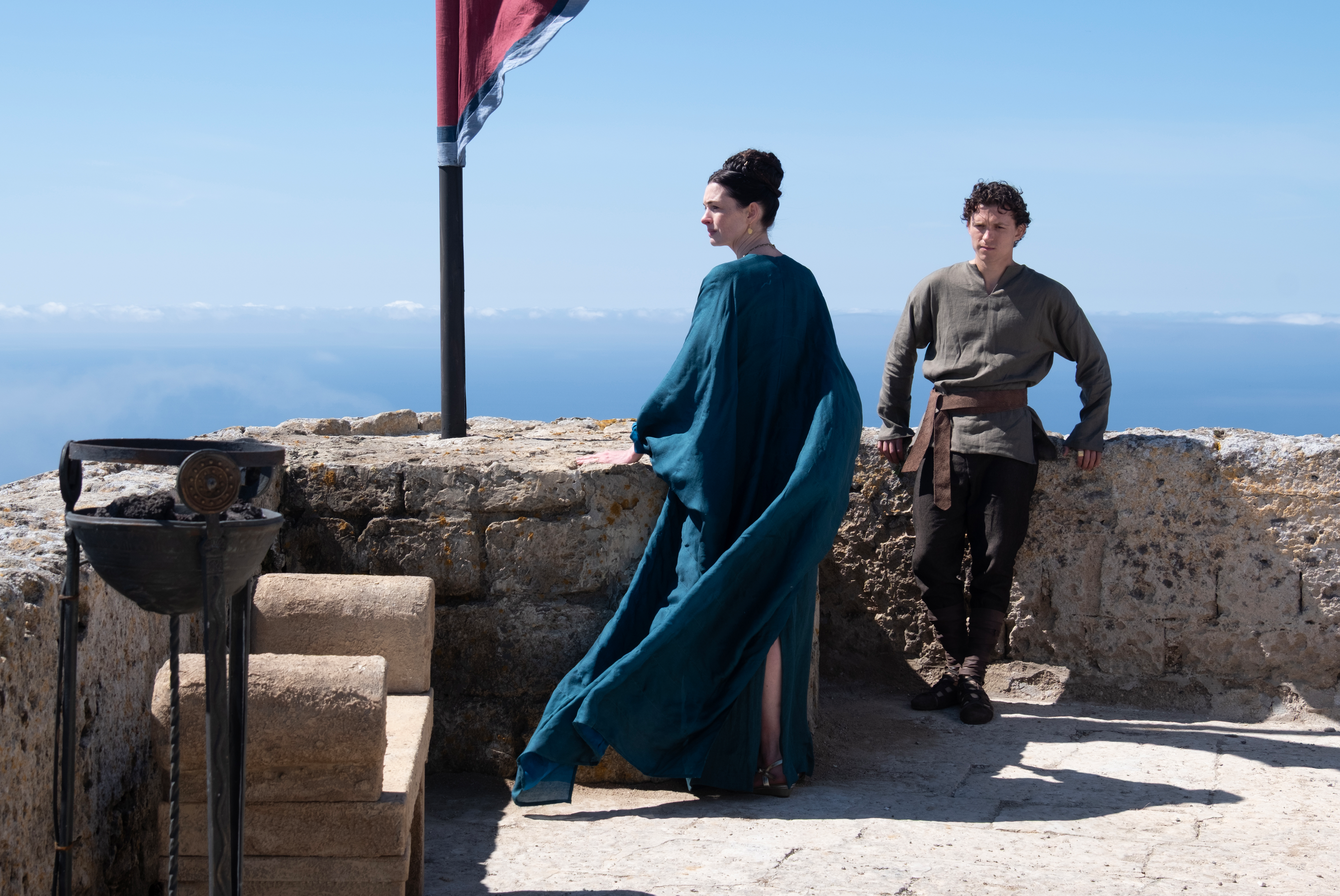
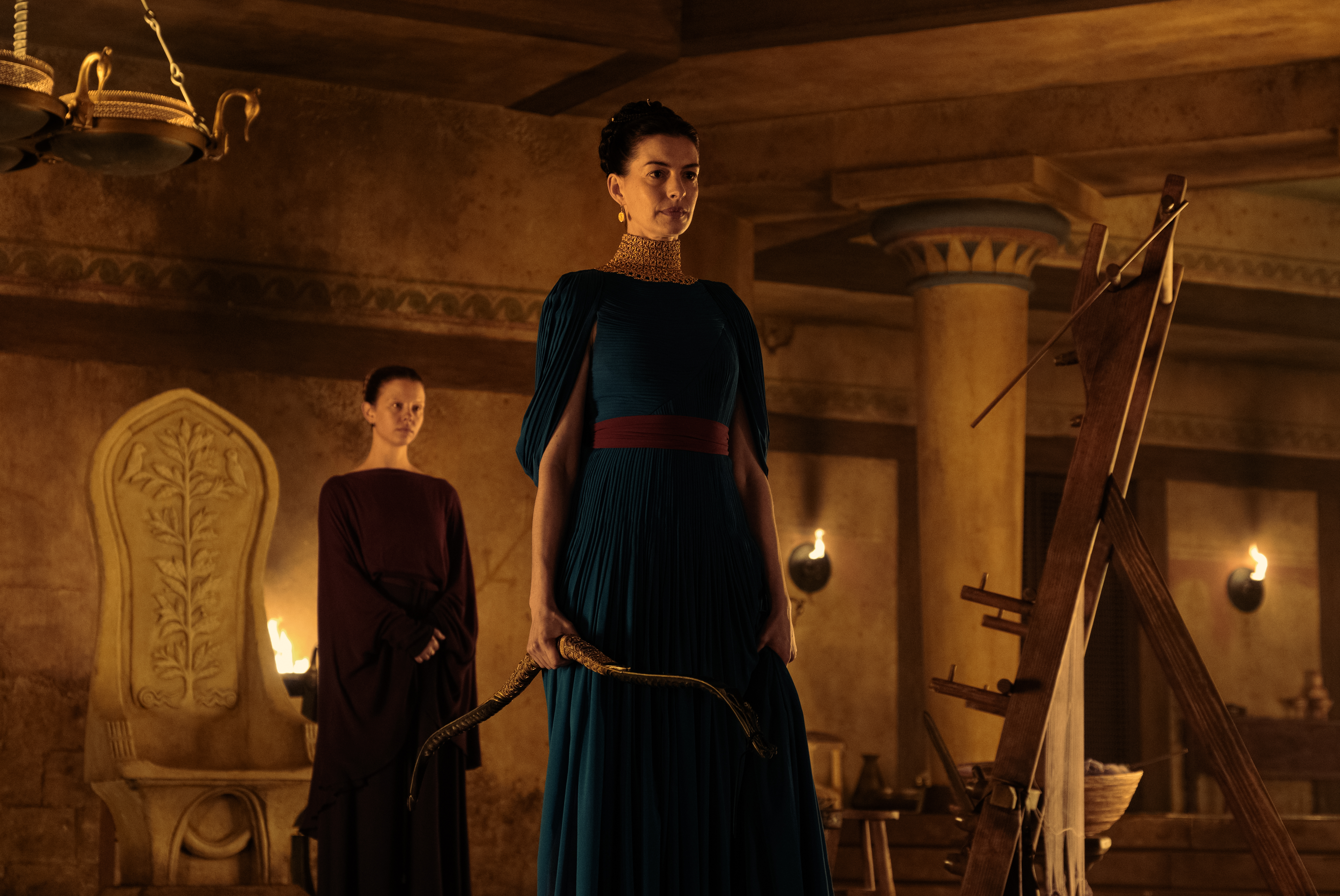
The rest of the cast flits in and out of the picture sporadically, some appearing only for episodic encounters, others with their own stories to be told but often disappearing for long stretches. These performances are variable — some with less screen time make bigger impressions than those with meatier roles, while others struggle with the ancillary nature of their presence in the tale. One gets the sense that, evoking the spectre of Terrence Malick (whose distinctive stylistic approach can also be felt in stretches here), certain actors’ parts have been reduced or reshaped, while others have unexpectedly claimed the foreground. Few would expect Himesh Patel, as Odysseus’ wearied second-in-command Eurylochus, to have as significant a narrative presence as Odysseus’ put-upon wife Penelope (a fiery Anne Hathaway), and yet he emerges as one of the most tragic, riveting figures in the grand mosaic.
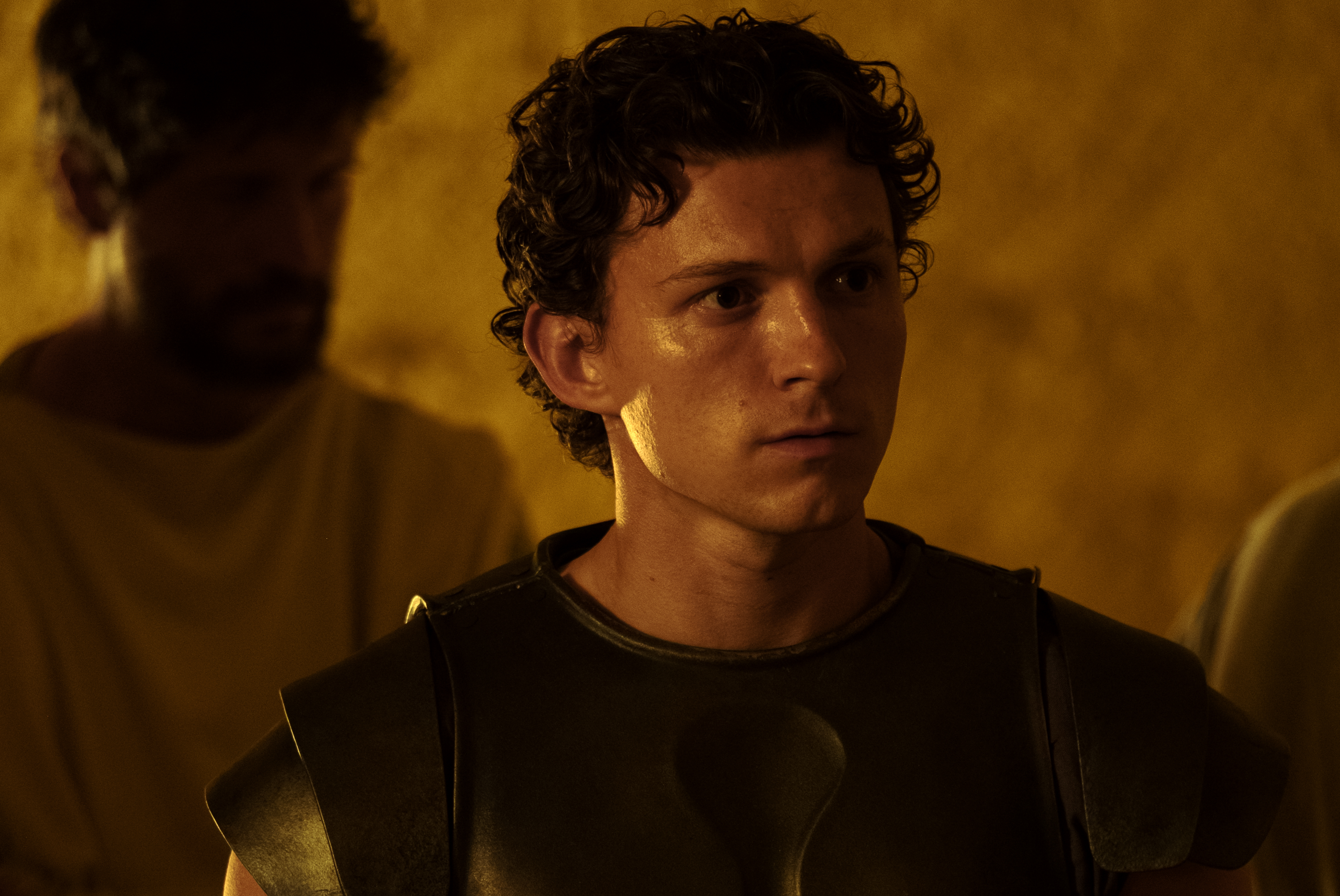
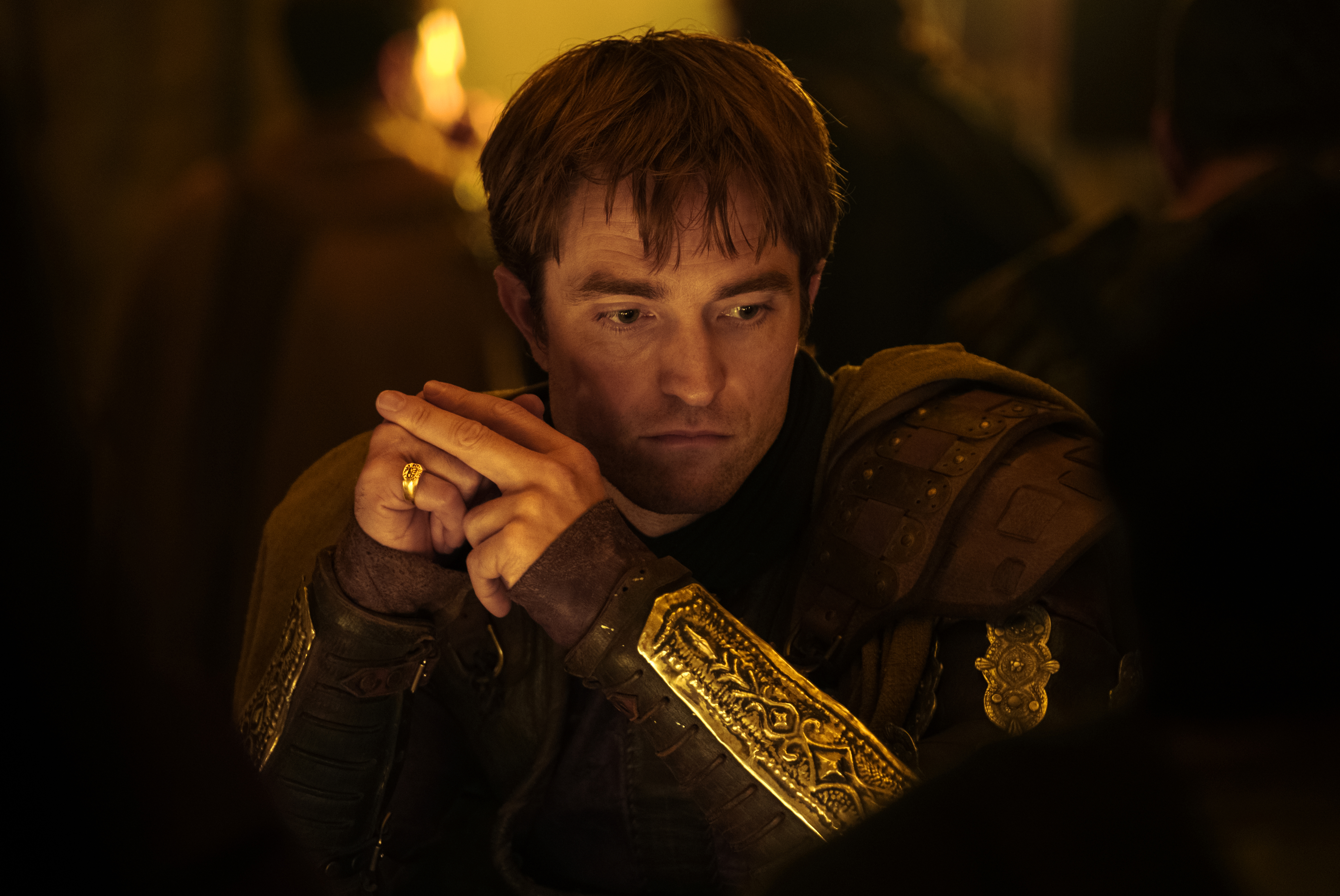
Two performers whose presence fuelled an ugly right-wing backlash online, a monumentally stupid discourse that bears no further discussion, Lupita Nyong’o in a dual role as Helen of Troy and Clytemnestra and Elliot Page as lionhearted army grunt Sinon, meet the furor with immense turns. Page in particular influences the story in far-reaching fashion, though appearing in only a few scenes, the haunted nature of the role rendering shivers in one of the film’s most atmospheric and frightening sequences. As the preening suitor Antinous, Robert Pattinson adds another snivelling coward to a filmography full of them, while John Leguizamo, as blind elder loyalist Eumaeus, functions as the soul of the film’s fractious Ithaca-set storyline. Other faces are so intensely recognisable that they fail to sink in to the story in the same manner — as the spectral goddess Athena, Zendaya’s elegant visage looks the part, but remains unsettled in the frame; Charlize Theron, as the yearning Calypso, fails to penetrate the surface as either a magical presence or a tragic figure. Others like Mia Goth and Benny Safdie are so throwaway as to be categorised as simply happy to be amongst it all. The weakest turn, sadly, belongs to Tom Holland as Odysseus’ willowy son Telemachus, the actor’s natural boyishness initially seeming to be a strong fit, but failing to capture the emotional register that the formidable roster of talent surrounding him largely manages to locate.
The Odyssey is, in every sense, a massive picture, one whose countless moving parts are too vast to cover here. It is also, perhaps surprisingly, one of Nolan’s most thematically dense and questioning works, allowing genuine doubt to surface, a region into which the filmmaker rarely dares to venture. The cost of duty and nobility, the ending of an age, the unknowability of our place in the universe and the works of forces beyond our understanding, the burden of leadership and the terrible cost of our choices — all these and more play on the filmmaker’s mind. A film sure to anger history buffs and Homer-loyalists alike, it is The Odyssey as told through the lens of a filmmaker of agnostic qualities. Thus, the ‘apparent magic’ that makes itself known here is tinged with quivering, unbelieving horror. The emergence of the Cyclops (Bill Irwin), a marvel of monster design, is a moment of terror and disgust, the first-such arrival of the uncanny rendered most effective by Nolan’s frequent cuts to the Cyclops’ mewling, disgruntled flock of sheep. Samantha Morton, as Circe, makes a meal of a short sequence, briefly morphing the shape of The Odyssey into body horror, while the presence of a population of vicious giants and the menacing creature Scylla continue a pervasive feeling of off-the-beaten-track dread, the kind marked in old maps as ‘here there be monsters’. A standout sequence follows Odysseus’ crew into the depths of Hades, a sequence that does away with hellfire and brimstone, replaced with a yawning void of emptiness. Nothing in The Odyssey is more daunting, though, than the sky and ocean — Zeus and Poseidon, per Greece’s populace — Homer’s ‘wine dark sea’ and nuclear thunderclouds positioning the audience in a state of mortal terror similar to Odysseus’ brave, vulnerable crew. Nolan, alongside the men and women of The Odyssey, never entirely arrives at surety on the question of whether we are masters of our own destiny or pawns in an infernal game.
The Odyssey – Now In Cinemas.