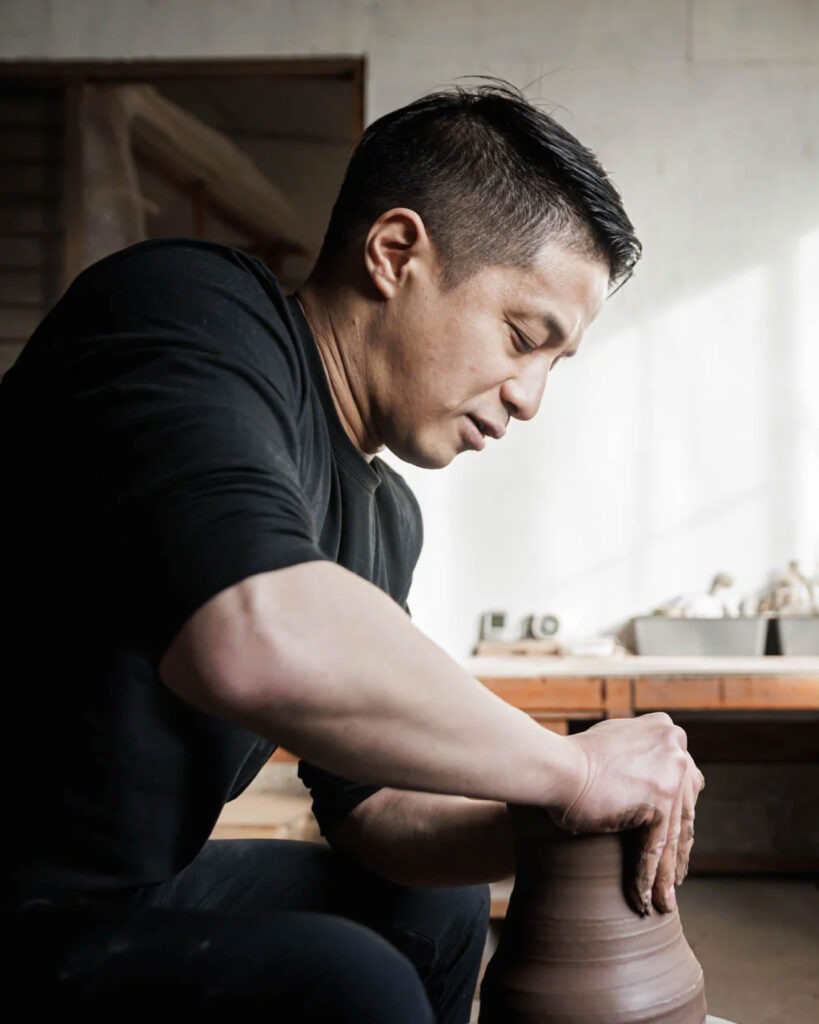
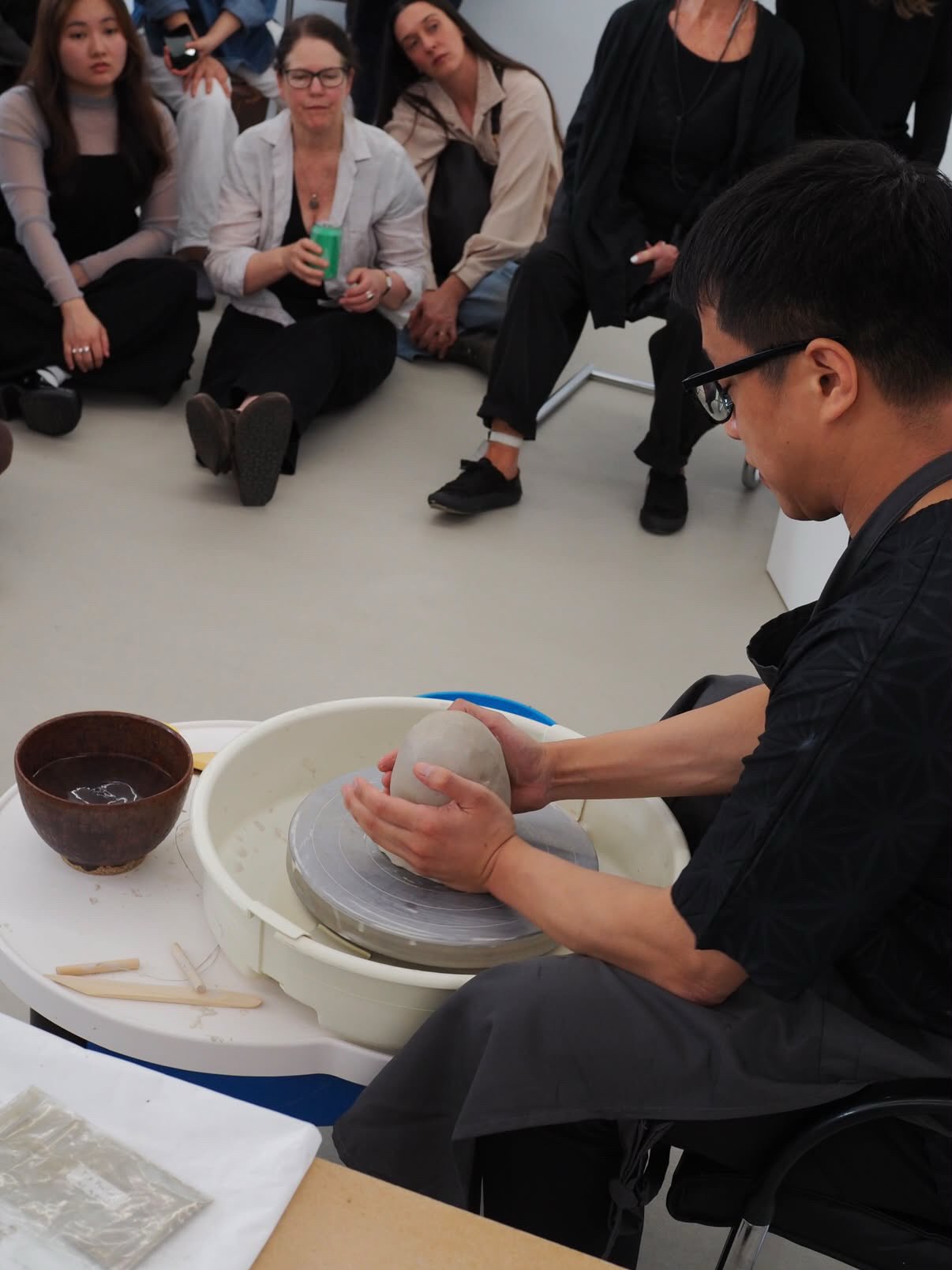
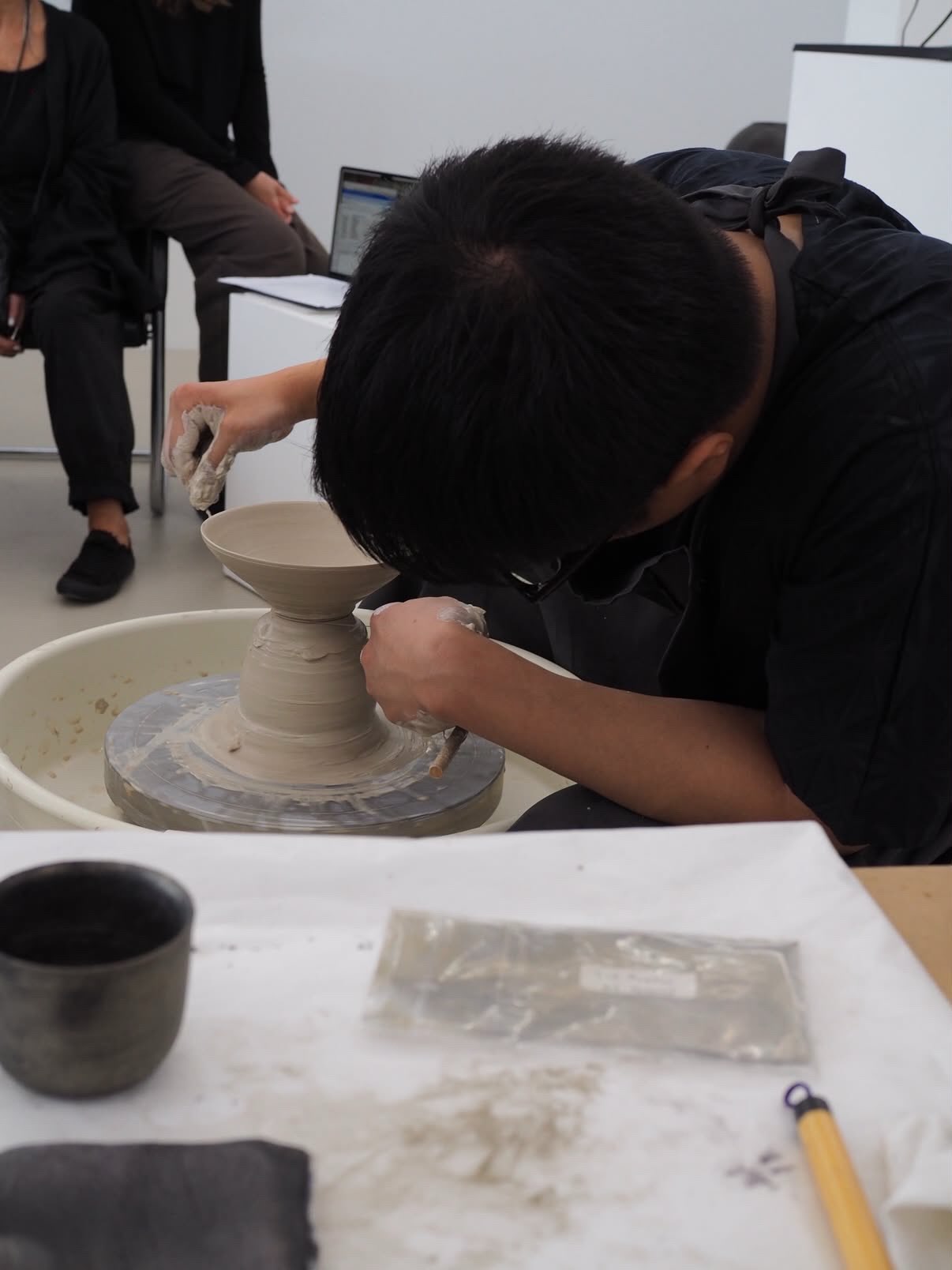
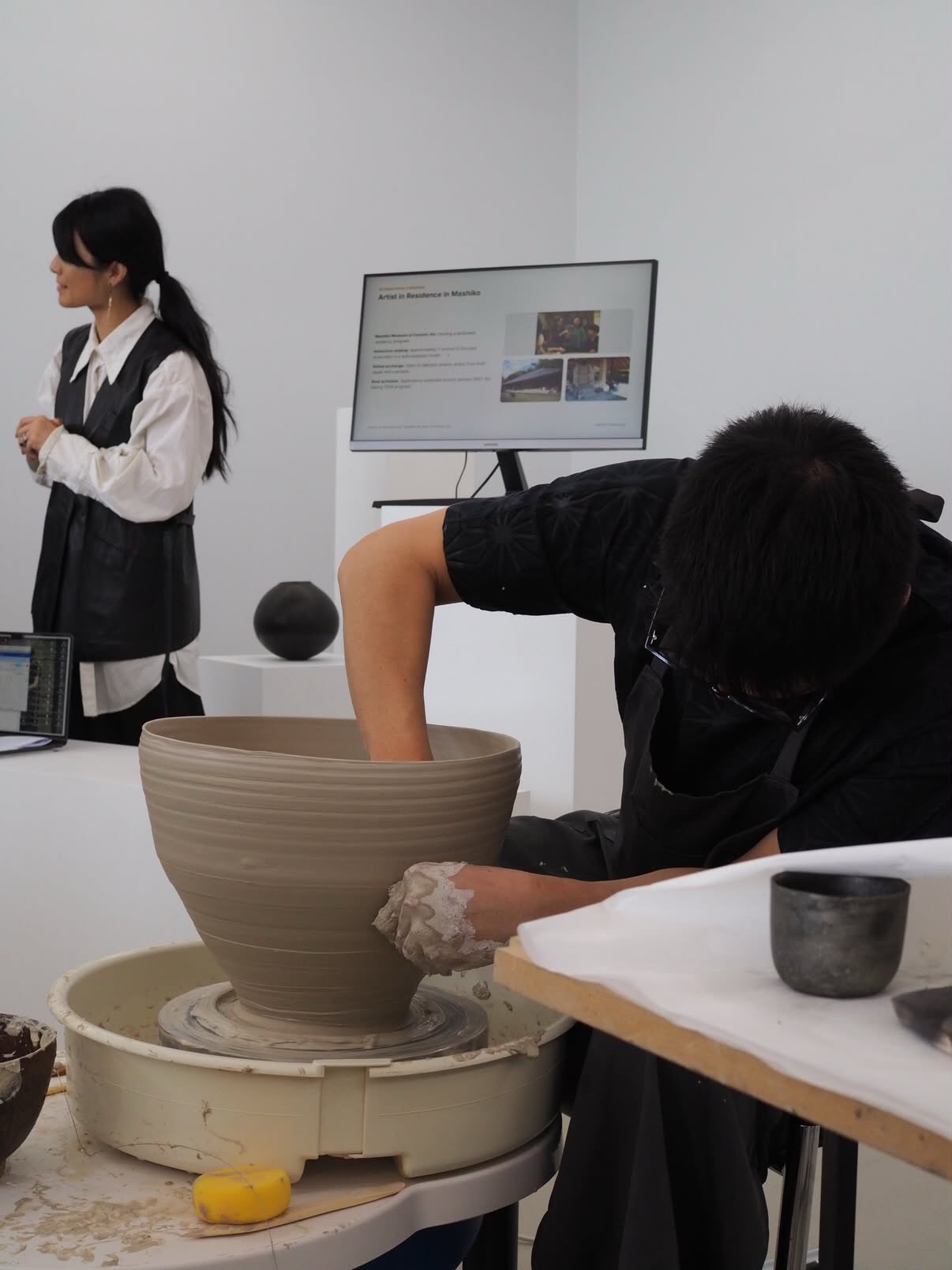
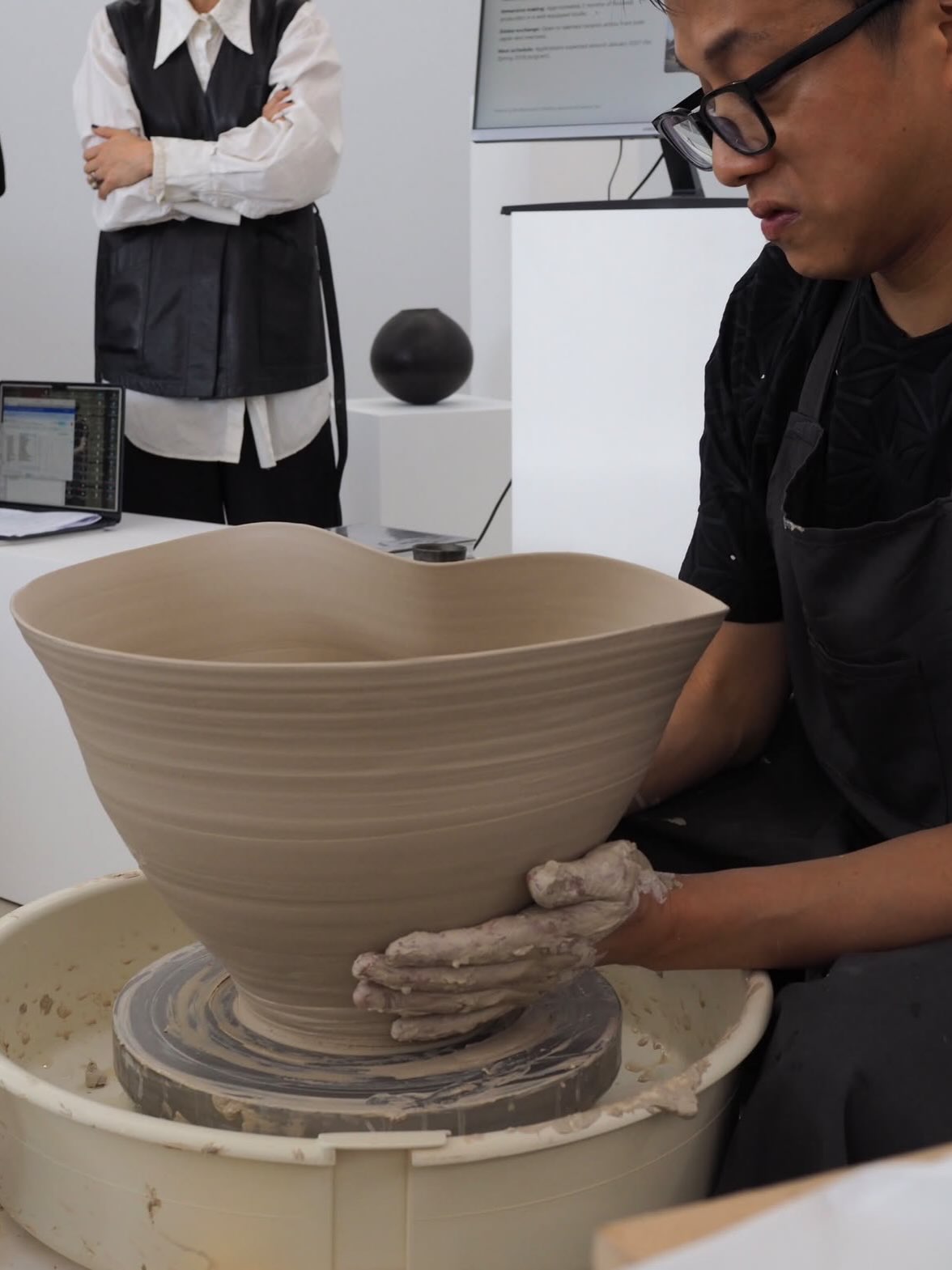
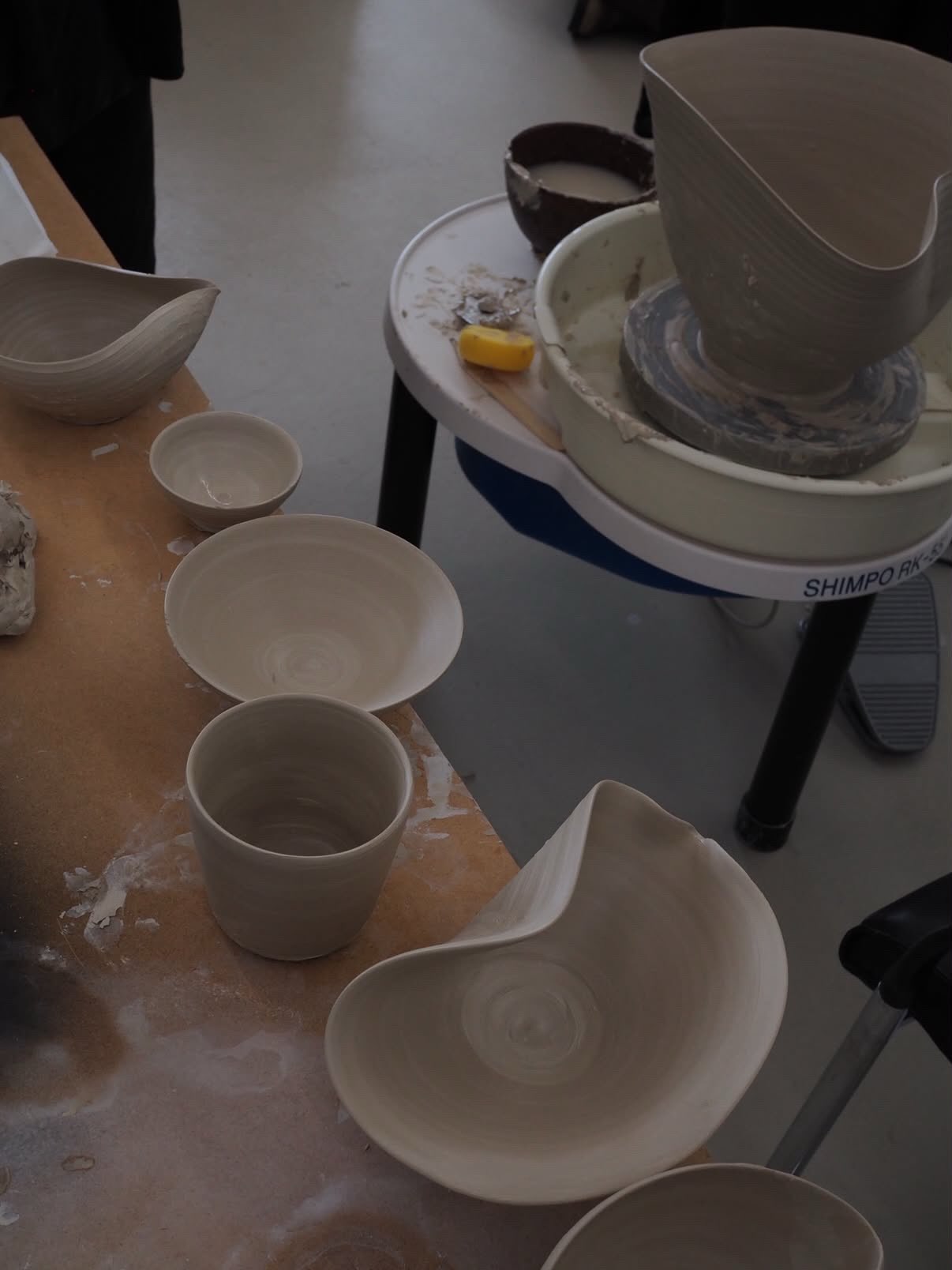
The finished object, of course, can hide all of this.
It hides the failures.
The collapsed walls.
The badly judged proportions.
The pieces that went into the reclaim bin.
And the years it took to make difficult things look simple.
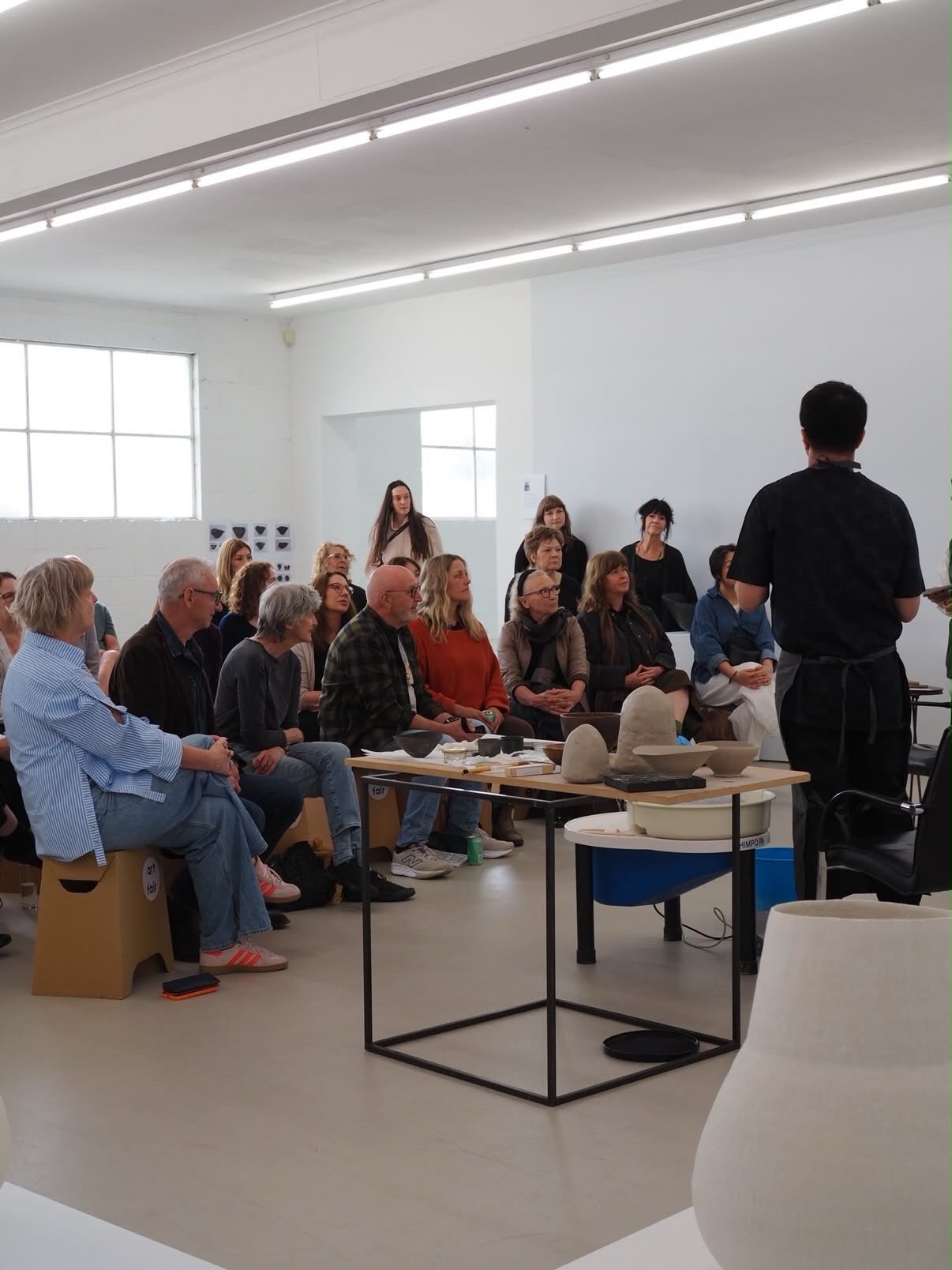
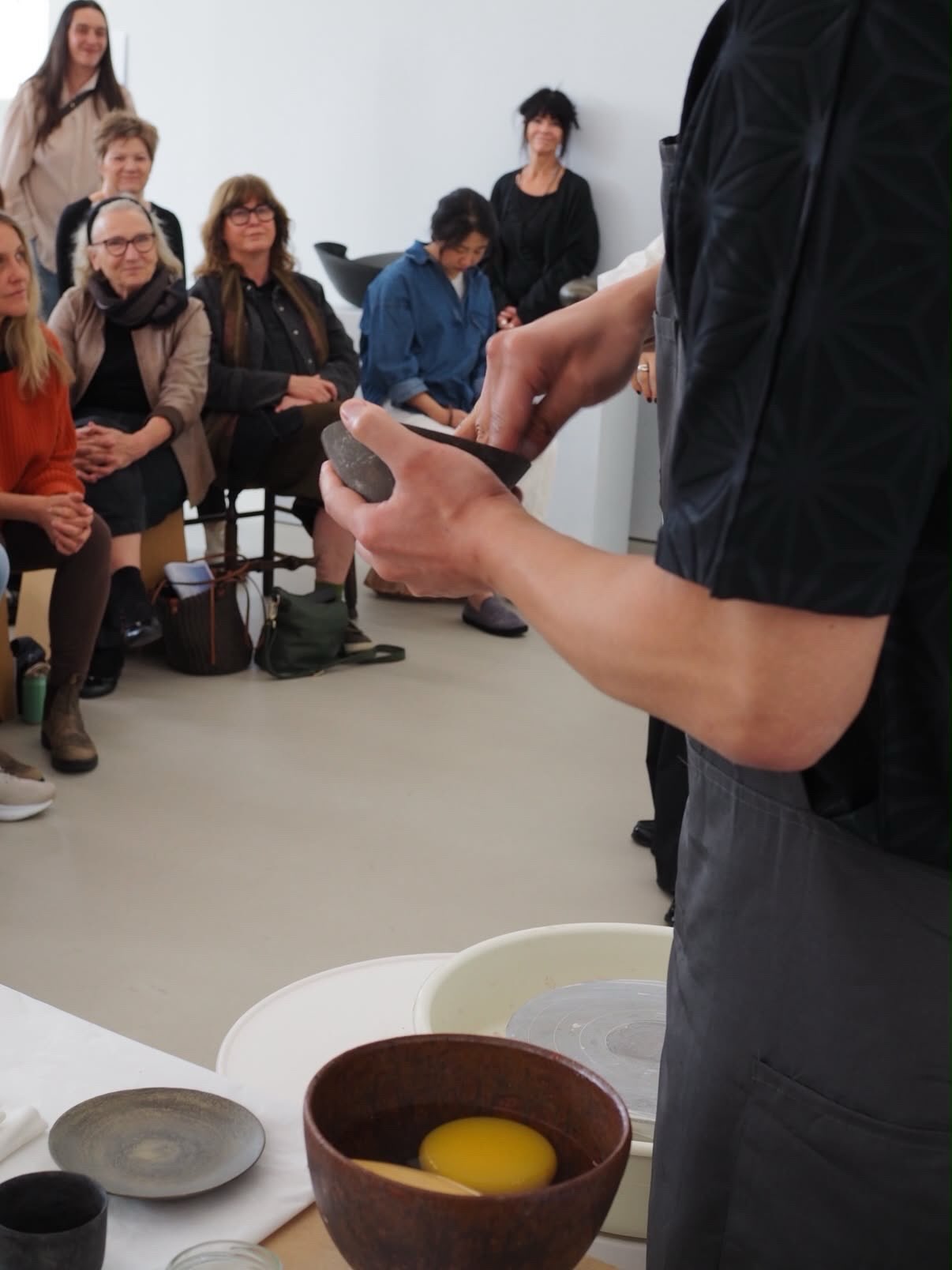
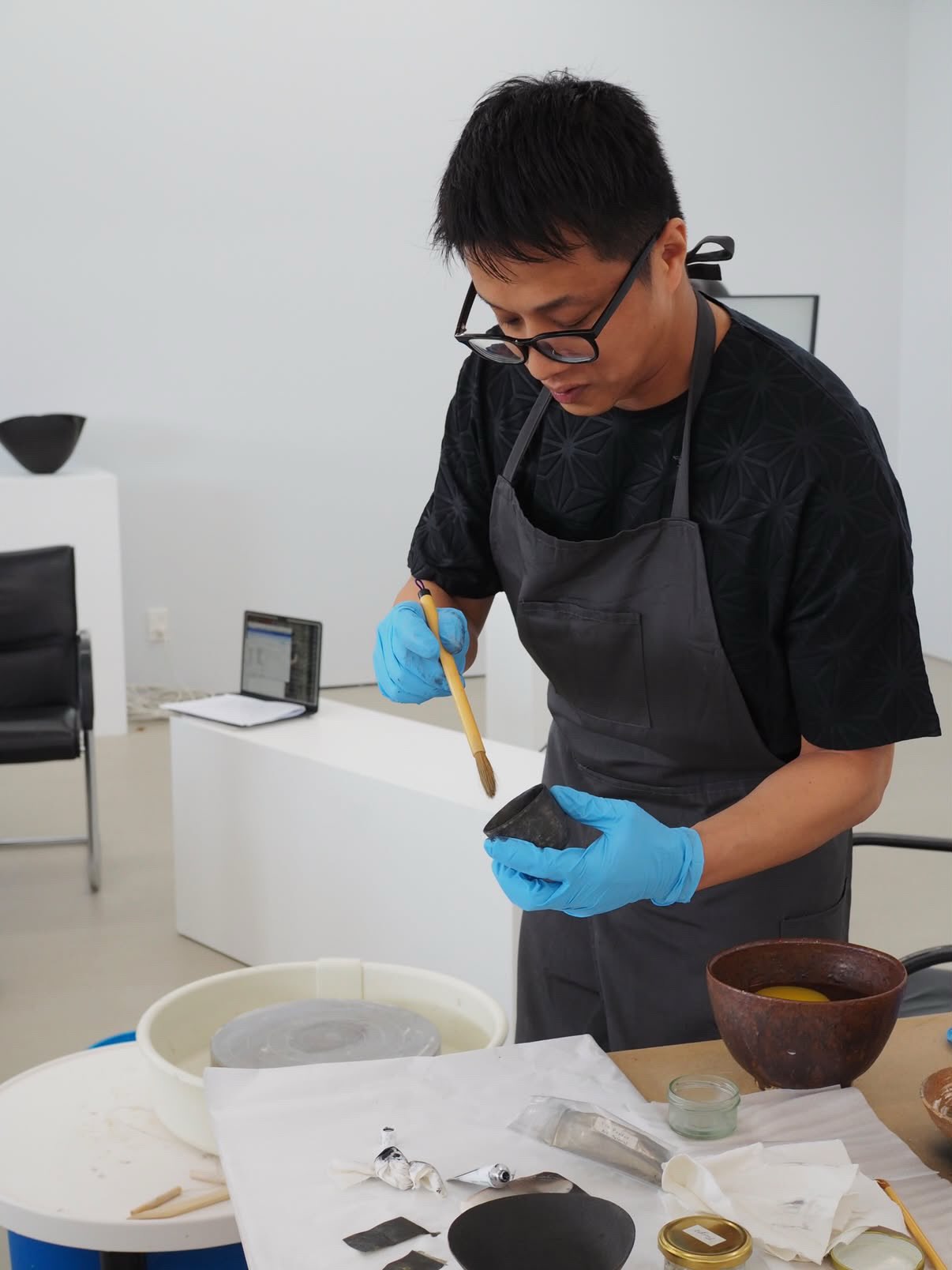
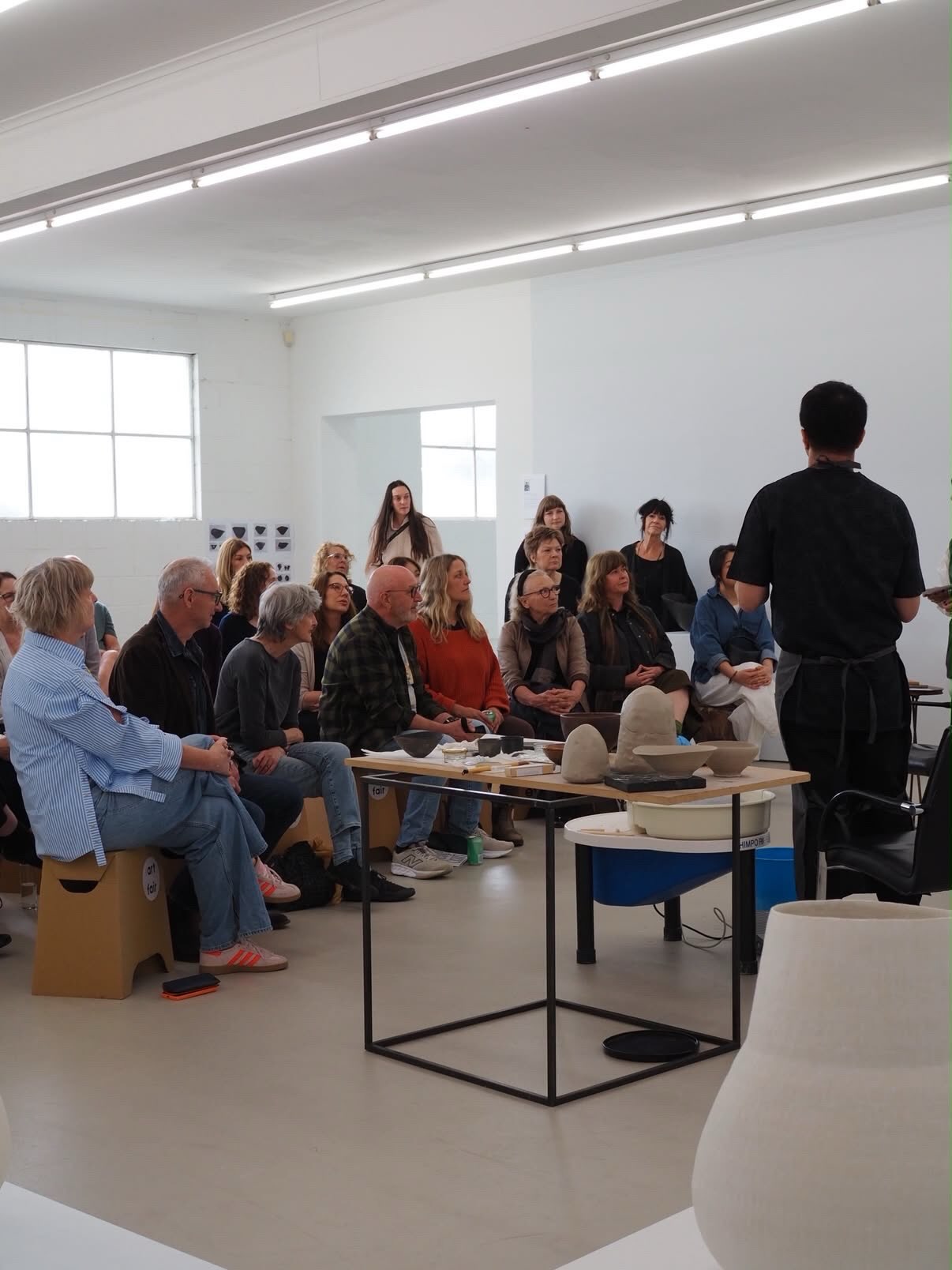
A demonstration gives some of that back.
You see the decisions.
You notice how little movement is sometimes required to change everything.
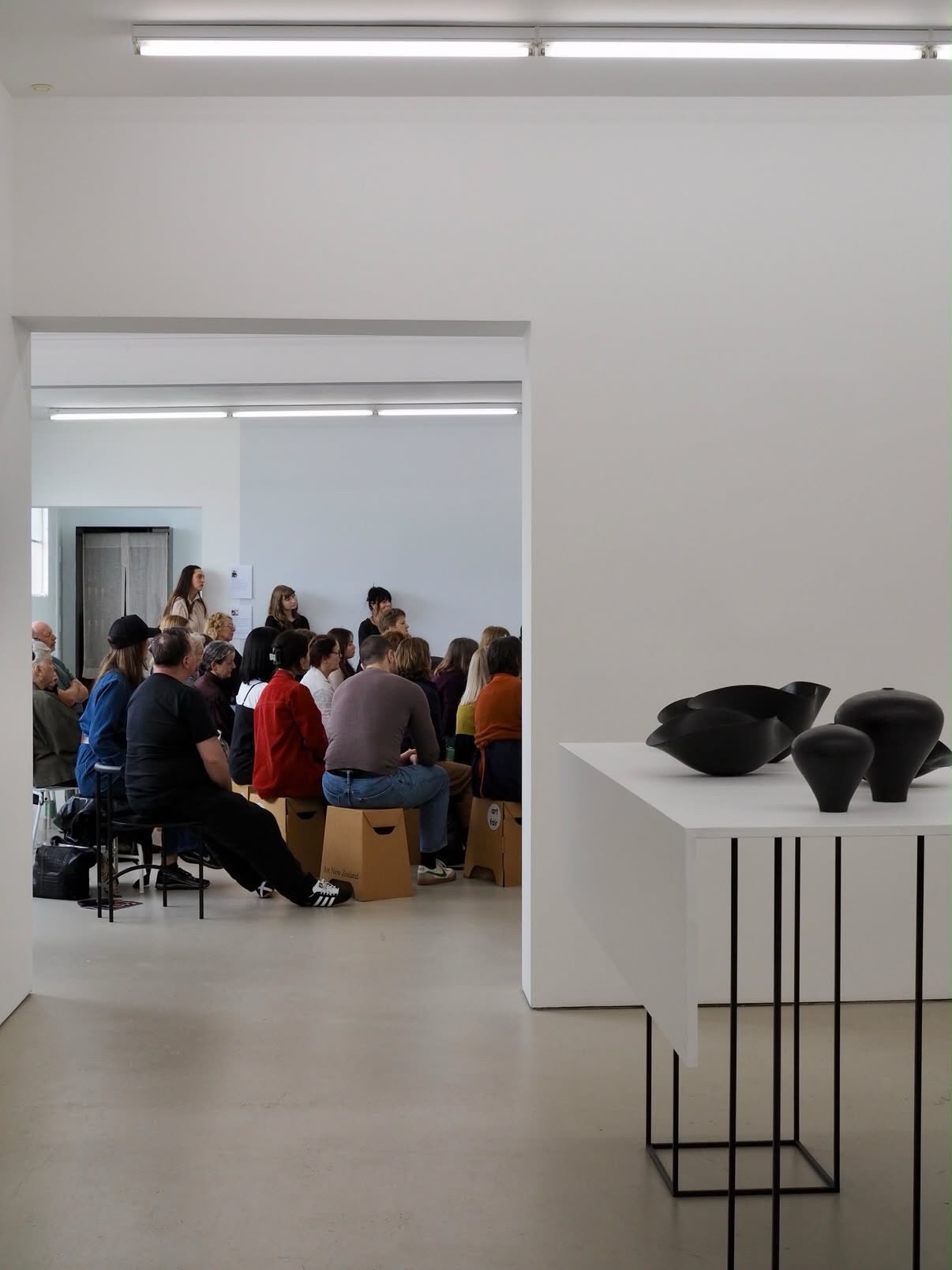
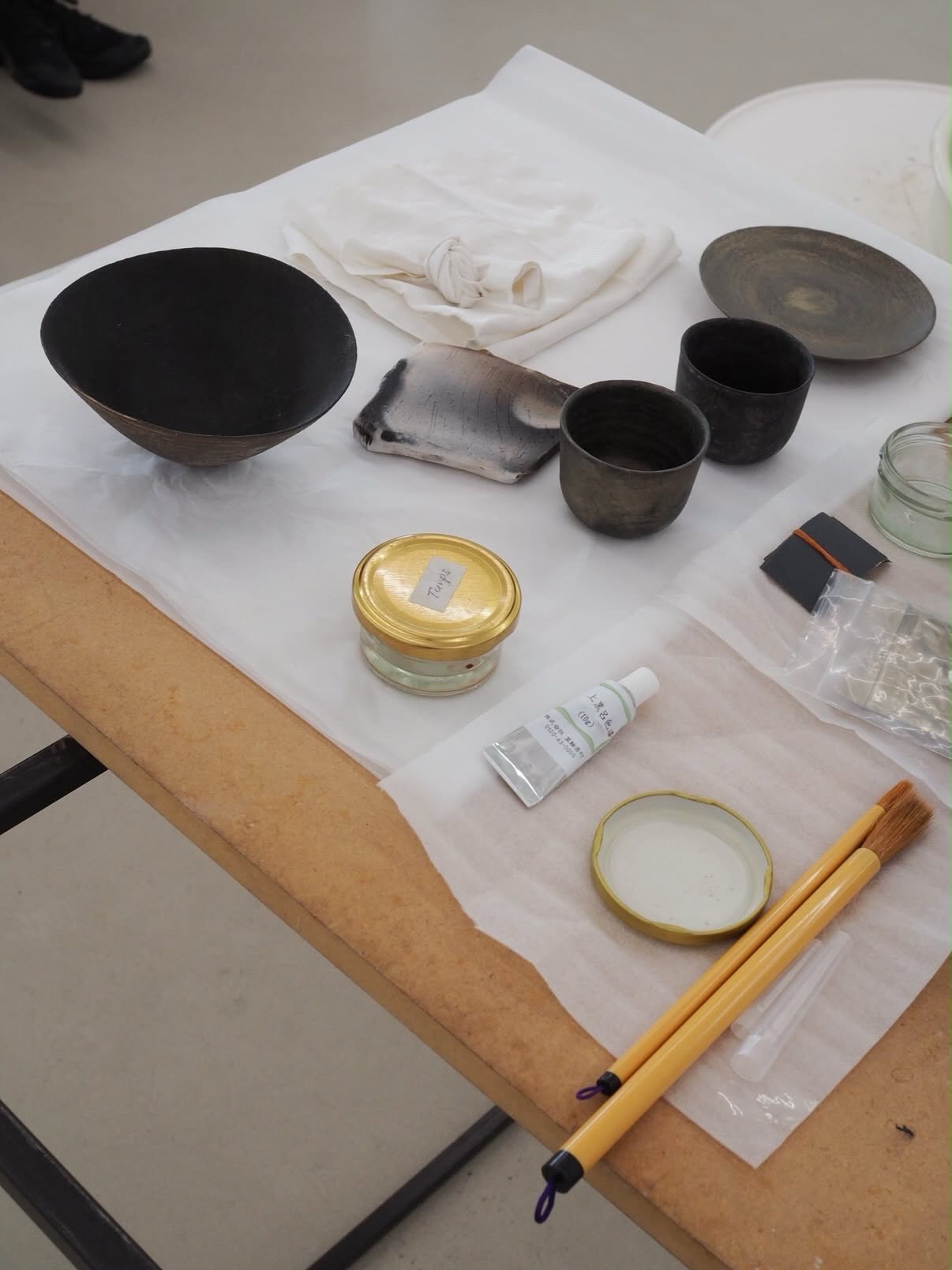
And then there are Onozawa’s surfaces.
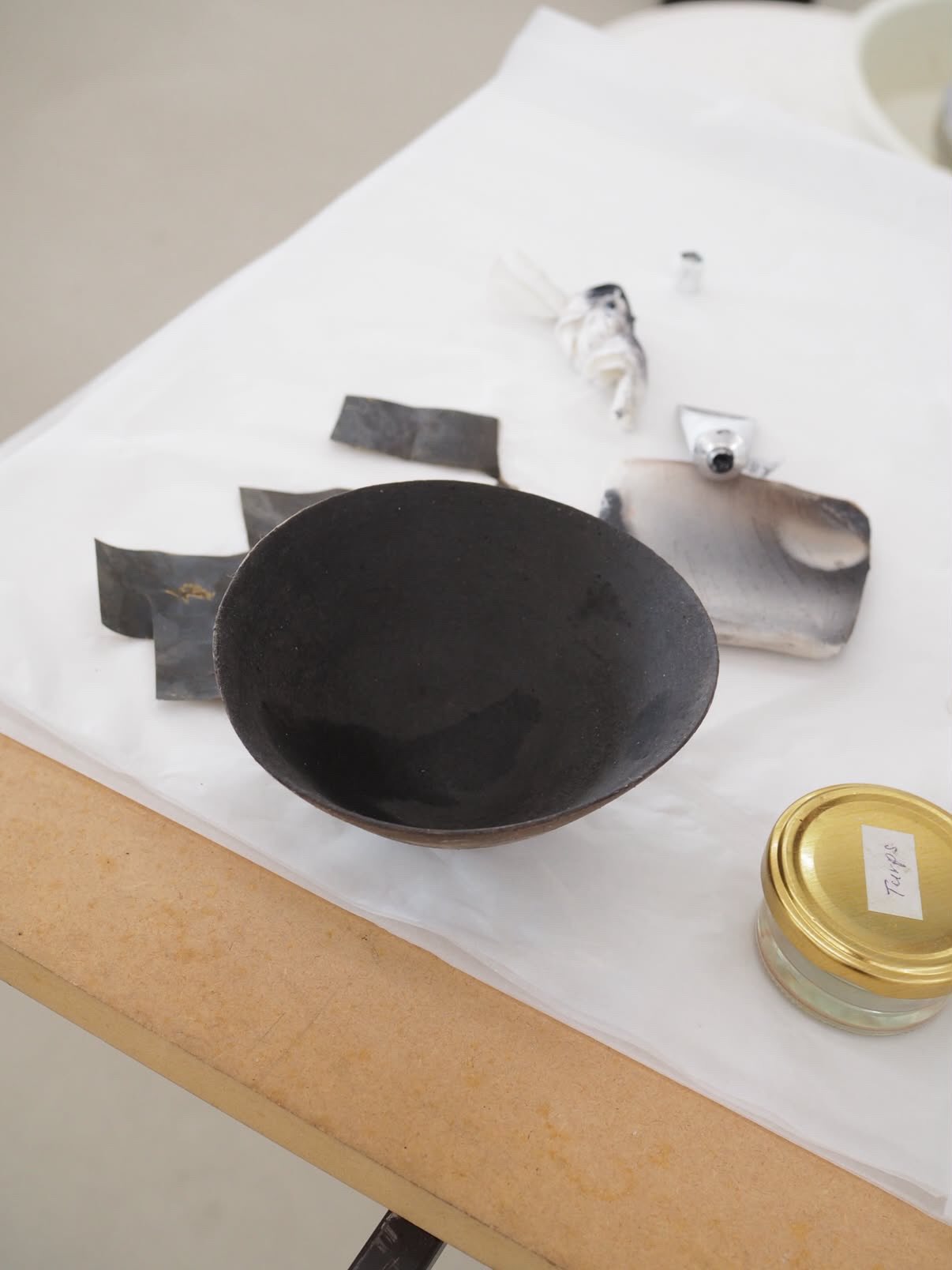
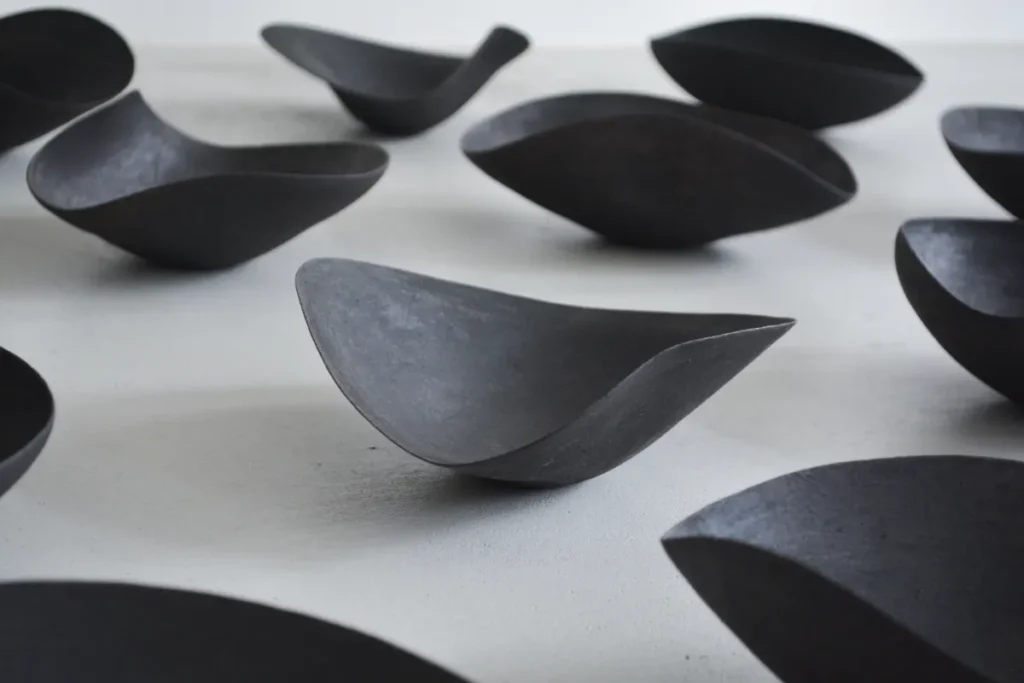
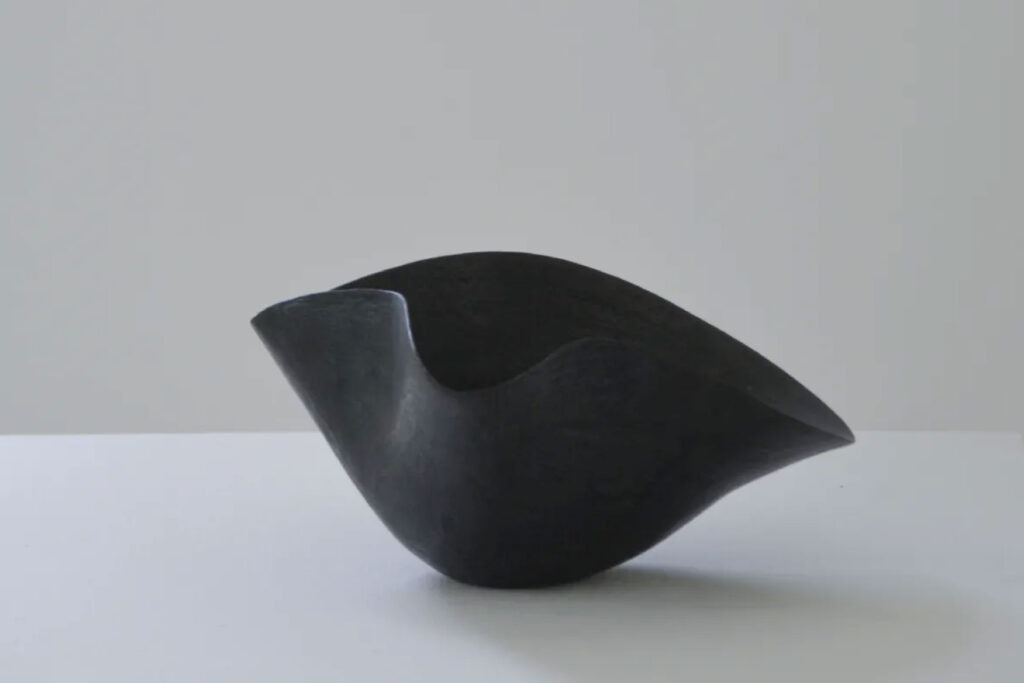
After forming, he builds up layers of clay, grinds them back and fires the work, before repeatedly applying lacquer and polishing. The result is a surface that feels weathered rather than decorated — as though time itself has been worked into the vessel.
Earlier layers remain beneath the exterior.
That feels important.
These objects do not pretend to have appeared perfect and complete. They carry traces of what came before.
In that sense, the surface becomes a kind of memory.
Onozawa’s work has travelled well beyond Japan, with exhibitions in China, Europe and the United States. He has shown at the Knoll showroom during Milan Salone, was a finalist for Open to Art in Milan, and has more recently exhibited and led workshops in China and Mexico.
But sitting in Grey Lynn, none of that international recognition felt especially important.
What mattered was proximity.
To see someone of this calibre working just a few metres away is to understand how much information can be held in a hand.