Director(s): Phil Lord, Christopher Miller
Country: United States
Author: Drew Goddard, Andy Weir
Actor(s): Ryan Gosling, Sandra Huller, James Ortiz
Written by Tom Augustine
A pervasive but facetious claim that has plagued cinema for decades is that the biggest blockbusters of yesteryear arrived sans-ideology, were somehow ‘apolitical’. It’s a depressingly common notion — that unless something is shouting its worldview from the rooftops, it is quite simply a piece of ‘entertainment’. This is not how the world works — nothing exists in our media landscape without some sort of political charge, whether that is overt or buried beneath the surface. Star Wars did not exist beyond politics — its rebels were styled after the Viet Cong, resisting the looming shadow of the American empire. Jaws was not apolitical — it is stuffed full of signifiers of American capitalism and conservatism, disguised as suburban charm before being torn to shreds. Back to the Future presents its idealised 1950s in the way the modern MAGA crowd likes to remember it — a place where you kept your doors unlocked, segregation wasn’t questioned, and the family unit was intact. Project Hail Mary, the new blockbuster from Phil Lord and Christopher Miller, eagerly puts itself forward as an old-fashioned adventure — and largely succeeds as a genial, absorbing crowdpleaser — but makes a blatant miscalculation in the way it invites, even encourages, one to leave their politics at the door. If there is any kind of ideology at play here, it is worship at the altar of science (though, to be fair, scientific fact is itself under attack in the modern day). The wider circumstances of Project Hail Mary’s world, in which the sun seemingly begins to die, threatening all life on earth, is barely explored — an international coalition of scientists, funded unquestioningly, are facilitated to the point of near-fantasy. Are we to assume the world of Hail Mary, ostensibly the same as the one we live in, is one that would rally so easily to such a mission, even with the knowledge of certain imminent doom? Are we doing so now, knowing what we know?
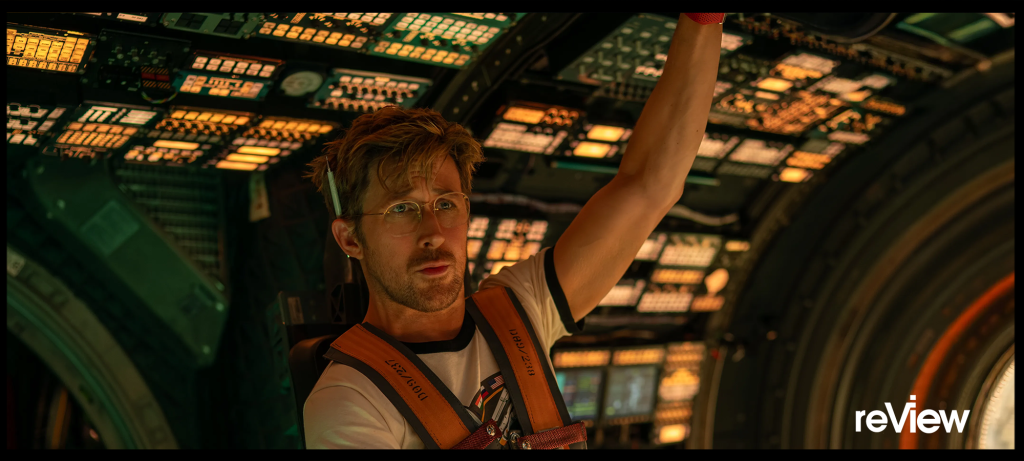
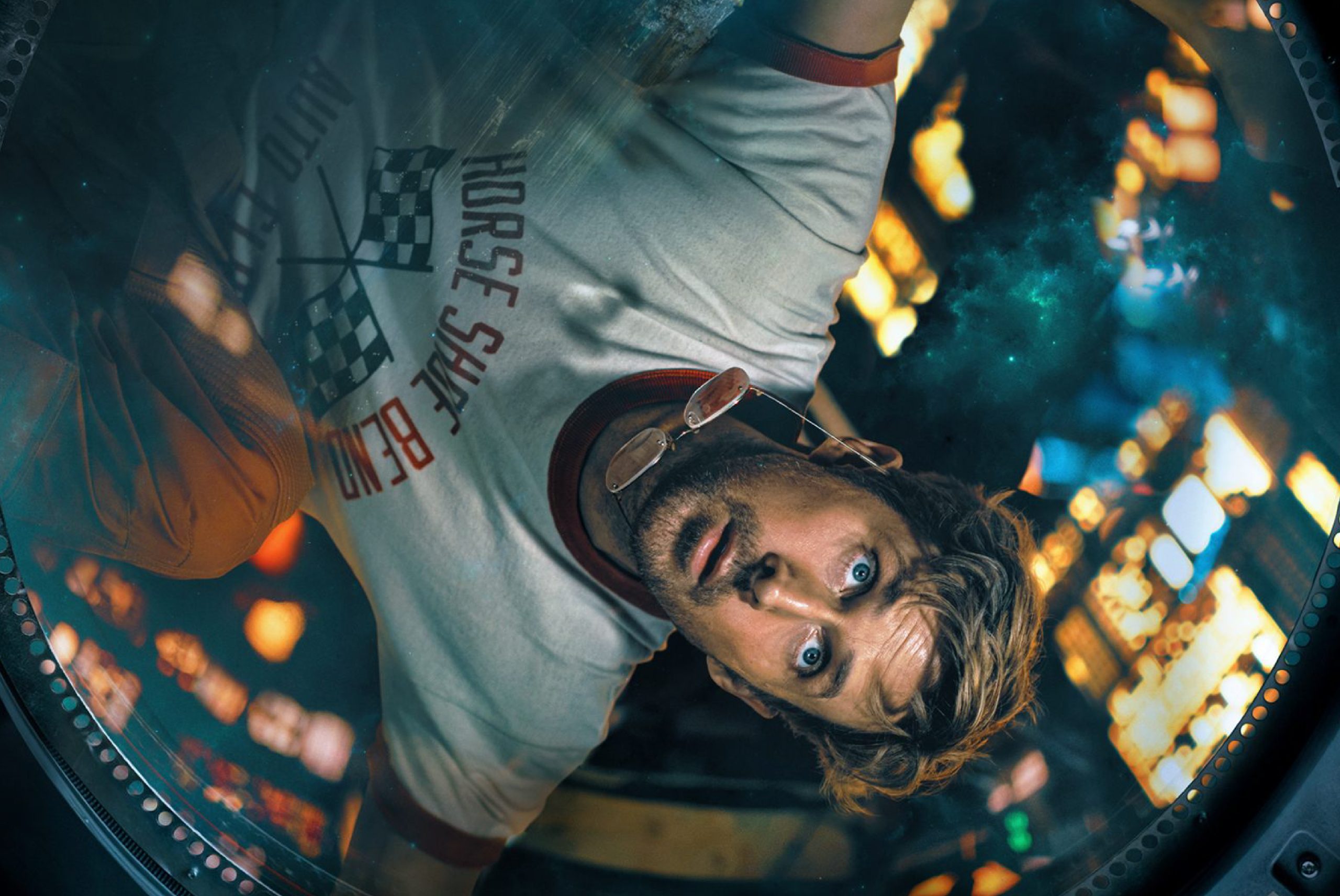
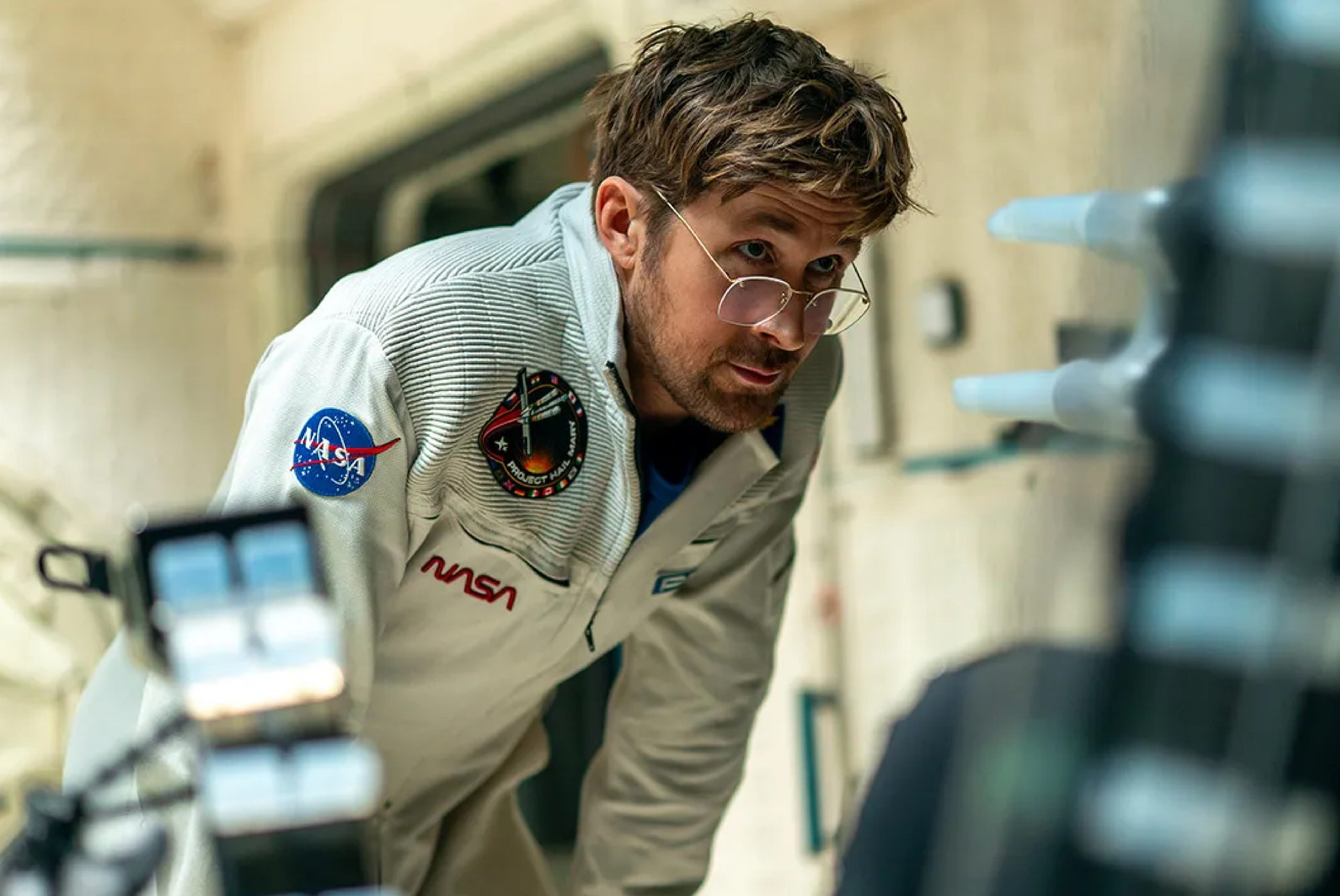
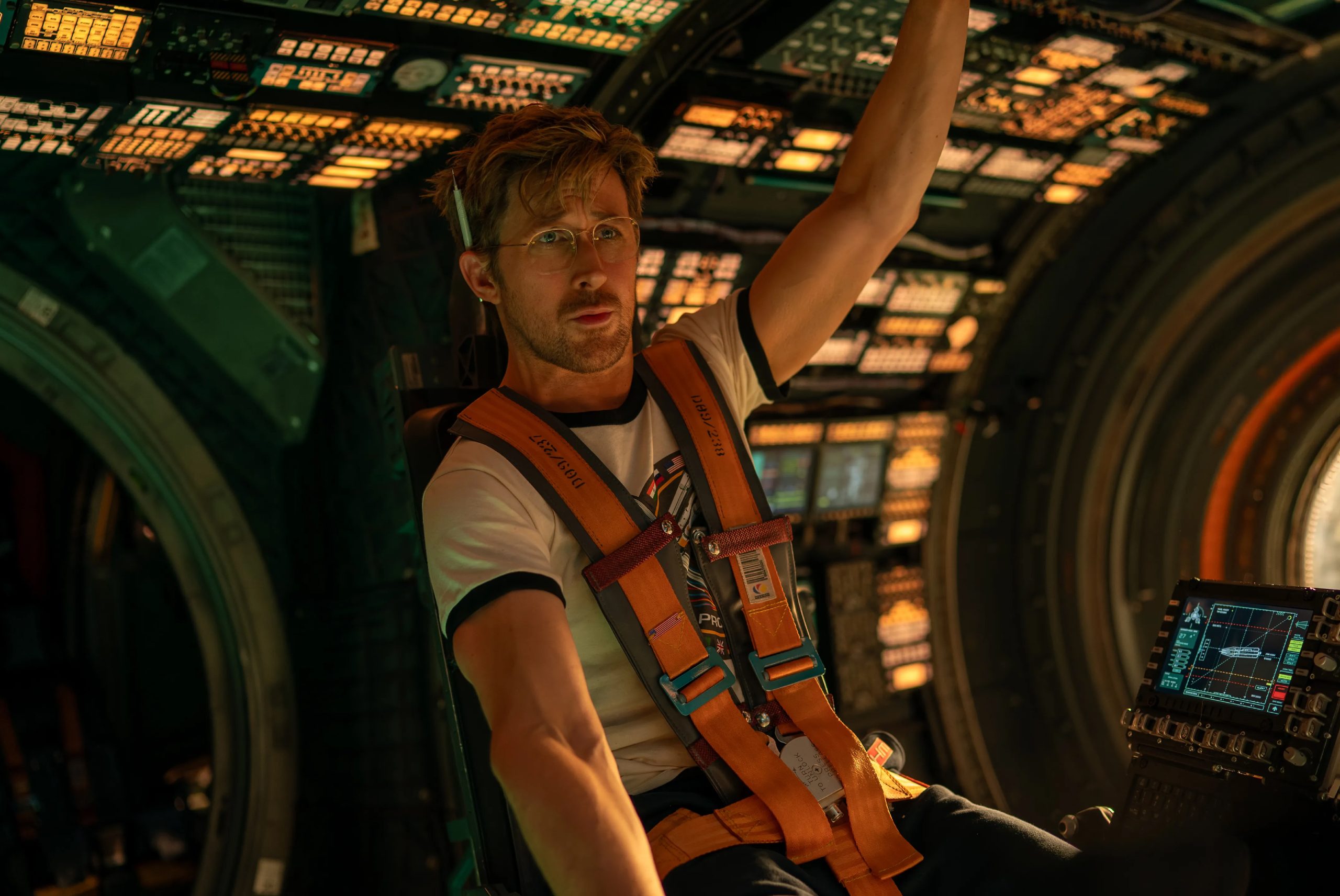
The answer to both is no, something that Project Hail Mary doesn’t really want you to consider — there’s fun to be had, after all. Its eagerness to avoid staking any kind of claim should ensure its enthusiastic embrace the world over — it is such a blank slate that it could be claimed by most political factions. Ideas that are worth fleshing out – international solidarity, the looming threat of climate change – are feinted at but frustratingly under-interrogated. It is both old-fashioned and yet bears some of the less gratifying elements of the modern blockbuster, namely the vein of sexlessness that has spread through the movie landscape like a virus. It is a remarkably chaste film, one in which star Ryan Gosling — he of true movie star charisma and selling power — plays a disgraced scientist with no pesky family or relatives to speak of and seemingly no sex drive or libido whatsoever. Lord and Miller’s previous films, the very good 21 Jump Street and 22 Jump Street and The Lego Movie (as well as producing the Spider-verse films) are films of dazzling design and Whedonesque humour. They are journeymen, whose style lends itself to the essential juvenilia of the American blockbuster form in the modern day, aiming to heighten it just a touch, and are thus a natural fit for the adaptation of the novel by Andy Weir. Like Ridley Scott’s The Martian before it, Hail Mary is laser-focused on true-to-life science and space-related procedures, allowing humanity to filter in care of the presence of a naturally affable movie star. In this sense, it is most successful as a reminder of Gosling’s ability, an ability that still feels like it has more to reveal to us. Gosling’s Ryland Grace, who awakens from an induced coma on a space shuttle millions of miles from home with no memory of the circumstances that brought him there, is a complex figure in some ways, but largely calls upon Gosling to play himself. For much of the runtime of Hail Mary, there is little shape to Grace beyond “Gosling in a space-suit”, which suits the film just fine.
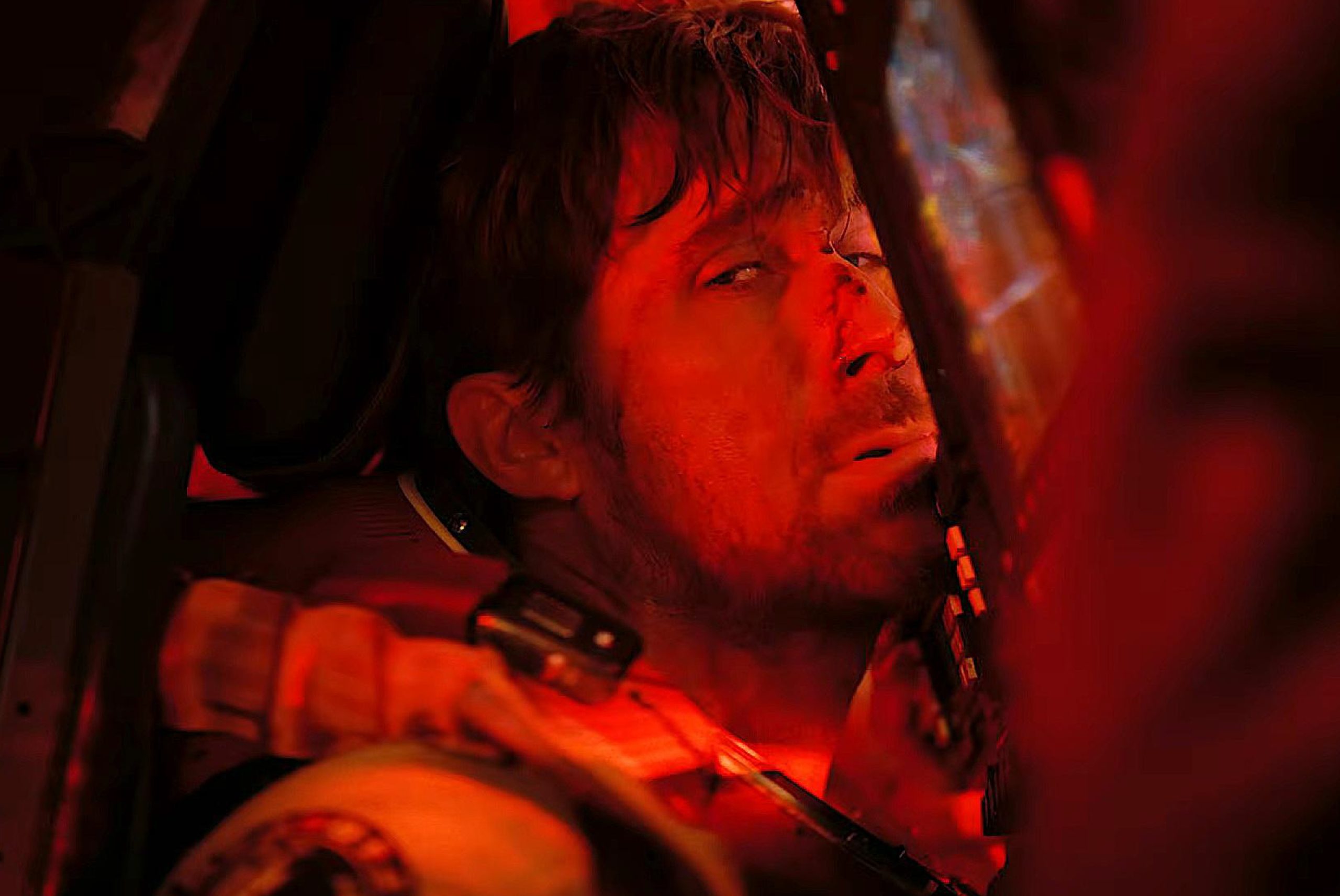
A mission to the depths of space fuelled by Ryan Gosling’s volcanic star power, Project Hail Mary is robust blockbuster entertainment with a syrupy-sweet core. It is the committed work of Gosling, largely acting alongside a practically-achieved animatronic scene partner, that ensures the film’s success despite some puzzling story choices.
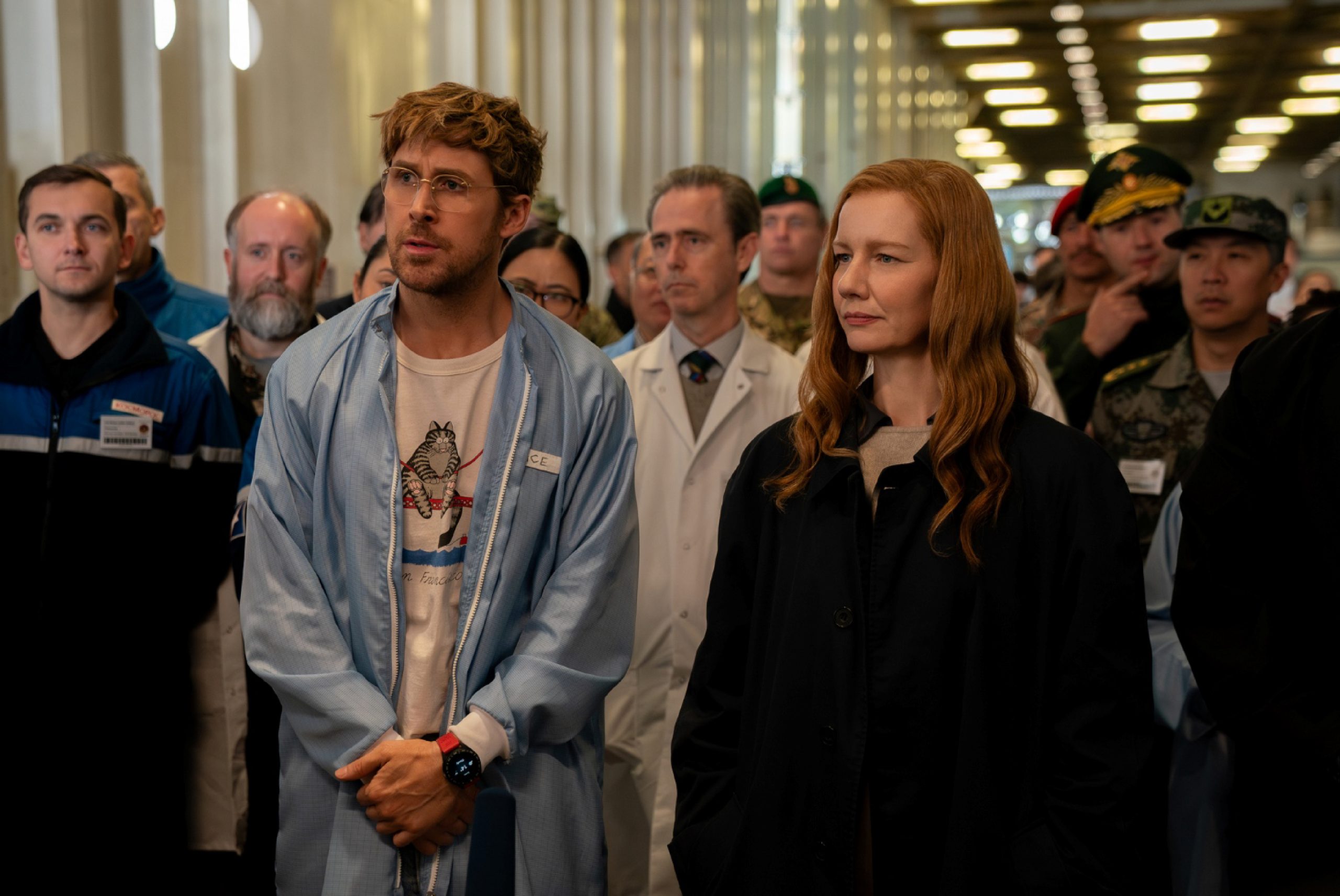
Gosling is on-screen for the near-entirety of Hail Mary, which oscillates back and forth between pre-mission, earth-bound Grace and the Sun-bound, spacecraft-inhabiting Grace of many years later. The cast beyond that is surprisingly m small — Gosling’s on-earth interactions are largely confined to his handler Eva (Sandra Hüller, fun) and security guard Steve (Lionel Boyce). There are blink-and-you’ll-miss-it bit parts for superb character actors Ken Leung and Milana Vayntrub, but neither are given much of a chance to breathe. The primary relationship of Project Hail Mary (with a spoiler warning attached — though it’s revealed in the trailers) is that of Grace and Rocky, the alien sent from his own planet Erid with the same mission. Both astronauts’ space-crafts have suffered the loss of the majority of their crew, leaving sole survivors — far from home, they must work together to understand and solve their mutual problem. Rocky, voiced warmly by James Ortiz (as a translation service on Grace’s laptop), is an exceptionally charming piece of animatronic design and puppeteering, a spider-like collection of rocks without a discernable face. The appearance of Rocky allows Hail Mary to shift on its axis into something like a buddy comedy, an intensely earnest, sentimental mode for a space adventure such as this, but one perhaps to be expected considering the directors guiding the ship. It is all exceedingly enjoyable, though those niggling doubts never totally disappear. The structure the film is saddled with, leaping backward and forward in time, is a structural gambit that adds very little to the film’s rhythm, particularly in later stretches. It’s a bug that speaks to the larger flaw in the Project – in trying to replicate the heartfelt overtures of Spielberg, Zemeckis et al, Lord and Miller are forced into ever-tighter corners, lest they rock the boat by changing course in some surprising fashion.
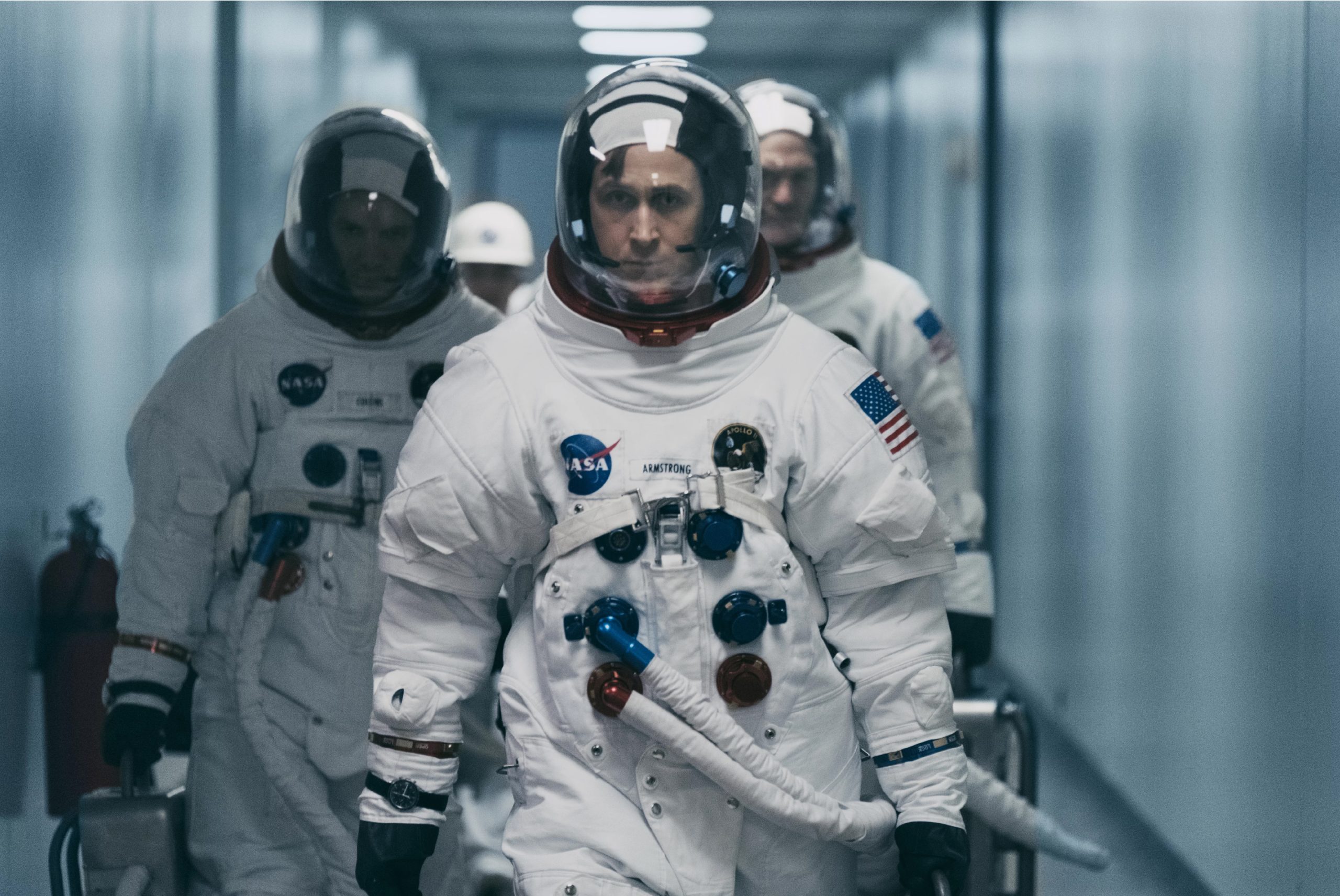
Space movies, by and large, seem to have landed in the hands of the scientists, mathematicians and logicians, if not in practice, then in style. It is the age of Christopher Nolan’s Interstellar, Denis Villeneuve’s Dune and Arrival, even Rogue One and First Man: films of operatic, furrowed-brow seriousness, whose overtly-mechanical nature is worn as a badge of pride. Films that treat the final frontier with a looser, more expressionistic touch are frequently given the short shrift (think last year’s box-office bomb Mickey 17). In this regard, one might be tempted to see Project Hail Mary as something of a tonic — it is a multicoloured blast of optimism, a family film unlikely to challenge any viewer but pumped full of odes to bravery and friendship. A compelling, late-breaking wrinkle threatens to reshape the story we’ve just watched yet again, but Lord and Miller have their sights set on a smooth landing. In a different light, though, Project Hail Mary shares many of the same issues as those other filmmakers’ vision of the unknown beyond our planet. In their unquestioning fealty to the importance of scientific accuracy and unwavering story logic, they sacrifice something of their artistic verve. Like Interstellar and Dune, Project Hail Mary is a technical marvel, not just in its animatronic central figure, but in its largely practical visual effects, rendering a universe awash in eye-popping hues. But one watches Hail Mary and longs for a daring that goes beyond the scientific, into the space of the spiritual. Perhaps, as Jodie Foster once said in Contact, they should have sent a poet.
Project Hail Mary is in cinemas now.