Director(s): Ian Tuason
Country: United States
Author: Ian Tuason
Actor(s): Nina Kiri, Michele Duquet, Adan DiMarco
Written by Tom Augustine
In her brilliant takedown of The Drama (which I also reviewed last week), critic Angelica Jade Bastien posed a question that circled my brain as I watched undertone — ‘is austerity becoming A24’s defining brand?’ This is not so much a question of film-to-film style — the company’s alliance with the Safdies and their collaborators have recently resulted in films like Marty Supreme, If I Had Legs I’d Kick You and The Smashing Machine, after all, and you could hardly call those austere — but rather what we know A24 to produce, what has come to define that inimitable ‘brand’. A24 is surely the most marketing-conscious of all movie studios, as committed to presenting themselves as a kind of cinephilic lifestyle label as they are in producing the movies themselves. I’m not entirely sold on assessments of A24 as either a boon for cinema’s ability to adapt and survive in the modern day; nor on accusations of their responsibility for a general shift toward aesthetics over substance. There’s value to both arguments, I think — whether A24 is responsible for an era of cinema that values immediately gratifying, ‘every frame a painting’ imagery over depth, or if they’re simply responding to an audience demand is something of a moot point at this late a stage in the game. The point is, the films we think of as A24 movies are usually ones modelled after the success stories of their fledgling heyday — films by Robert Eggers, Ari Aster, Yorgos Lanthimos, David Lowery, and so on. All drastically different filmmakers from each other, and yet there is a formal control, and a certain minimalism to their approaches that seems to have trickled down into A24’s later stable of flagship films. The Drama feels incredibly beholden to the films of both Aster and Lanthimos. undertone, the debut feature from Canadian filmmaker Ian Tuason, exhibits its own kind of austerity, one more in line with A24 horrors like Saint Maud, Lamb and yes, Aster’s Midsommar and Hereditary.
Thus, undertone, a religious horror that utilises sound as its primary scare tactic, has a visual sensibility of formal stillness, disciplined camera movement and exacting minimalism. In earlier eras, low-budget horror usually suggested something loose, out of control, and therefore dangerous. The aura that the phrase ‘low budget horror’ conjured was one of foreboding mystery – there was no managerial oversight, no restrictions afforded by sponsorship from giant conglomerates, as though these films had burst into the mainstream through sheer, violent force of will. These are some of the most beloved horrors ever produced: The Texas Chain Saw Massacre, The Blair Witch Project, The Evil Dead — in New Zealand, Bad Taste and Braindead. The low-budget horror successes of the modern day have a different tenor — these are films that aim to hide their own scrappiness, to justify an audience dropping their hard earned cash on a movie ticket by really looking the part. Even strong modern low-budget horror successes like Get Out and The Babadook have something of this within them. undertone is clearly attempting to follow the lead of the last truly viral microbudget success story, Paranormal Activity, a masterclass in using extremely limited tools to suggest horrors beyond comprehension without ever truly arriving at the ‘money shot’. Landing in an era of burgeoning digital technology and Iraq War-inspired maximalist torture porn, Paranormal Activity hit on that hallowed notion of unknowability — you truly didn’t know what you were in for as you stepped into the theatre. The only other time I can remember a film achieving that level of notoriety in recent years was, well, Hereditary, the original austere A24 horror. It makes sense that the company would attempt to chase that success in the years to come, doesn’t it?
Filipino-Canadian director Ian Tuason’s buzzed-about low-budget horror debut hopes to claim the spot once held by the Paranormal Activity series, providing atmospheric, paranoiac scares from simple cinematic mechanisms. Though sporadically effective, Tuason’s film is ultimately more successful as a showcase of quality sound-engineering than as a fully-developed work of cinema.
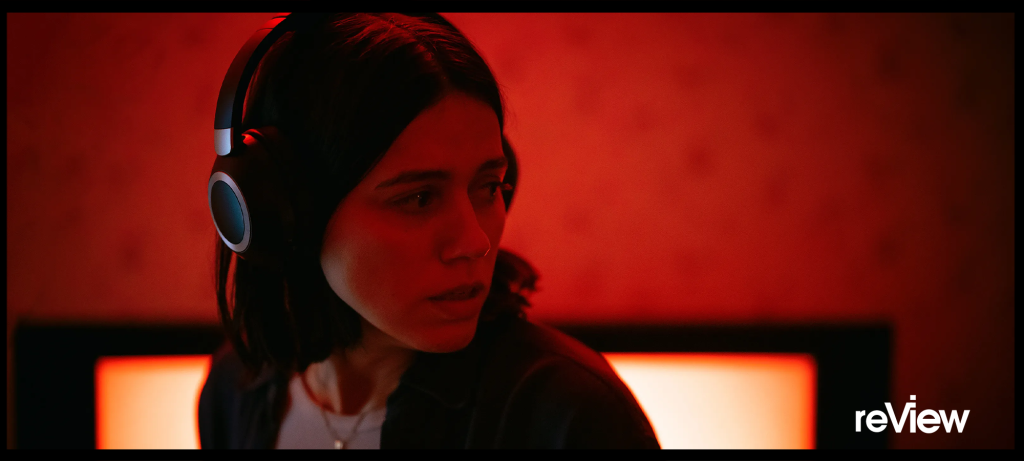
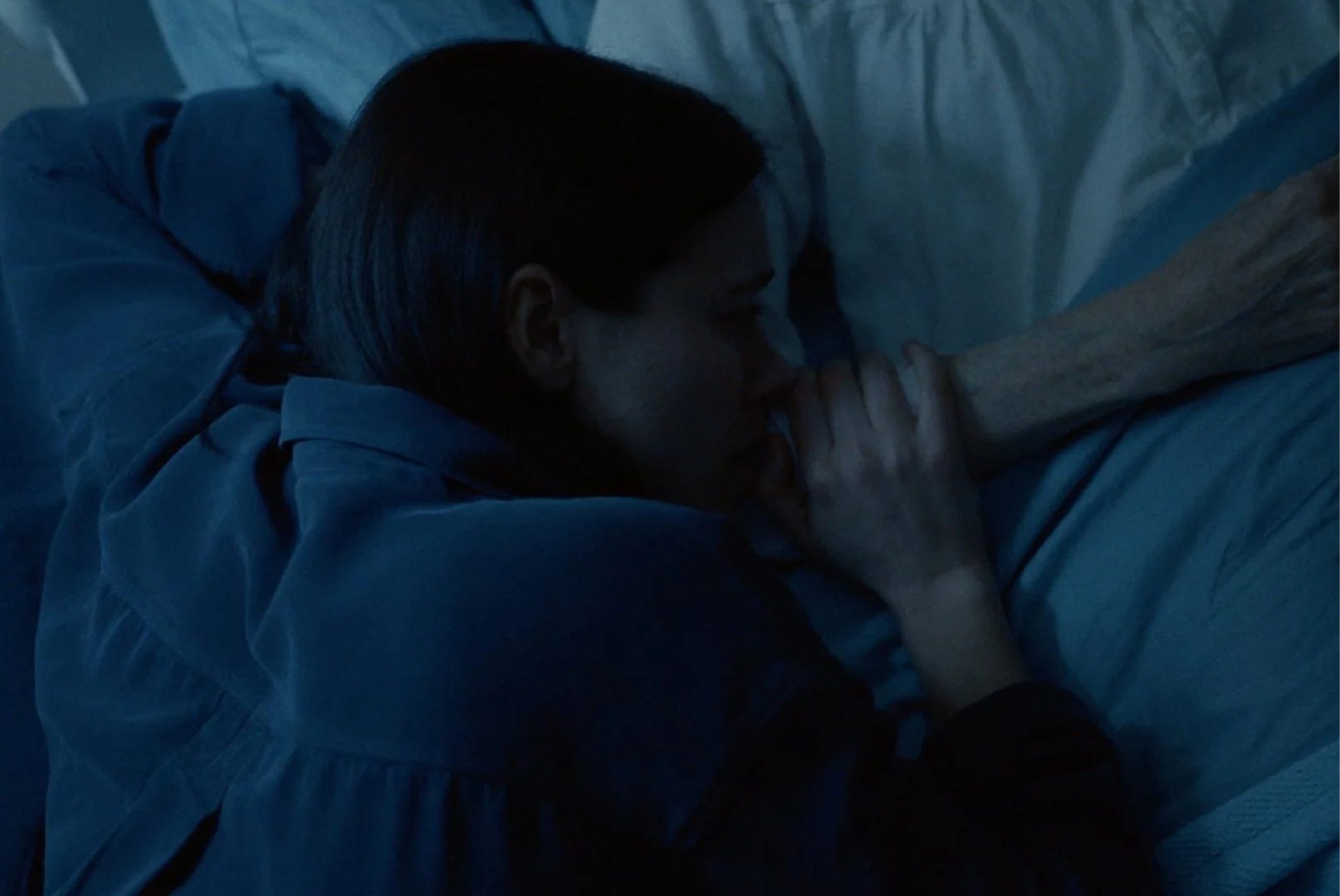
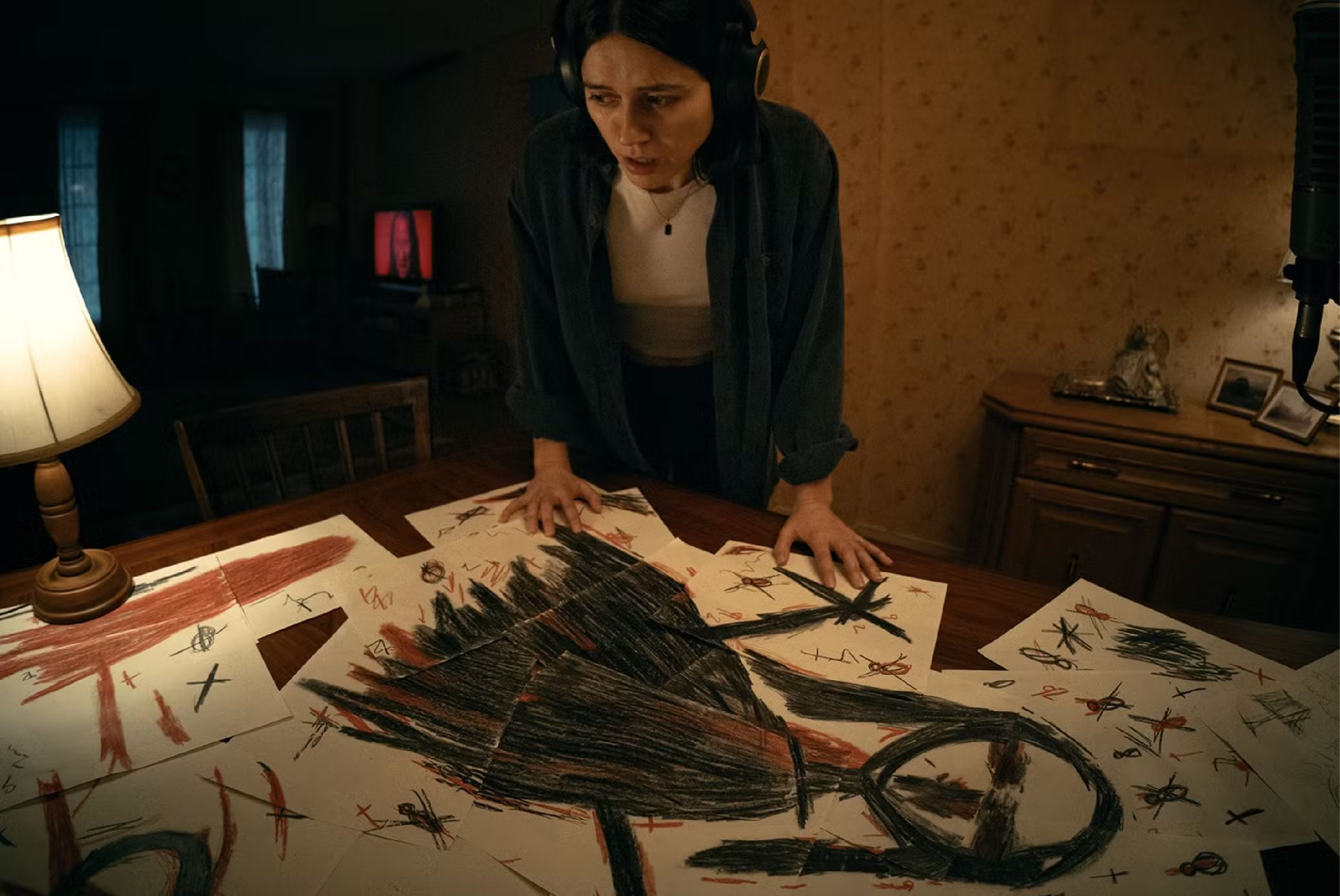
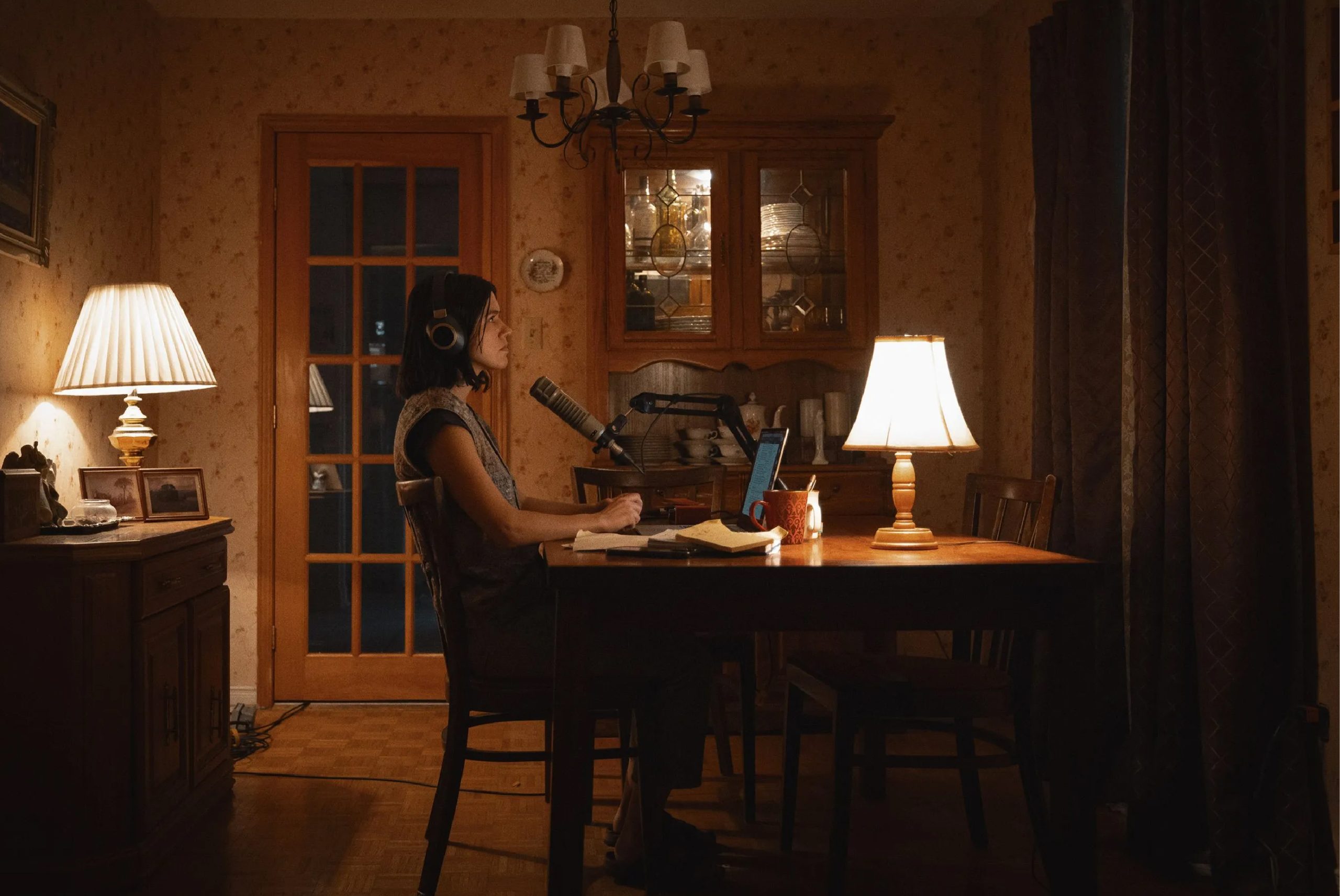
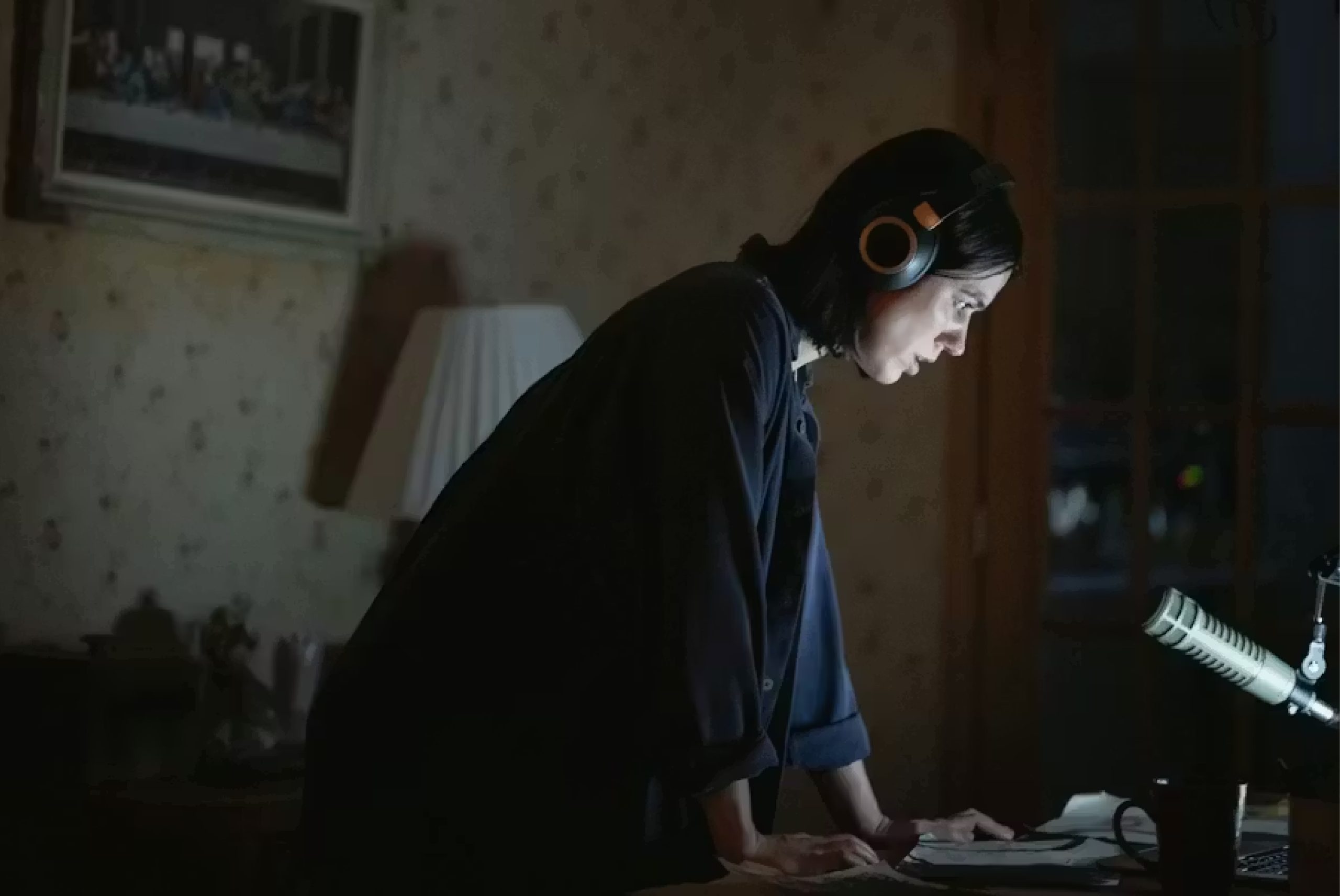
undertone is set entirely within the walls of a two-storey house where Evy (Nina Kiri) is caring for her dying mother (Michèle Duquet), who is in the final stages of cancer. In her downtime, she co-hosts a podcast with Justin (Adam DiMarco) called ‘The Undertone’, in which they investigate supposed paranormal recordings, with Evy functioning as the skeptical Scully to Justin’s believing Mulder. The latest episode of ‘The Undertone’ deals with ten recordings sent anonymously to Justin which seem to detail a demonic possession, which the two will explore as they listen to each recording separately, on-air. In the meantime, the otherwise mostly shut-in Evy begins to succumb to a sense of paranoia about her surroundings, as she languishes in her especially religious mother’s Catholic iconography-strewn house. Where Paranormal Activity cunningly utilised the grainy, shoddy contours of 2000s-era digital photography, undertone uses sound, deploying an exceptionally detailed sound mix that encourages the audience to lean in, straining to hear what is truly going on within the recordings, and within Evy’s house. It should be no surprise, then, that undertone’s best moments are propelled by its sound mix, which produces genuine moments of spine-tingling fear and a potent fug of paranoia that rarely dissipates. My recommendation would be to experience it in a Dolby-capable cinema, where the full effect of its devilish design can be experienced.
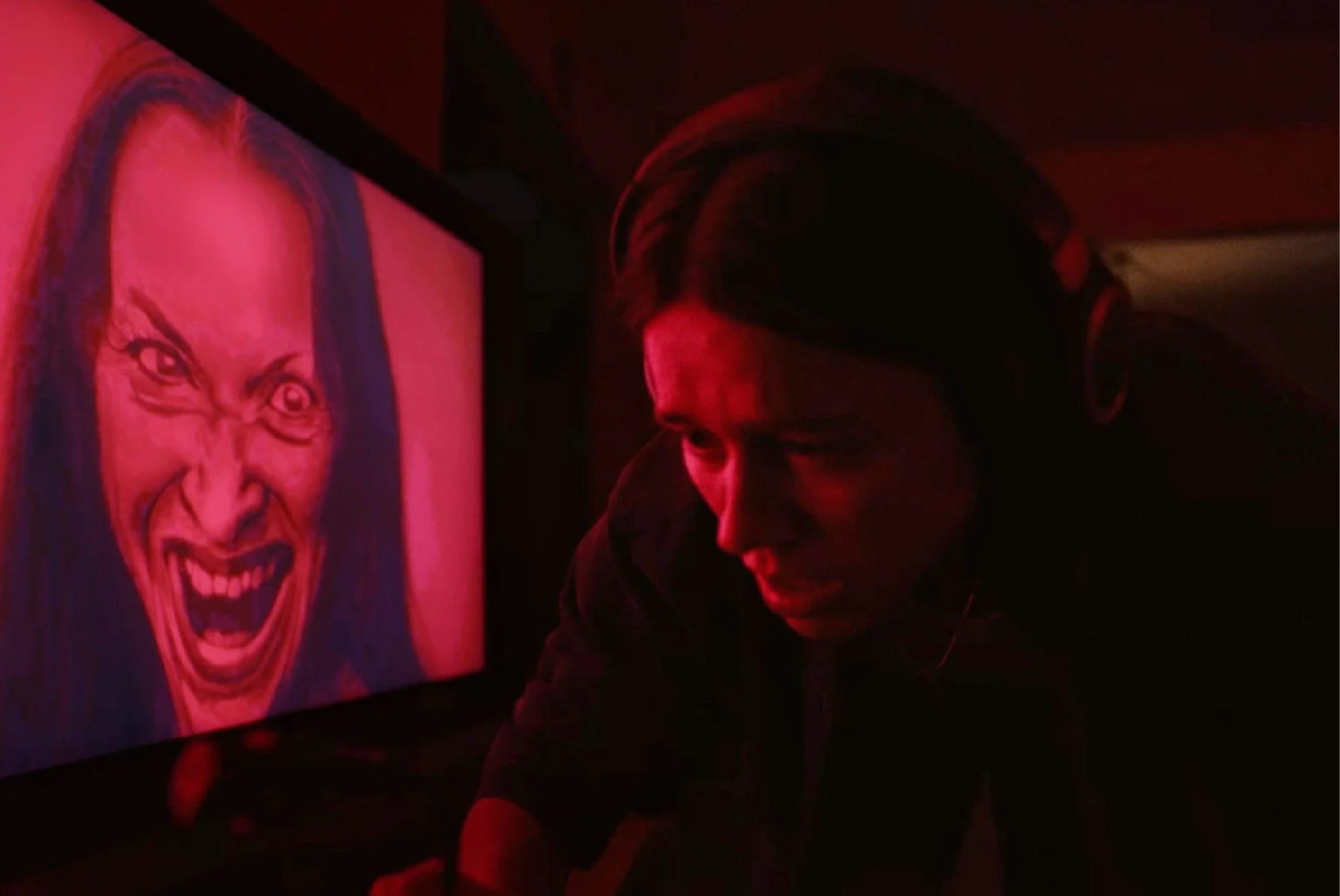
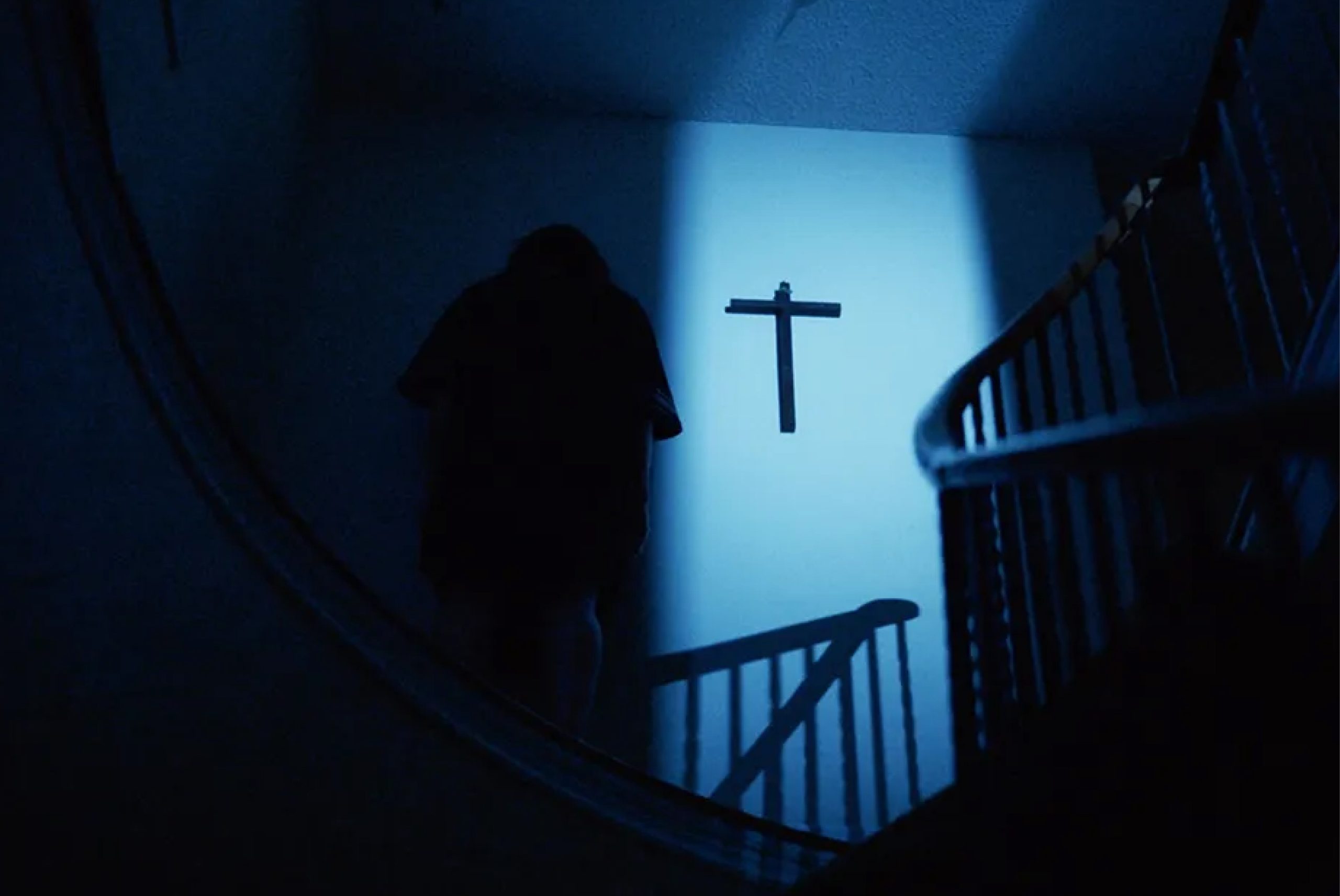
Unfortunately, the film that houses undertone’s sound is far less assured, a frequently-clumsy mishmash of tired religious horror tropes and a generally uninspiring visual palette. A microbudget does not necessarily preordain a limitation on evocative imagery, as Chain Saw and others can attest — but Tuason’s overreliance on sound means that his visuals have a drabness that aims for claustrophobia, but too often manifests as simply dull. Kiri, as the only actor to speak on-screen, is the face of the film, and does her best with the material — but Tuason sets a course for an ending one can see from miles away and never really deviates. It is commendable for a modern horror film to be as committed to generating a foreboding atmosphere as serving as a jumpscare machine, something that undertone rarely relies on, to its benefit, but the film feels so beholden to worn-out parts — creepypasta digital detritus, ominous religious paintings, figures standing in mirror reflections, obscure demon lore dusted off for a modern take — that the freshest elements of undertone feel fatally diluted. The film’s themes of motherhood, child-rearing, miscarriage and abortion, all in concert with religious anxiety, seem to feint toward a general conservatism but are too muddy and honestly underdeveloped to warrant any meaningful investigation. It’s an austere film, one that could have used a little more off-the-leash danger, even madness — the kind that low-budget horrors once thrived on.
Undertone (dir. Ian Tuason) is in cinemas now.