

RATING
Director: Paloma Schneideman
Country: New Zealand
Writers: Paloma Schneideman
Actors: Ani Palmer, Noah Taylor, Rain Spencer
Written by Tom Augustine
Aotearoa director Paloma Schneideman’s debut feature is a wry, tender exploration of a queer coming-of-age set during the halcyon days of dial-up internet, a clear-eyed portrait refreshingly light on sentiment. It marks the arrival of a major talent, certain to be a key fixture in an emerging generation of New Zealand filmmakers.
There are many portraits of New Zealand youth in our short film output — understandable, considering the general age range of those making them. Correspondingly, it can be difficult to stand out from the pack and indicate that you have some new or daring perspective to offer. Over the last few years, there have been some youth-focused shorts that have emerged worthy of note — Judah Finnegan’s Workshop, Josephine Stewart-Te Whiu’s When We Were Kids, Robyn Grace’s Oranges and Lemons, among others — joining the ranks of a great many classic Kiwi shorts that tackle the same topic, from Two Cars One Night to Watermark to O Tamaiti. Among the more recent is Paloma Schneideman’s Gate Crash, which follows a group of teens who break into a mansion in Wellington for their end of school piss-up. I was fortunate enough to be one of the jury members at Whānau Mārama New Zealand International Film Festival the year Gate Crash competed and it is one of the films whose qualities stuck with me long after the Festival ended, particularly a stunning wide shot that shows the teens fleeing the house at dawn, which reminded me somewhat of a similar frame in Fellini’s La Dolce Vita. It was a sure indicator that Schneideman had the means to tell stories of youth in a way that felt fresh, a promise that has been fulfilled with her debut Big Girls Don’t Cry, a film that has enjoyed enormous success abroad, before opening this year’s Festival at the Civic Theatre in Auckland.
For many years now, it has felt like New Zealand cinema has been lacking in unifying perspective, or at the very least momentum. That is not to say that there haven’t been excellent films over the last few years — the 2020s have already gifted us two superb Owen Marshall adaptations from James Ashcroft, Stewart-Te Whiu’s We Were Dangerous, documentaries Toi Tū: Visual Sovereignty and The Haka Party Incident, among others — but the sheer output of promising work that has arrived this year feels significant in that several have broken out beyond our shores, and others feel youthful, which is to say they feel new. Aside from Taratoa Stappard’s superb gothic horror debut Mārama, many of these are premiering or arriving on New Zealand shores for the first time at this year’s festival — Conor Bowden’s wonderful, gratifying silent film The Ungrateful Tenant; Pietra Brettkelly’s giddily experimental documentary Crocodile, Vea Mafile’o and Gavin Fitzgerald’s muscular Lomu, and several other promising titles. But Big Girls feels like the centrepiece, not least because of its Opening Night positioning — known in music circles as PolyHill, Schneideman has been a steady presence in Auckland arts, music and film culture, a multi-hyphenate whose work across mediums aligns in its focus on queerness and female sexuality. Schneideman’s work feels exciting, and that goes for Big Girls too, a film of artistic rigour that maintains a warm, empathetic pulse.
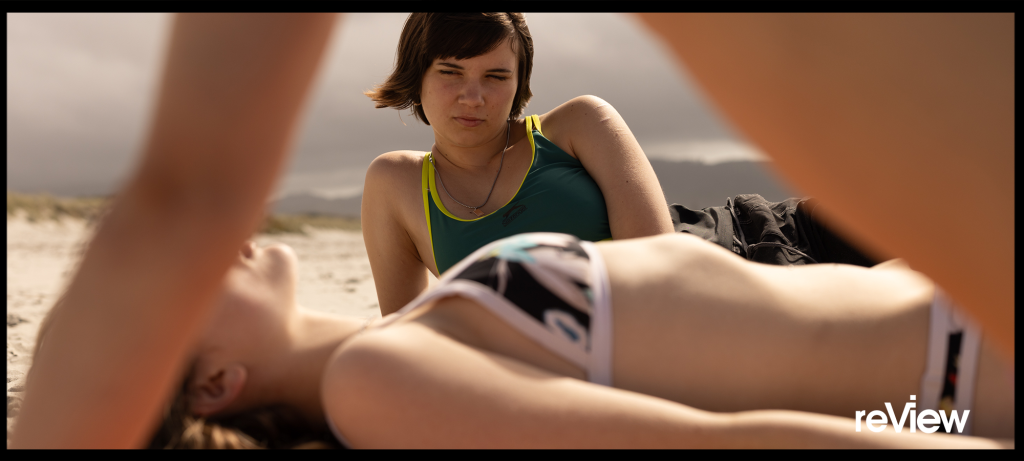
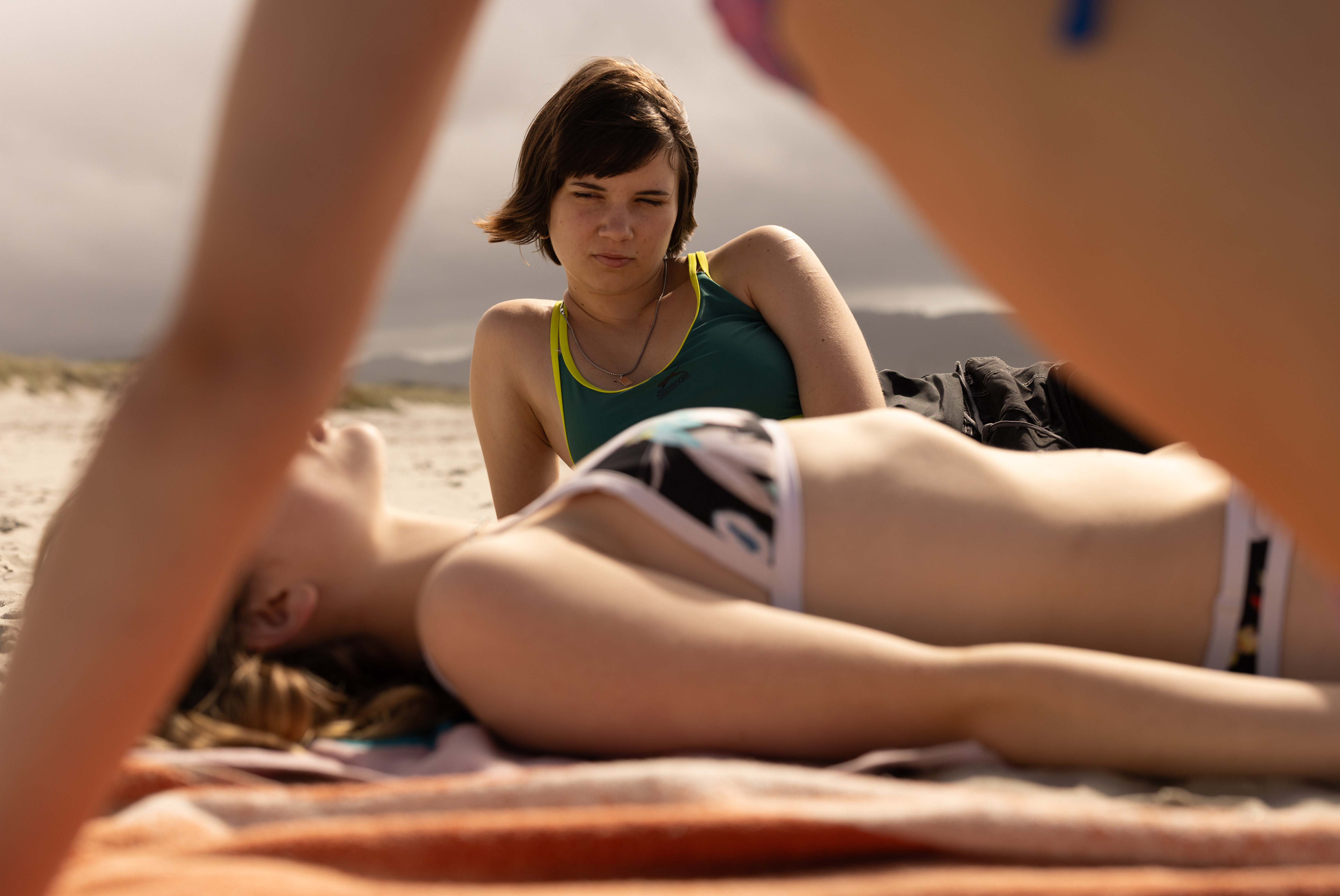
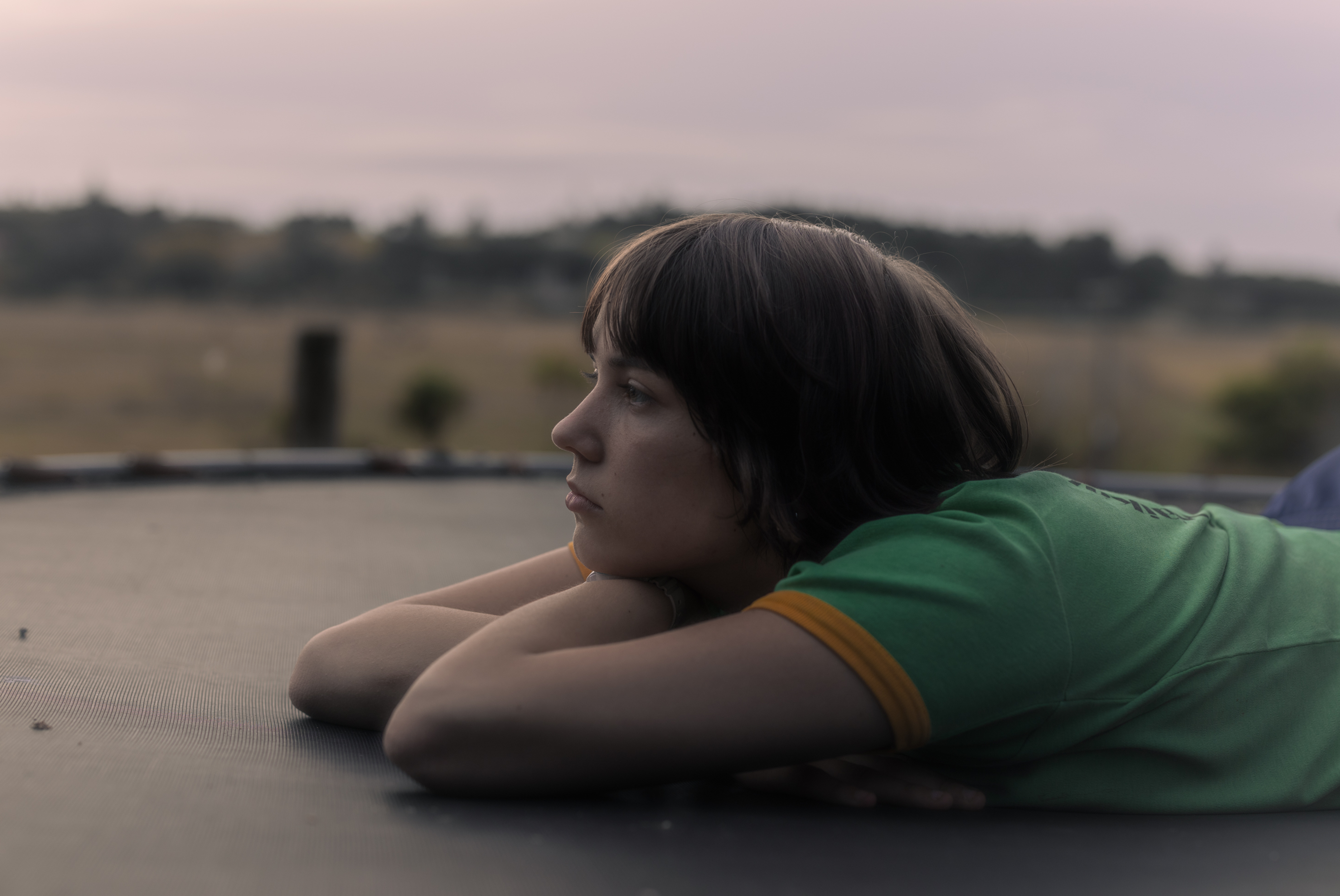
For many of my — and Schneideman’s — generation, Tumblr was a foundational ground, a place where culture, political sensibility and style emerged for scores of young people fumbling their way toward selfhood. I realised recently that the experience of Tumblr was, for me, largely replaced by the comment boards of the AV Club, where I first encountered criticism and the seedlings of ‘Film Twitter’. It was there where I encountered, in response to Jonathan Levine’s The Wackness, arguably the first true ‘90s period piece, the shock of assembled Gen-Xers that they’d reach the point that boomers experienced when watching Dazed and Confused, or perhaps American Graffiti: they were old enough now that the time in which they came of age was an object of nostalgia. How unprepared I was for that eventuality to reach me, which it does in Big Girls Don’t Cry, a film that traces the arrival of the internet on the unassuming and ill-prepared shores of Aotearoa, and how MSN and Photobooth had as significant an influence on our upbringing as school or television. Sid (a heartrending Ani Palmer) is one such kid — at fourteen, she is encountering desire and sexuality for the first time, the effect she has on others and the unexpected ways others affect her. The opening scene of the film, in which Sid encounters a masturbating man on video chat site Omegle, is one that many (myself included) will identify with — suddenly, the sexual world of adults is made manifest on the screens in our bedrooms.
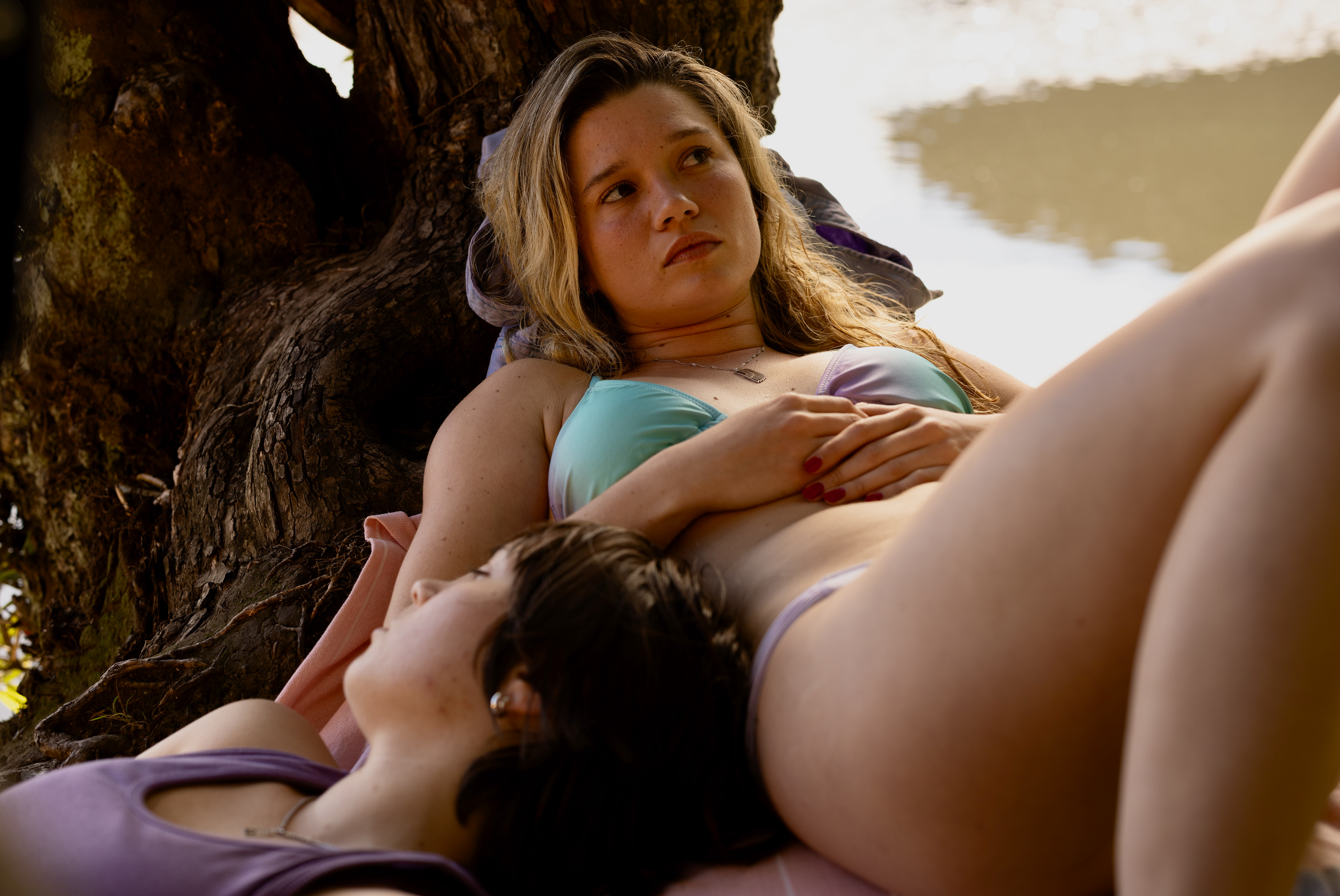
Like many other stories of youth and sexuality in Aotearoa, Sid’s growing (mis)understanding of herself — and her discovery of her queerness — is vividly tied to the land surrounding her. Like The Scarecrow’s seedy and sinister rural exploitations and Sydney Bridge Upside Down’s nightmarish beachside psychosexuality, Big Girls Don’t Cry echoes Sid’s feelings of vulnerability and displacement in the holiday town of Ōmaha, which is rendered (unlike the sundrenched summer holidays for which such towns are known,) in humid, wet, miserable tones. As the ravages of climate change touch down in New Zealand ever more insistently, these periods that I think of as ‘shithouse summers’ are more and more common — but they were also present often enough in those halcyon days of the noughties that Schneideman’s rendering here sparks the thrill of recognition. Sid lives in a bohemian (read: chaotic) home with hothead artist father Leo (Noah Taylor) and older sister Adele (Tara Canton), while slowly drifting from bestie Tia (Ngātaitangirua Hita), whose levelheadedness represents a kind of repression that Sid is eager to shirk as makes forays into the far more enticing world of popular girls Lana (Beatrix Wolfe) and Stevie (Sophia Kirkwood-Smith). At the same time, the alluring, mysterious Freya (Rain Spencer), a friend of Adele’s, is staying in the house for the summer, offering Sid a kind of enlightened outsider’s perspective on the proceedings that sparks admiration and attraction concurrently. Part of what is gratifying about Big Girls Don’t Cry is how vividly all these and other characters are rendered — though we are almost entirely rooted in the perspective of Sid, none of the other players in the action feel throwaway, right down to smaller characters like Tia’s boofhead older brother Diggy (Poroaki Merritt McDonald). It ensures that Schneideman fills the frame with a sense of place and atmosphere so frequently absent from modern coming of age stories, aligning it with other major coming-of-age pieces like Charlotte Wells’ Aftersun, Antoneta Alamat Kusijanovic’s Murina and Christine Jeffs’ Rain.
It is in the interplay of these characters, too, that Schneideman makes her directorial sensibility known, walking a consistently impressive line between hard-won kindness and a bracing lack of sentimentality. In the process of finding herself, particularly as a queer person in conservative Aotearoa, Sid crosses lines, has others cross her lines and dashes close relationships without realising it. Absent a mother figure and, for the most part, a father figure, Sid is an emotionally volatile spirit trapped inside a shy, mousy teen vessel. The cost is written on Palmer’s face, whose performance anchors the story with an ease beyond her years. Spencer, too, is remarkably assured as the object of desire who reveals her own fallibility (in Sid’s eyes) at a particularly inopportune moment, one of many heartrendingly recognisable moments of sudden maturation that play out almost entirely internally, but which Schneideman ensures are deeply felt. Schneideman’s training with Jane Campion, as a student of her A Wave in the Ocean film school, surely came in handy here — there are traces of Campion’s razor sharp emotional brutality in the fracturing of some of these key relationships, and the hint that not all of them can be mended. The voice that emerges most prominently is Schneideman’s own, however: like her main character, this debut represents a kind of emergent manifestation, a ‘first film’ — small scale, personal, vividly rendered, one whose imperfections only serve to endear you further toward it — that promises a consistently fascinating career ahead, one worthy of national support.
Big Girls Don’t Cry Premieres Wednesday 29 July at the NZ International Film Festival.