Whānau Mārama: New Zealand International Film Festival 2026

Written by Tom Augustine
Over the next week, over 130 films will play as part of Whānau Mārama New Zealand International Film Festival 2026. Read on for bite-sized reflections on the films that will surely come to define this year in cinema.
All of a Sudden (dir. Ryusuke Hamaguchi)
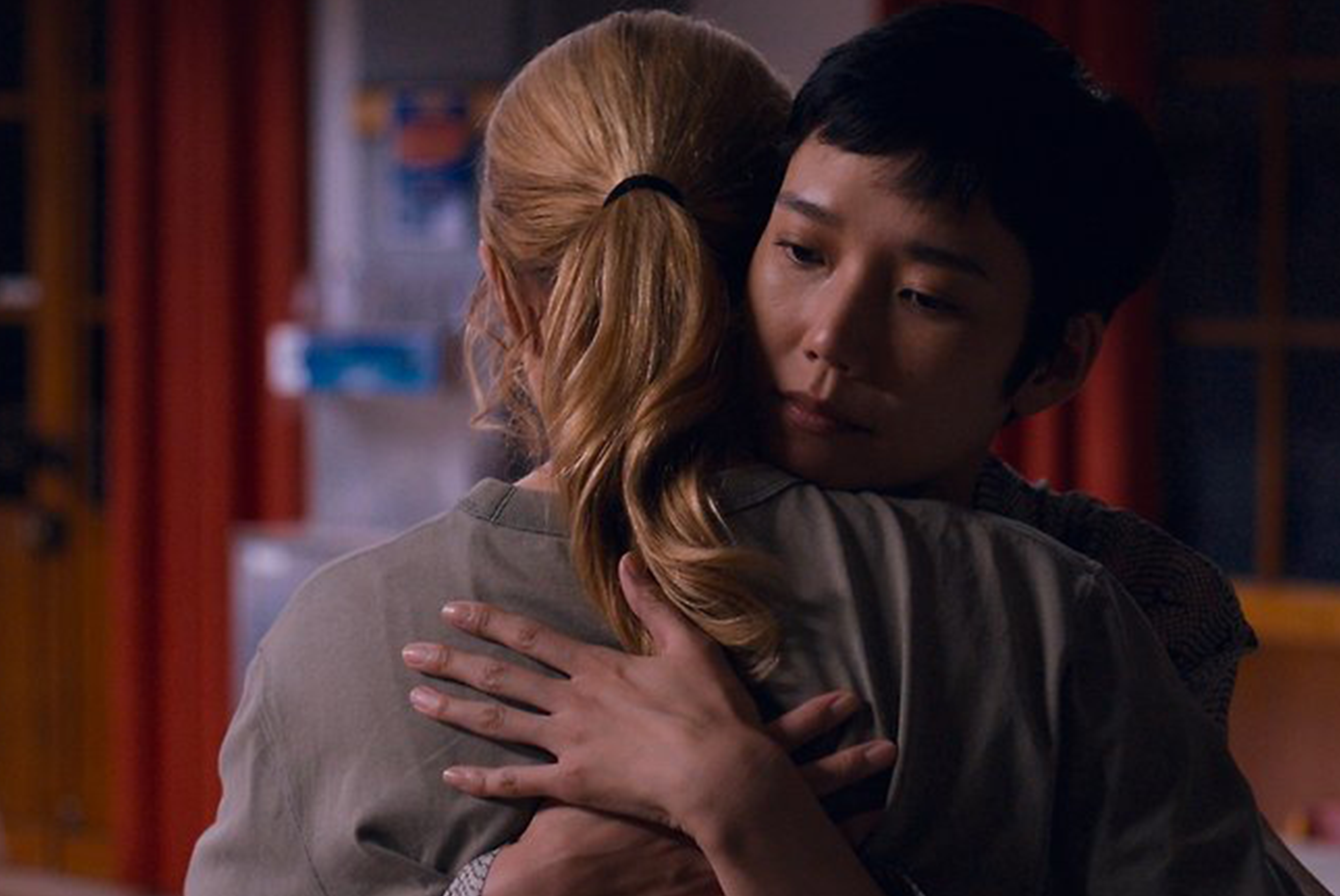
To begin, one of the best films of the year. Hamaguchi, director of Drive My Car and Evil Does Not Exist, has established a robust and identifiable style, and yet none of his films can be thought to be totally parallel to any other. So it goes with All of a Sudden, a magnificent and profound exercise in locating humanity in bleak environments — a dementia ward and the wounded heart of a dying artist. Following the connection between the French director of a nursing home embracing an experimental, empathy-based treatment (Virginie Elfira) and a celebrated theatre director (Tao Okamoto), Hamaguchi’s three-hour drama melts from one movement to another with the graceful rhythm of a master filmmaker, bolstered by truly remarkable turns from the two leads. There will be more to say about this majestic film, undoubtedly, very soon.
Rating: Five stars
The Ungrateful Tenant (dir. Conor Bowden)
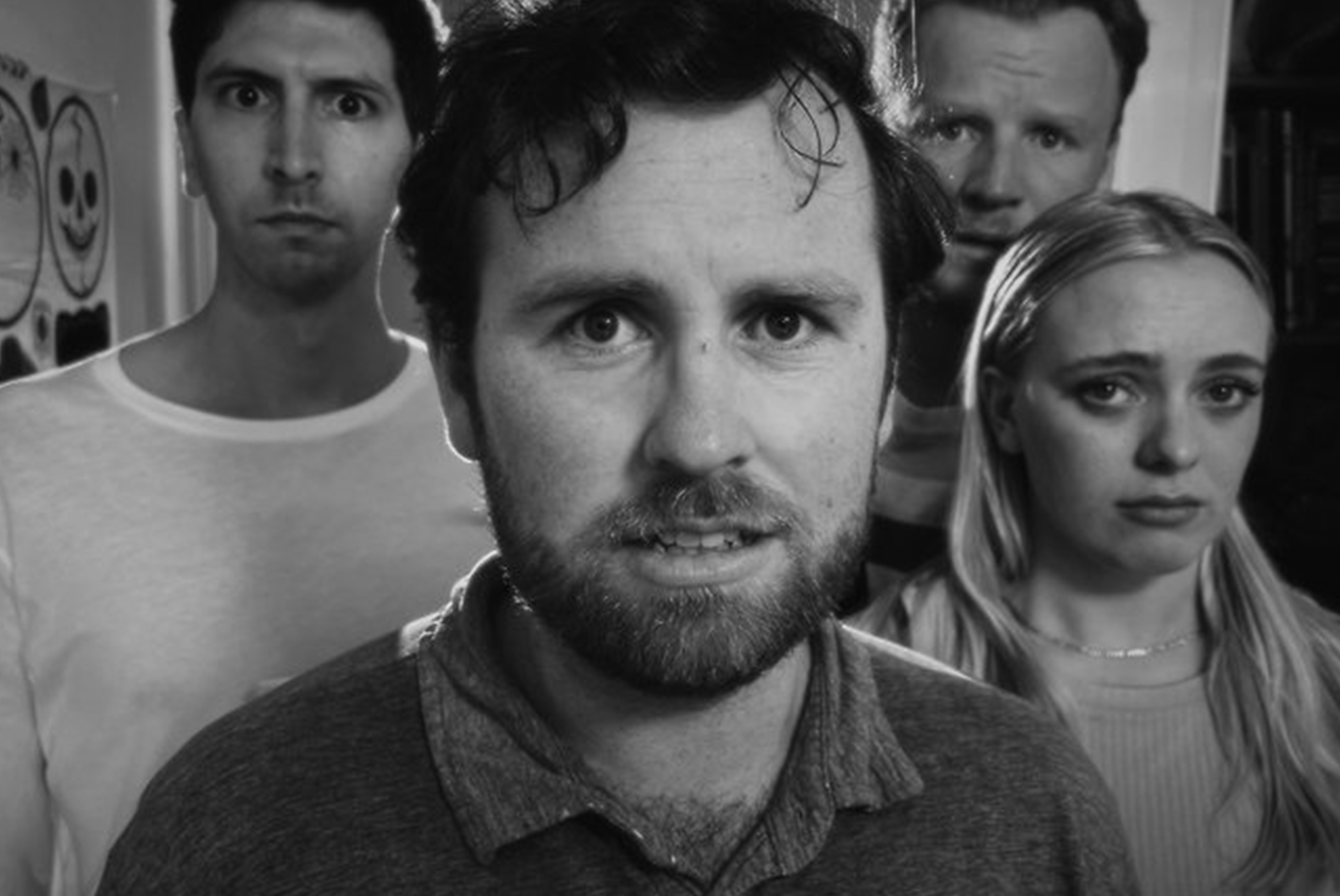
It is shaping up to be an uncommonly strong year for New Zealand narrative cinema, with Conor Bowden’s shoestring-budget debut sitting comfortably alongside Big Girls Don’t Cry and Mārama as examples of a burgeoning new cinema generation for this country. Bowden’s silent comedy, which tackles the Auckland renting crisis with clear-eyed rage and spiky humour, is quite unlike any other Kiwi film of late, one with a clear and deft understanding of silent cinema language, updated to the modern era in consistently surprising ways. As writer-director-actor, Bowden reveals himself as a major talent, one who has crafted a film that boldly offers the perspective of a frequently-silenced renting class, forever at the mercy of Aotearoa’s landlord hierarchy, which the National Party and their cohort so pride themselves in bolstering. A silent film that screams its point so convincingly that it’s impossible to ignore.
Rating: Four stars
Yesterday the Eye Didn’t Sleep (dir. Rakan Mayasi)
Echoing the work of the great Abbas Kiarostami (who Palestinian director Rakan Mayasi reportedly studied under), Yesterday the Eye Didn’t Sleep marries the political and the poetic in haunting, elliptical fashion. Examining how a dispute between two rival clans living along the Lebanon-Syria border inevitably exacts the greatest cost on the women of these families, whose liberation is ultimately forfeit, the film is urgent and searching, utilising a cast of non-actors to shattering effect. The film’s denouement is one of the more memorable I’ve encountered this year, a remarkable long take which recalls the work of another of Mayasi’s Kiarostami-trained contemporaries, Jafar Panahi. In a year of thrilling debuts, from the grandiose to the small-scale, Yesterday the Eye Didn’t Sleep is one of the most wholly-formed.
Rating: Four-and-a-half stars
Dead Man’s Wire (dir. Gus Van Sant)
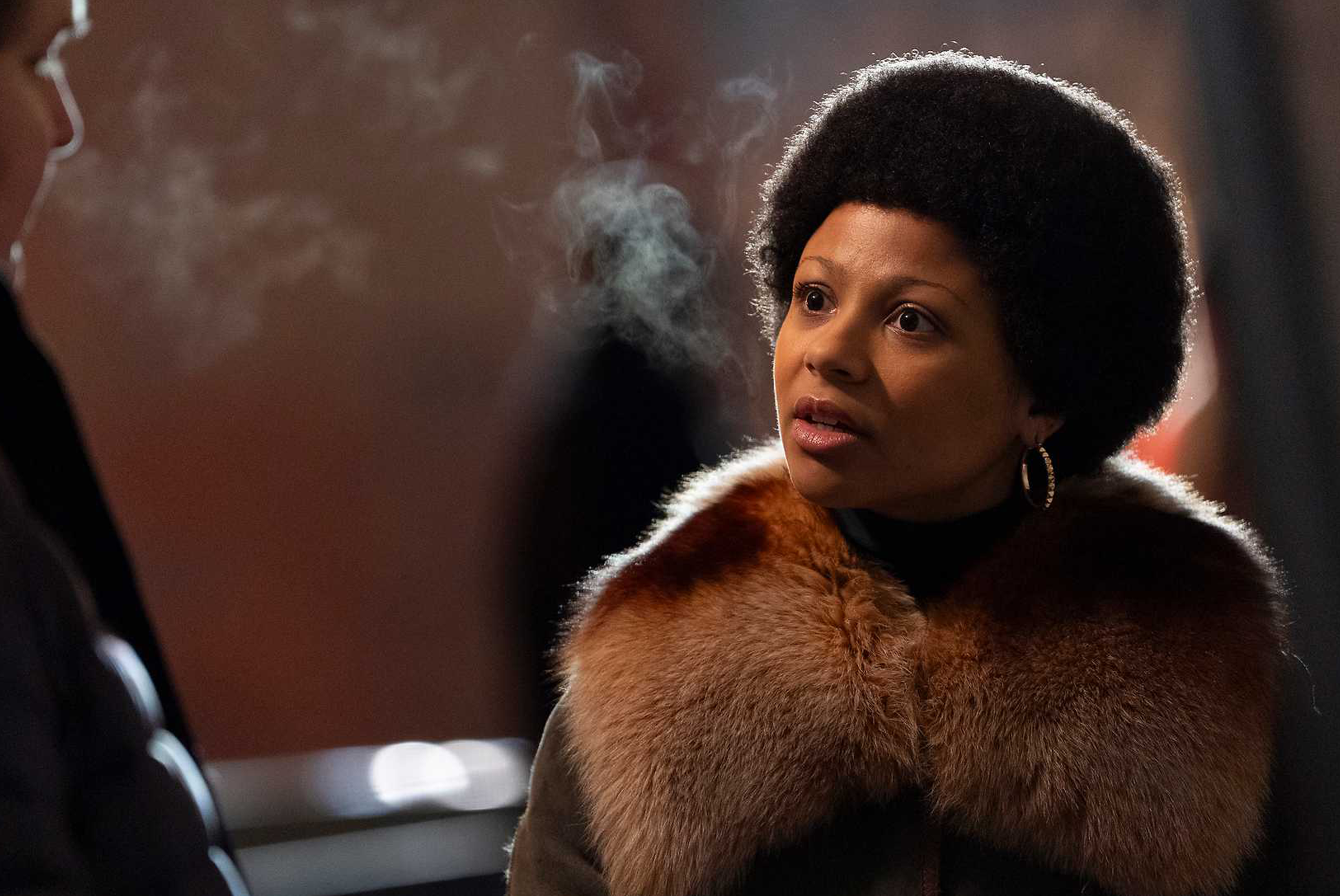
Gus Van Sant’s nervy, gritty crime thriller, recreating the circumstances surrounding Tony Kiritsis’ 1977 hostage standoff after he was cheated by a family mortgage broker business, received respectful but hardly laudatory notices when it was released last year. It’s a shame, because Dead Man’s Wire is Van Sant’s best film since 2003’s Elephant, a gratifying thriller that naturally echoes Dog Day Afternoon, but is blessed with its own offbeat sense of humour, as well as career-best work from Bill Skarsgard as Kiritsis. Van Sant’s more avowedly populist sensibilities mean that its recreations of Seventies drab are not as satisfying as Kelly Reichardt’s sublime The Mastermind, but there’s an energy here that’s palpable and addictive.
Rating: Four stars
Crocodile (dir. Pietra Brettkelly, The Critics)
The latest from one of Aotearoa’s most prominent and respected documentarians, Pietra Brettkelly’s Crocodile is an enormously enjoyable time at the movies, but also one that reveals a filmmaker challenging and interrogating the modern conception of the documentary in a way that eschews bland intellectualising. Uniting with teen Nigerian film collective The Critics, Brettkelly cedes directorial control in allowing them to document their own stories, following them as they come of age, grow a massive online following, and discover their own artistic sensibilities on camera. In capturing their charmingly homemade attempts at science fiction and action epics, Brettkelly ties any number of concerns together — African cinema, the relationship between Hollywood and international audiences, the arrival of the Youtube generation, the place of documentary in modern cinema, and the everyday struggles of poverty-stricken countries. In the process, it produces what is quite probably Brettkelly’s finest film. Rating: Four stars
The Voice of Hind Rajab (dir. Kaouther Ben Hania)
The murder of six-year-old Palestinian girl Hind Rajab, alongside several other members of her family and the Red Crescent emergency response team that were dispatched to help her by Israeli forces has become, like the story of Anne Frank before her, a stand-in for any number of horrors committed during these years of genocide. That Hind’s final hours were recorded, as she was pinned down in a bombed out car surrounded by dead family members, provides those who have watched the genocide unfold over their phones (and those who deny it) for years now one of the most succinct documents of this inhumane era. These are recordings that Tunisian filmmaker Kaouther Ben Hania wields to fearless, controversial ends in the award-winning The Voice of Hind Rajab. I confess I am not entirely sure where I stand regarding the usage of Hind’s real voice in this dramatisation of the events, which are otherwise populated by actors playing Red Crescent dispatchers. On the one hand, there is something blatantly exploitative about it, even with the permission of her mother, an exercise in reminding those who are not Palestinian that those in Gaza are dying in swathes day-to-day. On the other hand, as Bilge Ebiri convincingly argued, entreaties to reign in what could be categorised as ‘bad taste’ often mean that the ability to reach those who need to hear what is being said is snuffed out. Ben Hania’s docufictional style is sound, and builds to a predictably devastating climax, though the handling of the drama in the two acts leading up to it, laden with histrionics that distract rather than amplify the tragedy, undercut the impact somewhat. An enraging and frustrating work, it is one that would be useful to show those with their heads still in the sand.
Rating: Three-and-a-half stars
100 Nights of Hero (dir. Julia Jackman)
This aggravating, ten-years-too-late adaptation of the graphic novel of the same name is an insidiously twee ode to plastic feminism, a cheap-looking assemblage of naieve platitudes cosplaying as a film with Something Serious To Say. Set in a fantastical world that echoes the more-accomplished dystopian restrictions of The Handmaid’s Tale, the film follows a highborn woman (a muted Maika Monroe) who, along with her mysterious maid Hero (Emma Corrin), attempt to subvert the patriarchal dictates of their world through the power of storytelling. With messaging drawn directly from the pink pussy hat era of feminism, which feels outrageously inept in the modern day of rampant misogyny in near-total power, nothing in Hero feels anything more than juvenile and misguided.
Rating: One-and-a-half stars
Wolfram (dir. Warwick Thornton)
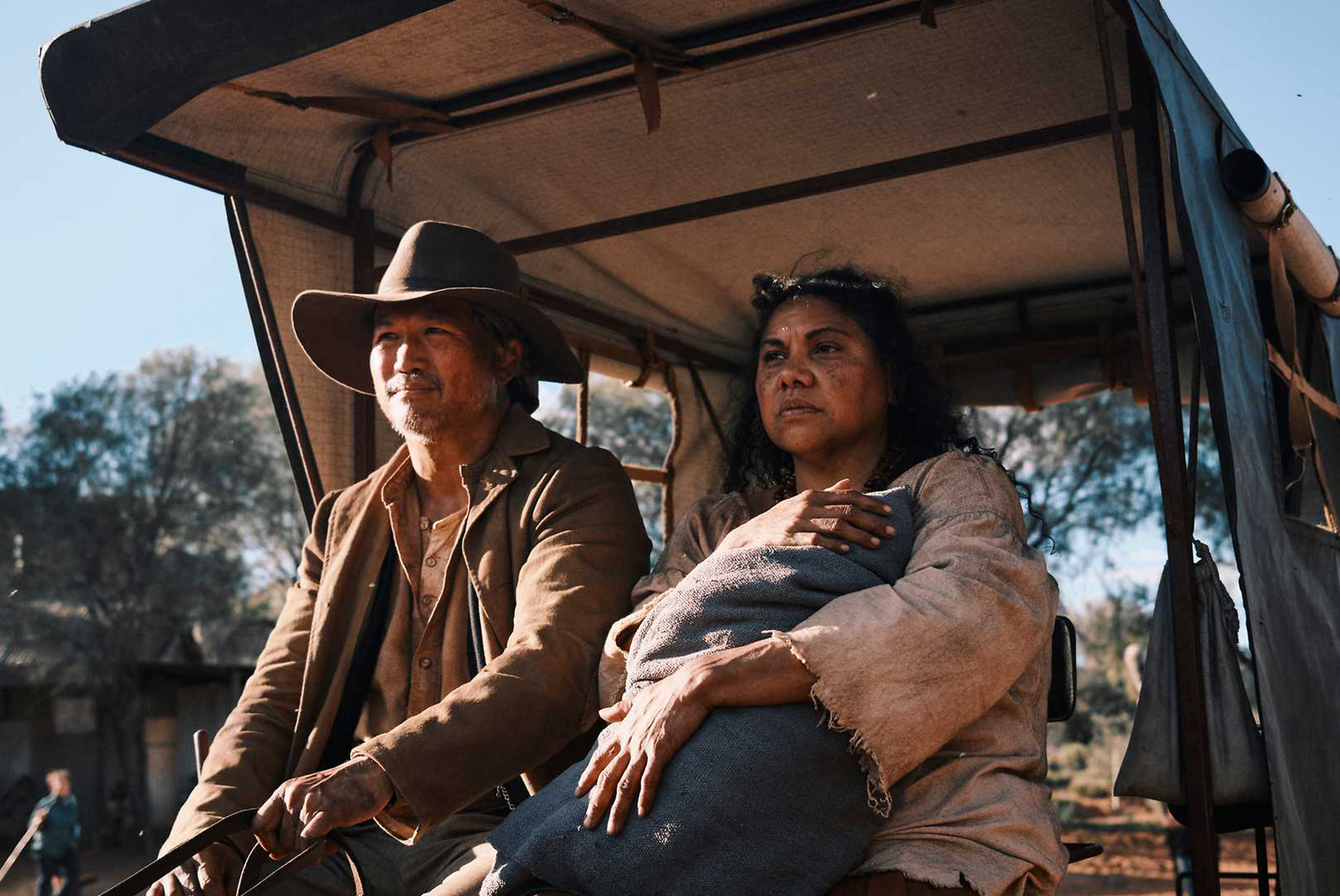
Warwick Thornton, for reasons that I won’t state outright but which should be easily extrapolated from the content of his work, seems destined to be underrated in the grand summary of Australian filmmakers, despite being one of the most essential working today, and the highest profile indigenous Australian filmmaker to boot. His latest, Wolfram, a pseudo-sequel to his grief-stricken Sweet Country, is a tough but graceful tonic, a sprawling Western with an ending as moving as anything he’s ever given us. The somewhat muted reception it has gotten is bewildering — this might be the Australian film of the year, one of sweep and novelistic scope, generous to its characters and clear-eyed in its sense of rage.
Rating: Four stars
The Fox (dir. Dario Russo)
This disappointing slice of absurdist magical realism wastes a fun concept by failing to interrogate its thematic concerns in any meaningful way. The story of two married couples on the outs, cheating on each other with each other, who are lured by a mischievous talking fox into a deal with the devil, certainly has a compelling look and sense of atmosphere, pitched somewhere between Yorgos Lanthimos and Edgar Wright (there’s even a sequence of brainwashed townsfolk that echoes Hot Fuzz’ ‘the greater good’ punchline), but runs out of steam quickly and fails to mine comic gold from its oddities. A deliciously committed performance from the great Emily Browning, one of the truly underrated actresses of her generation, pulls it back from the brink, but only just. There’s also something to be said for the wonderful voice work of Sam Neill, in one of his last performances as a talking magpie, that serves as testament to the actor’s cheeky irreverence.
Rating: Two stars
Fjord (dir. Cristian Mungiu)
Cannes’ track record of awards-friendly but underwhelming Palme D’Or winners (think Anora, Titane, Triangle of Sadness) continues with this muddled and conflicted drama, one with plenty to say but woefully ineffective methods of conveying it. The story of a conservative, religious Romanian family who enter into a labyrinthine child custody battle with the the forces of justice in Norway, where they’ve just moved, Fjord is the brainchild of Romanian New Wave mainstay Cristian Mungiu, surely the most well-known of this movement. Where contemporaries Cristi Puiu and Radu Jude approach serious subject matter with razor sharp, witty incisiveness, Mungiu’s Fjord is leaden in its obviousness, blunt where it needs to be cutting. The easy criticism — and one that is, to an extent, apt — is that Mungiu’s position, that the ‘woke’ liberal ideologies that guide much of the Scandinavian firmament have become, in turn, very much like the oppressors they rail against (a position evidently not without merit), is undercut by the director’s insistence on lacing his attacks with reactionary nonsense. European, ostensibly liberal institutions have been known to weaponise their ideologies in order to suffocate alternative, usually religious points of view — one need only look at the attempts at banning the burqa — but their ploys are far more insidious than the cartoonish, one-dimensional rendering deployed here. Mungiu approaches the villains of the piece — the short-haired, pants-wearing radical feminists who want to take away the saintly Gheorghiu family’s children for their backwards Christian views — with the same vicious disinterest with which they in turn attack our protagonists. Mungiu renders the film handsomely, but lacks the courage to make this the satirical piece he clearly intends for it to be. He also lacks the courage to make his protagonists Muslim, or brown-skinned, the more likely victims of such ideological attacks. Instead, we have stoic, soft-spoken Sebastian Stan (for his part, very good work) and an angelic, chaste Renate Reinsve, aggrieved in their lily-white trauma.
Rating: Two stars
Nuisance Bear (dir. Jack Weisman, Gabriela Osio Vanden)
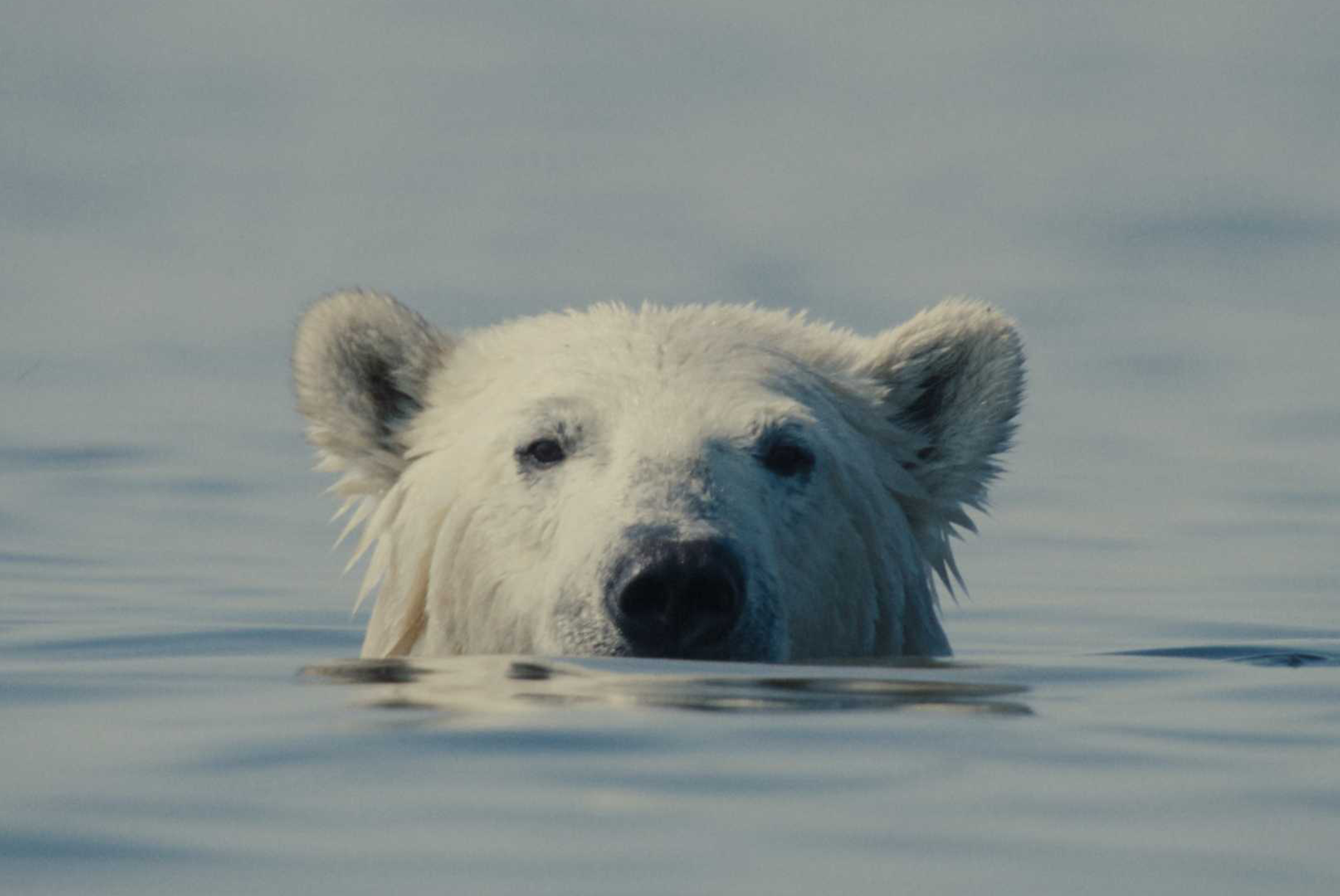
Here’s a documentary that really understands the suggestive, hypnotic power of images, one from which other documentaries, particularly those that over-exert themselves via info-dumping talking heads, could learn. Winner of Sundance’s top documentary prize, Nuisance Bear follows an adolescent polar bear in the Arctic towns of northern Canada, particularly ‘polar bear capital’ Churchill, who unceasingly harry the human populace in search of food. With the ever-expanding impacts of climate change, the bear’s usual source of nourishment — seals and fish hunted on ice floes — has become an ever more precarious proposition. Thus, these towns, populated mostly by indigenous Inuit communities, must labour endlessly to rehouse and otherwise ward them off. Well-regarded documentarians Weisman and Osio Vanden capture the wintry expanses of Manitoba via genuinely staggering cinematography, some of the best I’ve seen in any film this year. Along the way, Nuisance Bear transforms from a nature doc to a chase movie to a rage-fuelled examination of climate change and, of all things, celebrity, as the polar bears are endlessly pursued by paparazzo-like tourists looking to clap eyes on a vanishing species. It is a film whose framing is focused on the polar bears, but which explores with great depth the vanishing culture of the Inuit people, too, who like Aotearoa’s own indigenous population were brutalised by and continue to grapple with the creeping tendrils of colonialism. An exceptionally accomplished, haunting work.
Rating: Four stars
La Gradiva (dir. Marine Atlan)
This sprawling, devastating film is one of my absolute favourites from a Festival year full of major titles. Another significant debut offering, this one from renowned cinematographer Marine Atlan, this is a youth film set in the shadow of Mount Vesuvius, as a group of university students embark on a school trip to Pompeii. Across a leisurely, patient runtime, we come to know the many diverse faces of this group — particularly Colas Quignard as troublemaker Toni and Suzanne Gerin as an outsider of the same name. Also present is their put-upon teacher Madame Mercier (Antonia Buresi, the film’s beating heart). Gorgeously photographed, the film evokes everything from A Brighter Summer Day to Margaret to Blue is the Warmest Colour as its students sightsee, fight, fuck, argue and fall in love. Against this, the backdrop of history — and the tragedy at the heart of Pompeii — looms large. That the film tips into tragedy as it arrives at its denouement is, perhaps, its own kind of youthful indulgence — but not one that I can begrudge, considering how moved and transported I was by the entire piece. Major stuff.
Rating: Five stars
Everytime (dir. Sandra Wollner)
Mysterious, shocking and hypnotic, Austrian filmmaker Sandra Wollner makes a leap to the big leagues with the Un Certain Regard-winning Everytime, a film that examines familial grief and memory, a kind of bold fusion of Aftersun and Mulholland Drive, with all the narrative trickery that might suggest. Bookended by terrifying moments of peril, the film follows mother of two Ella (Birgit Minichmayr), her young daughter Melli (Lotte Keiling) and grief-stricken boyfriend Lux (Tristán Lopéz) as they struggle with responsibility over the loss of eldest daughter Jessie (Carla Hüttermann). A bravura opening sequence, following Jessie’s final day of life, precedes a slower, more methodically-paced middle section, before eventually dovetailing into dream logic and implication in the film’s unmoored, unsettling final third. Wollner handles the film’s shifts with utmost confidence, as assured in the handling of piercing drama as head-scrambling moments of surrealism. This is one to which I can’t wait to return.
Rating: Four-and-a-half stars
Silent Friend (dir. Ildiko Enyedi)
There is much to admire in Ildiko Enyedi’s arthouse darling Silent Friend, first and foremost the galaxy brain pairing that is Tony Leung Chiu-wai and Léa Seydoux, two of the most expressive and watchable faces in the history of the medium. Theirs is just one of a triptych of stories that span the history of a single, giant gingko tree that sits in the sprawling garden of the Marburg University campus. Leung’s neuroscience professor is housed there during COVID, investigating the question of the interior lives of trees — what do they think, feel? Decades earlier, a young poet is drawn into the experiment of a science student, forming his own relationship with the garden. Decades before that, the University’s first female science student (a luminous Luna Wedler) struggles with rampant sexism and misogyny as she tries to carve a path for herself. I struggle with these time-hopping anthology stories, but Hungarian filmmaker Enyedi handles the temporal jumps with elegance and directorial élan. It is a film that meanders, and its findings can be a little underwhelming — but at its best, it is a sensitive ode to humankind’s communion with nature.
Rating: Three-and-a-half stars
Ghost in the Cell (dir. Joko Anwar)
The spirit of Sam Raimi is alive not in the modern-day Evil Dead series, but in this Looney Tunes-esque Indonesian horror from Joko Anwar, a deliriously fun, cartoonish and politically potent work of bloodletting. The story of a group of prisoners who must band together to save themselves from a sadistic, identity-thieving demon they’ve become confined with, the film is as frequently laugh-out-loud funny as it is scary, with a far more meaningful connection to the work of Edgar Wright than the aforementioned The Fox. A large ensemble of Indonesian actors are all served remarkably well — there are no roles that feel superfluous or underrealised. The gore, when it happens, is astonishingly gross and compellingly artful. It is a remarkably astute film, tackling corruption and questions of class solidarity with real verve. It is far less accomplished in tackling issues of queerness, a wrinkle that produces no small amount of discomfort, but is ultimately not enough to diminish what is one of the most enjoyable watches of this Festival so far.
Rating: Four stars
Chronovisor (dir. Kevin Walker, Jack Auen)
My screening partner for this film absolutely hated it. As the credits rolled, they turned to me and told me it might be the worst film they’ve ever seen at the Festival. It was a sentiment a good portion of the half-full Hollywood Avondale likely shared. It couldn’t have been further from my experience, which I can only describe as bewitching. This frightening and magnificent curio, somehow the feature debut of directing duo Walker and Auen, is a meticulously compiled academic mystery exploring the real phenomenon of the Chronovisor, reportedly a kind of ancient camera that allowed the inventors — led by a Benedictine monk — to look into the past. The implications of the technology are immense, something that academic Beatrice (Anne Laure Sellier) finds herself encompassingly drawn toward, as she ignores her other work in a dogged search for the truth. Shot in dreamy 16mm, Chronovisor itself has the feeling of a found object not necessarily intended for viewership — a whiff of uncanny menace hangs like a thick smog over everything. Much of the film consists of text on screen — thus the divisive response it engendered — pulling quotes from any number of articles, books, periodicals and magazines and demanding viewers read along. All the while, the viewer is pulled along by one of the expressive and evocative music of Holst’s The Planets. This is a challenging film, of that there is no doubt. I also am not sure I’ve ever seen anything quite like it.
Rating: Five stars
Blue Heron (dir. Sophy Romvari)
One of the bigger disappointments of the Festival, Sophy Romvari’s Blue Heron arrives on the back of a wave of critical support, and there is no denying the enormous potential that the filmmaker has, with an already sound grip on her handsome approach to visual language and the way her work flits between documentary and fiction with fluid ease. A semi-autobiographical retelling of her childhood years, as her family struggles with the troubling behaviour of her older brother (Edik Beddoes), Blue Heron is a tastefully mounted but vague film, one that keeps an exacting distance from not only the cipher that is her elder sibling, but all the other characters as well. It makes for an emotionally unfulfilling portrait of memory and grief, one that lives in the shadow of the far superior Aftersun. There is a wonderful performance here by Amy Zimmer, playing the director’s stand-in in the later half of the film, where Romvari employs a not-entirely-successful postmodern gambit, folding the story in on itself. Though not a disaster, by any means, it is a work that surprised me in how little it drew on my emotional investment.
Rating: Three stars
Goodbye, Cruel World (dir. Félix de Givry)
A delicate, endearing debut feature from French actor-turned-filmmaker Félix de Givry, this warm teen romantic drama has the kind of offbeat tenderness you might find in a Harold and Maude or Being There, or the early films of Wes Anderson. The story of a fourteen-year-old who desperately goes into hiding after a suicide attempt goes awry, de Givry’s film makes great use of its young stars, Anatomy of a Fall’s Milo Machado-Graner and newcomer Jane Beever, who really sell as the kind of loner outcasts whose teenage years foretell better days ahead — if they can make it that far. In true Harold and Maude and Rushmore fashion, Machado-Graner’s character is hilariously clad in a goofy, ill-fitting leather jacket, a great example of how a simple piece of costuming can tell us more than dialogue ever could. Throughout, de Givry captures our pair’s dreamy tryst in gorgeous celluloid, evoking a small French town gripped by a child’s ‘disappearance’ (though he is hiding in plain sight for much of the film) with a tactile, homespun quality that I found relentlessly charming. Though the film sags somewhat in the middle, there’s a confidence present within Goodbye’s moving denouement, with its final shot of shimmering profundity, that promises the arrival of a real talent.
Rating: Four stars
Over the next week or so there is a true wealth of cinema still on offer, many of which are unlikely to grace our screens again. Keep an eye out for the encore screenings and late additions, which are sure to offer exciting opportunities (I’m already beelining for Ira Sachs’ Rami Malek-starring The Man I Love), as well as the Letterboxd Secret Screening, which inside word suggests you won’t want to miss. As for me, the weekend ahead offers Lucrecia Martel’s Landmarks, Ross McElwee’s Remake, Pawel Pawlikowski’s Fatherland, Lucile Hadžihalilovic’s The Ice Tower, Valeska Grisebach’s The Dreamed Adventure, Kiyoshi Kurosawa’s The Samurai and the Prisoner, Alexandre Koberidze’s Dry Leaf, Javier Calvo and Javier Ambrossi’s The Black Ball and Lukas Dhont’s Coward. Will I see you there?
Whānau Mārama: New Zealand International Film Festival 2026 – All details at https://www.nziff.co.nz/2026