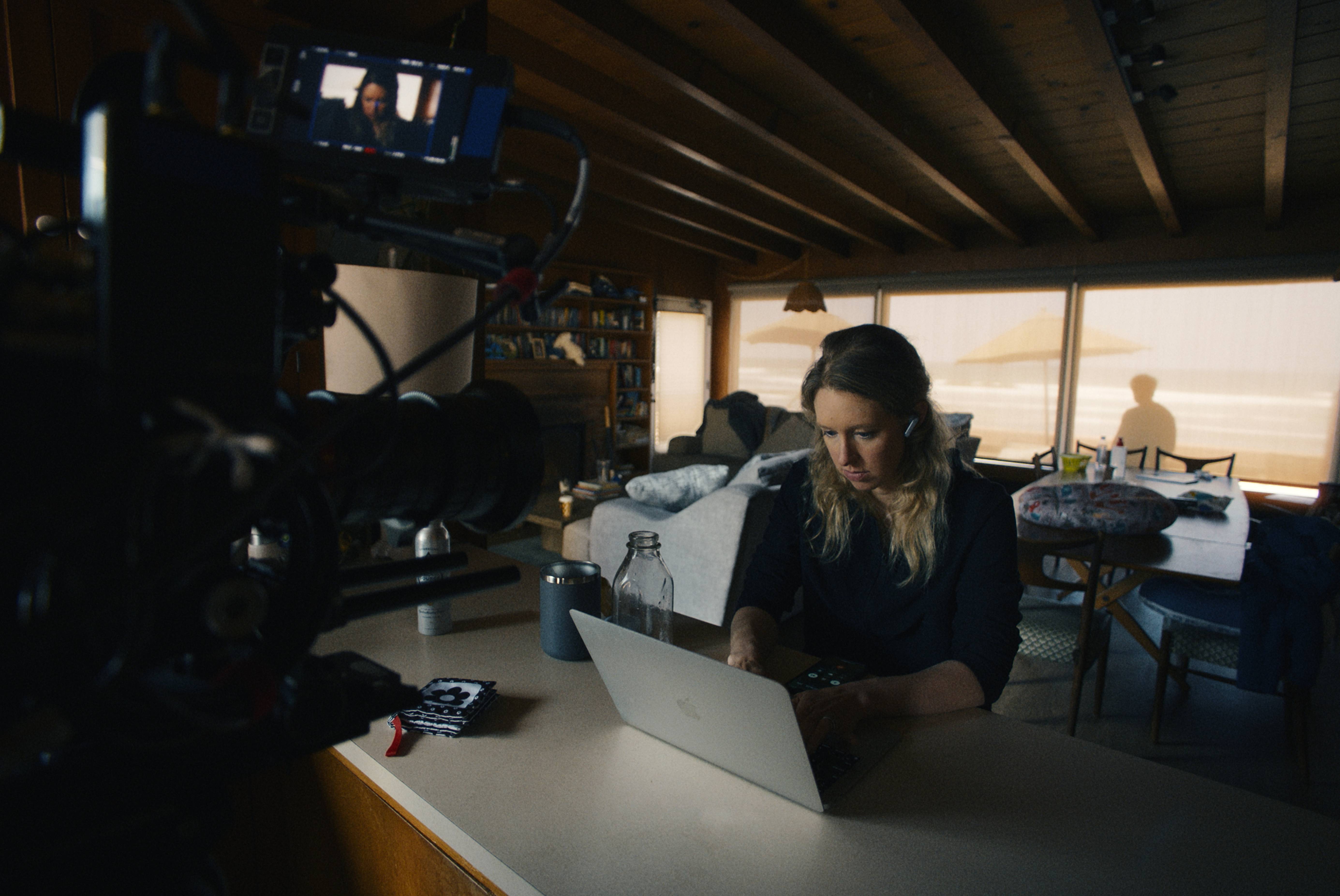
One of the most remarkable films of the year, Nathan Fielder and Lance Oppenheim’s investigation of Elizabeth Holmes and her husband Billy Evans is a slippery and mysterious exploration of human behaviour and the uncertainty of reality. Shocking, hilarious and unsettling, it is a film that grows in the mind long after the credits roll.
In my creative and critical life, I’m drawn to ambiguity. The unknowns and the unknowable. What we choose to believe, and why. Raised Catholic, we learned about mysterium fidei, or ‘the mystery of faith’. This is when we choose to believe something that defies our ability to grasp its full totality, or that transcends reason — reason here referring to what we can ascertain to be concrete truth by using our senses, and our capacity for logic. It was always my favourite part of Mass, when the Monsignor would mutter, almost perfunctorily, the words ‘the mystery of faith’ in the middle of the Eucharistic Prayer. It always felt offhand, somehow, but reassuring, in the way it conceded that doubt is indeed a key aspect of true faith. Admitting that you cannot prove your belief to be based in fact, but resolving to place your faith in the idea that it is true, and living your life accordingly. Maybe that’s why I find myself compelled by the notion of ambiguity even today — I am a doubting Thomas.
Many of the great ambiguous films are films about faith — indeed, one of the very best of this year’s films, Chronovisor, is among that number — and yet these and other artworks that reckon with doubt are often the focus of the ire of organised religion. One of the more famous examples in cinema history is Martin Scorsese’s The Last Temptation of Christ, which depicts Jesus Christ as a fallible human being, one that struggles with desires of the flesh and wrestles with his own questions surrounding his mission, something that many decried as sacrilege. Another is The Devils, in which Ken Russell depicted the ways in which blind faith turns people into easy fodder for fascist manipulation, but whose visual depictions of blasphemy caused many to mistake it for actual blasphemy (Russell was, of course, a devout Catholic until his death). To me, this is an example of the way organised religion perverts the teachings of Christianity: unquestioning faith is a tenet of humankind, not divinity — to follow without opening yourself to doubt is a concession to fascist thought. This is not true faith, it is brainwashing. Nothing we place our faith in should come without struggle. We see this in the maniacal support Trump receives from his most devout followers, many of whom incidentally see him as aligned with Christianity, somehow.
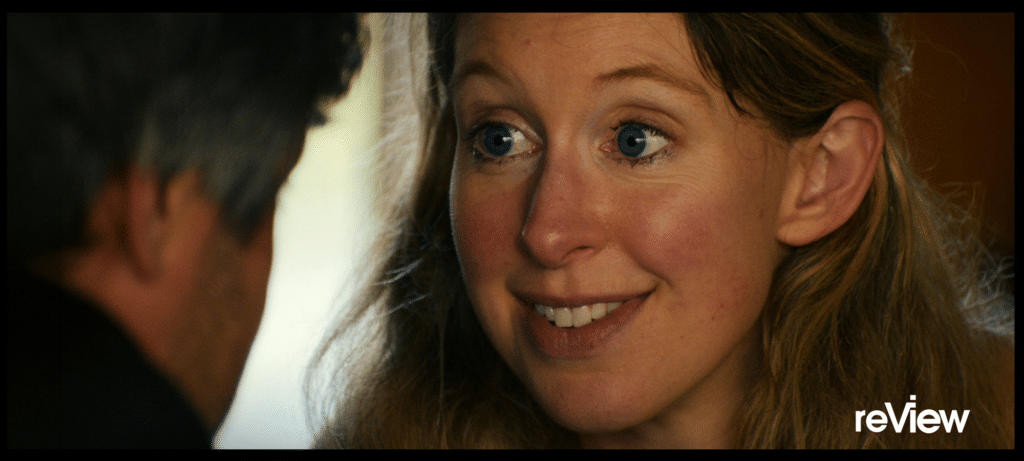
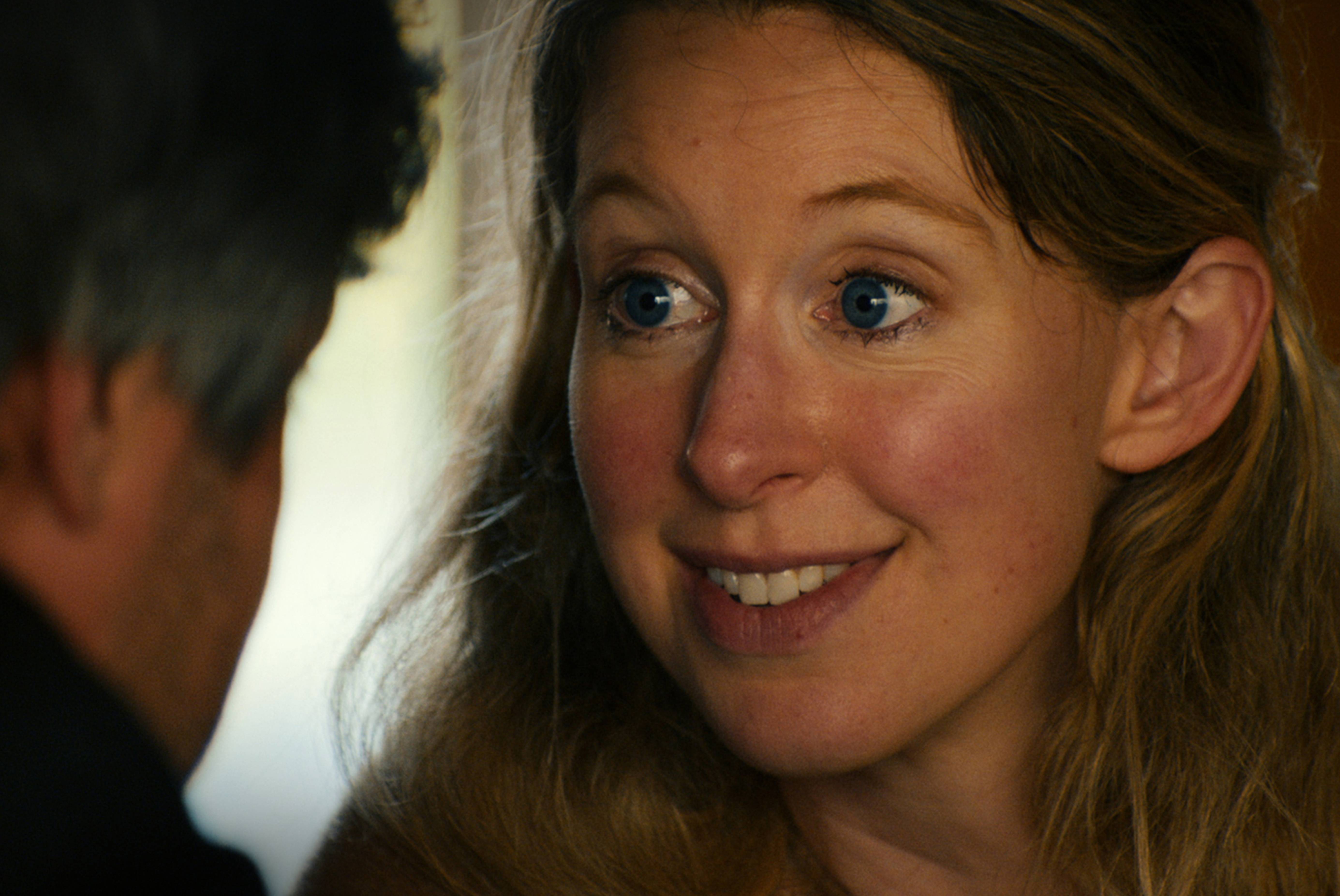
You Can See Everything, a portrait of Theranos fraudster Elizabeth Holmes in the days before she goes to prison, is one of the most profoundly ambiguous films I’ve seen in years, one that explores the fundamental dichotomy between belief and doubt, while methodically deconstructing the notion of documentary as having the capacity to present ‘reality’ in any genuine way. It is a film that follows in function, rather than form, the films of Abbas Kiarostami, most notably Close-Up, another documentary with an elastic notion of truth, utilised to different ends. Where Kiarostami’s masterpiece has a gentle sense of poeticism easily found within the key texts of Iranian cinema, You Can See Everything is rooted in the spiky and hyperactive intensity of the modern American independent cinema. It is distributed by A24, and shares an aesthetic with the glossy films that have come to define that stable, as well as being co-directed by Lance Oppenheim, whose visual sensibility burst onto the mainstream earlier this year with A24’s Primetime (fittingly, his first two features before this were documentaries: Some Kind of Heaven and Spermworld).
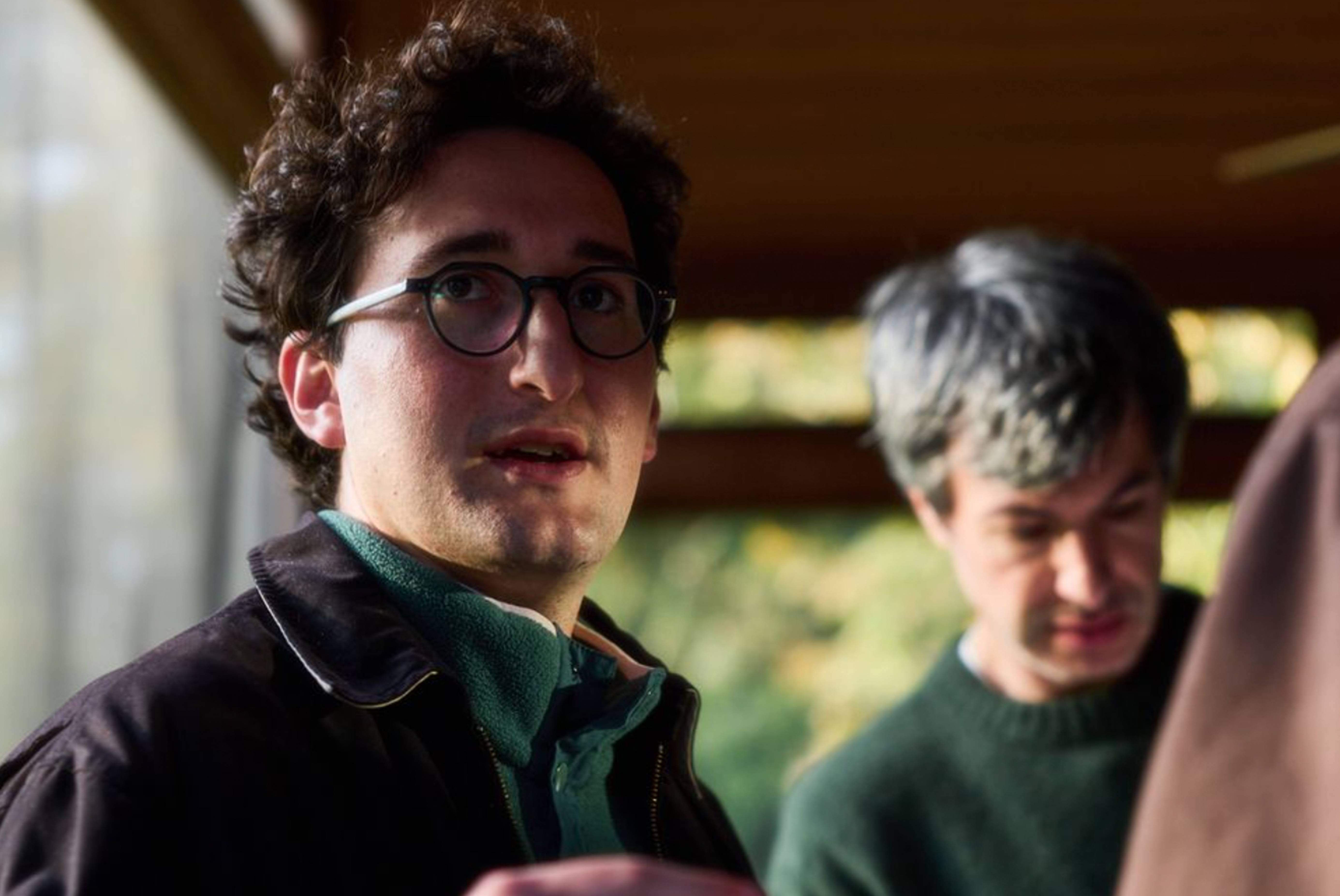
The other director is Nathan Fielder, surely one of the most important American artistic voices of his generation, whose televisual output has long dabbled in the world of ambiguity and constructedness. Millennials like myself, raised on the likes of Nathan for You and its ilk, feel a deep connection to Fielder, a man whose fundamental awkwardness and self-doubt serve as a signpost for an insecure generation. While You Can See Everything can be funny, and much of that humour comes from what we know of Fielder, it is also a departure, a serious-minded and frequently disturbing unpacking of the modern American psyche, one that challenges us constantly, demanding to know what we place our faith in. It is a film that separates truth from fact — exploring the way in which we accept something to be true on an emotional, rather than logical, level. It is quite possibly the film of the year.
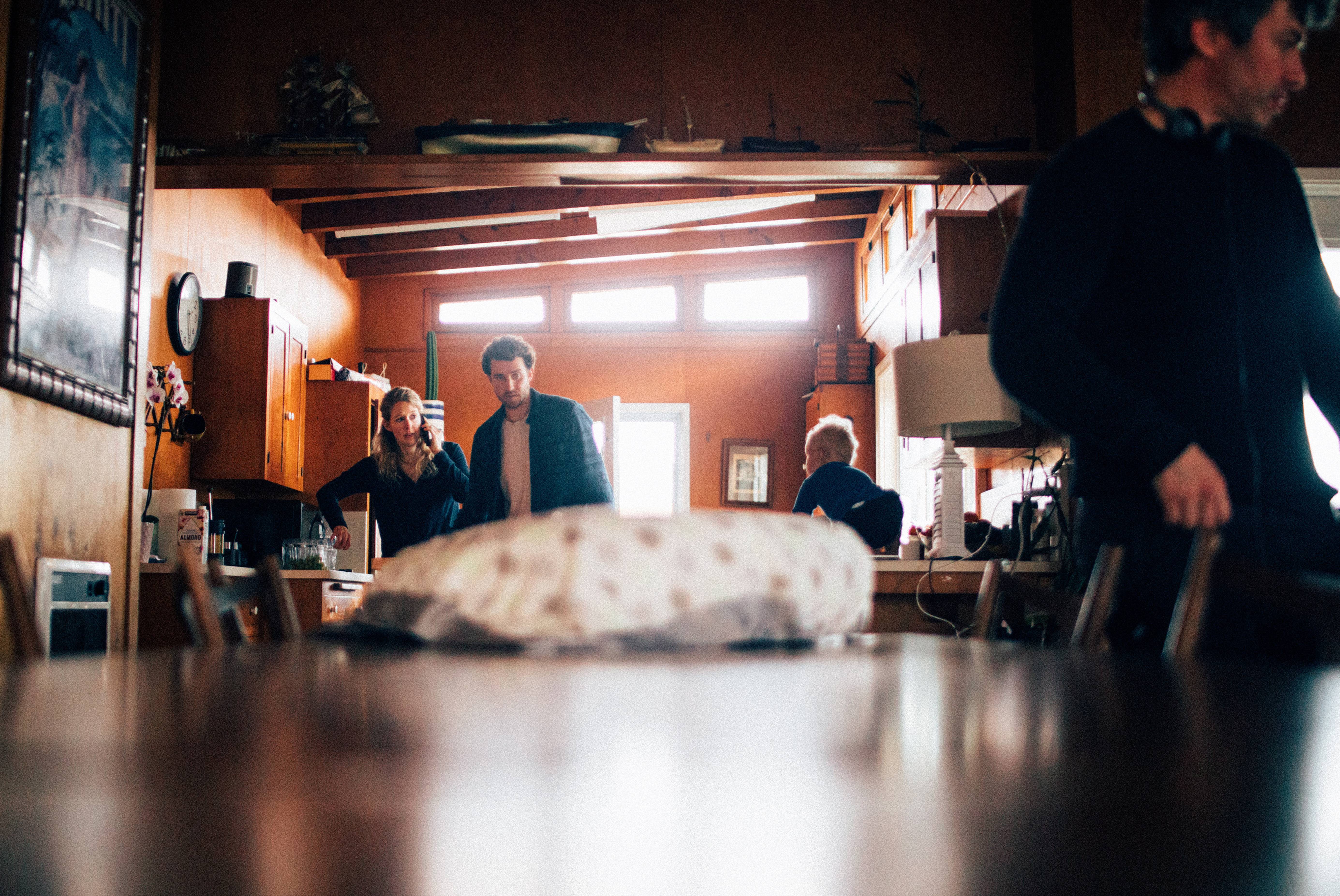
Oppenheim and Fielder’s film is one of near-fathomless depth and potential for interpretation, a fact all the more startling for its documentary format — the deep uncertainty we’re invited to feel arising from footage that, in lesser documentaries, we are often encouraged to accept as truth. What has been remarkable in the time since I watched the film is speaking to others who have also seen it — to see the vast divergence in opinion on just what they actually saw. One of my friends was absolutely certain that it functioned as a portrait of post-partum befuddlement and insidious spousal abuse; another declared it to be textbook in its depiction of sociopathic manipulation. ‘Wow, men really are suckers. She’s guilty as sin’, a friend said when I mentioned another friend (a woman), who thought Holmes was innocent. It’s a Schrödinger’s Cat movie, one in which both and neither are true, all ‘realities’ existing at once. The lens is thus turned on the viewer — it is a film that calls attention to what we are bringing to the story, not the other way around. Thankfully, this doesn’t mire You Can See Everything in the realm of endless intellectualising. Indeed, it is an emotionally charged experience, often oscillating between hilarious, frightening and heartbreaking in a single scene. Mysteries abound — for what reason did Holmes and her horrible, Charlie Kirk-loving husband, Billy Evans, bring Fielder and his team into the sanctum of their private home in the weeks leading up to her prison sentence? What is the precise nature of Fielder and Holmes’ relationship? How does the fact that Fielder was going through a recent breakup colour the way he presents this footage? We are aware we’re being manipulated at every turn, but by whom and for what purpose is harder to elucidate.
It is also a film that practically demands repeat viewing. Even now, I wrestle with memory and understanding: something tells me that watching it again will paint a completely different picture to the one I have now. A film of such shape-shifting parameters can only be a testament to the grand potential of cinema, the stuff of dreams and memory, its relationship to us far more mysterious than we give it credit for: like all films, the relationship we have to the images changes the further in time we stray from them, but few call attention to the way art bends around our constructed identities in quite the same way. In this sense, Holmes is a magnificent avatar for the human condition: motherly, empathetic, befuddling, terrifying, Machiavellian, fragile, invulnerable — contradictions mounting atop each other until they blot out the sun. The more the filmmakers attempt to elucidate the deeper into the Overlook Hotel hedge maze we go, freezing to death and unable to find an exit. Fielder and Oppenheim understand that any trace of objectivity here is a joke — Holmes has invited Fielder to get too close, and the film embraces this compromise and imperfection. As the film transitions in its second half into a metanarrative mind warp laced with signifiers of the modern ‘true crime’ craze (as well as a pair of startling cameos too good to spoil), one feels Fielder plucking at the way we’ve been trained by documentaries past to see shadows on the walls, demanding we question whether this stylisation is on to something or not — where you land is up to you.
I can’t say I’m much of a drug user. I find I get too much in my own head. I’m an overthinker, and I get paranoid. Weed makes me feel like I’m having a heart attack. I’ve never used psychedelics — I fear I may ring some bells in there that can’t be unrung. I remember the first time I got really stoned, when I was nursing a heartbreak at university, I spiralled into a panic when I started to observe just how animalistic we are — how we move and interact, and the odd divide between behaviours learned and instinctual. How so much of our society, our morality, our understanding of ourselves is built around peculiar quirks of nature or base liminal desires. This is the reality of things, and yet every now and then I feel like I’m seeing them in action from a place removed, up in the sky, and it freaks me out. I thought about this when I watched You Can See Everything, a film of intimate and intricate behavioural analysis whose stroke of genius is its ultimate lack of discovery. What is there to know, anyway? We’ll all be dead soon, and then we’ll really find out.
You Can See Everything is in cinemas now.