This month, Rialto Channel’s Beyond the Screen series presents essential retellings of the works of some of the greatest icons in all of cinema. Among them, this meticulously constructed exploration of Charlie Chaplin’s final silent masterpiece.
In another part of my life I teach film history to high school students every now and then. It is a vast and complex topic, one that intertwines with the flow of modern history in a way matched by only a few other art forms, chiefly music. What to focus on and what to draw attention to is usually a matter of taste — often I show the work of Hitchcock and Kubrick, naturally, but there are so many that there simply isn’t time to address. The four documentaries being shown this month on Rialto Channel as part of their Beyond the Screen series are ideal in size and structure as primers, the kinds of well-executed flurries of information that provide essential context and appropriate adoration to a number of the key touchstones of cinema history. In Godard Cinema, the radical mind that became the central figure of the French New Wave is examined and celebrated — not just the anchor films like Breathless and Pierrot Le Fou, but his later, even more daring experimental films like Histoire(s) Du Cinema and Goodbye to Language. In Alien: Terror in Space, the remarkable science fiction horror is interrogated and mythologised, drawing attention to its deeply influential aesthetic and the daring narrative choices that have the potency to shock decades later. In Once Upon a Time Michel Legrand, the French composer and jazz legend whose work reached a peak with The Umbrellas of Cherbourg is fêted for his inimitable contributions.
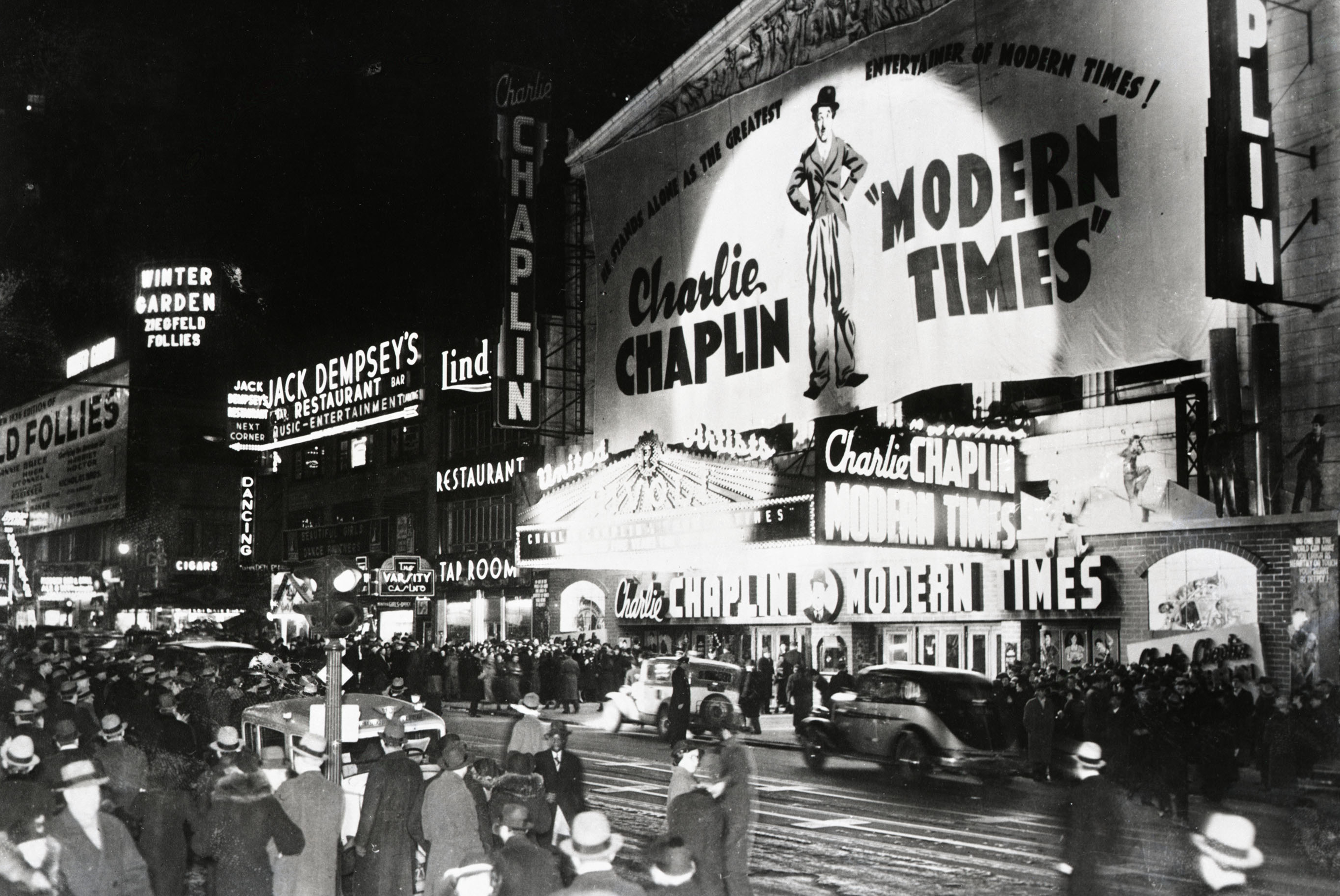
Of these, I was immediately drawn to Chaplin’s Modern Times: The Path of Silence, Grégory Monro’s brief but intricate examination of the final outing of The Tramp, Chaplin’s most beloved and famous creation. Like many cinephiles, it is difficult for me to avoid getting emotional about Chaplin — a filmmaker of fearless ambition and political fortitude, a craftsman and visionary who came as close to truly defining the cinematic art itself as any sole person has done. Chaplin was also derided, unfairly judged, and put out to pasture by an ungrateful and increasingly puritanical mainstream audience. The making of Modern Times is fascinating, particularly in the way it eerily echoes to the plights of filmmakers in 2026. Monro’s film lays out the state of the nation quickly and efficiently: in 1936, the ‘talkies’ had been around for nearly a decade, all but obliterating the art form unto itself that was silent cinema. Chaplin had not made a film for several years, since 1931’s City Lights, and was facing the fate that many other silent greats failed to overcome — obsolescence. This inability to transition to the talking picture is an existential crisis that has been well-litigated in cinema — from the grand in Singin’ in the Rain to the also-ran in Babylon, but rarely with more potency than Sunset Boulevard, whose noirish Hollywood tragedy made room for ‘The Waxworks’ of H.B. Warner, Anna Q Nilsson and, most infamously, Buster Keaton (the yin to Chaplin’s yang). In 2026, frontiers of technology far more sinister in their proportions than the adding of sound to picture have many speculating about the obsolescence of creativity itself. Others chase cheapening trends, looking to musty IP properties or streaming platforms to dilute the artistic merit of the medium. For Chaplin to make a silent picture in the late-30s was considered an enormous risk, one that only the most capable of artists could achieve. Of course, it was a grand success.
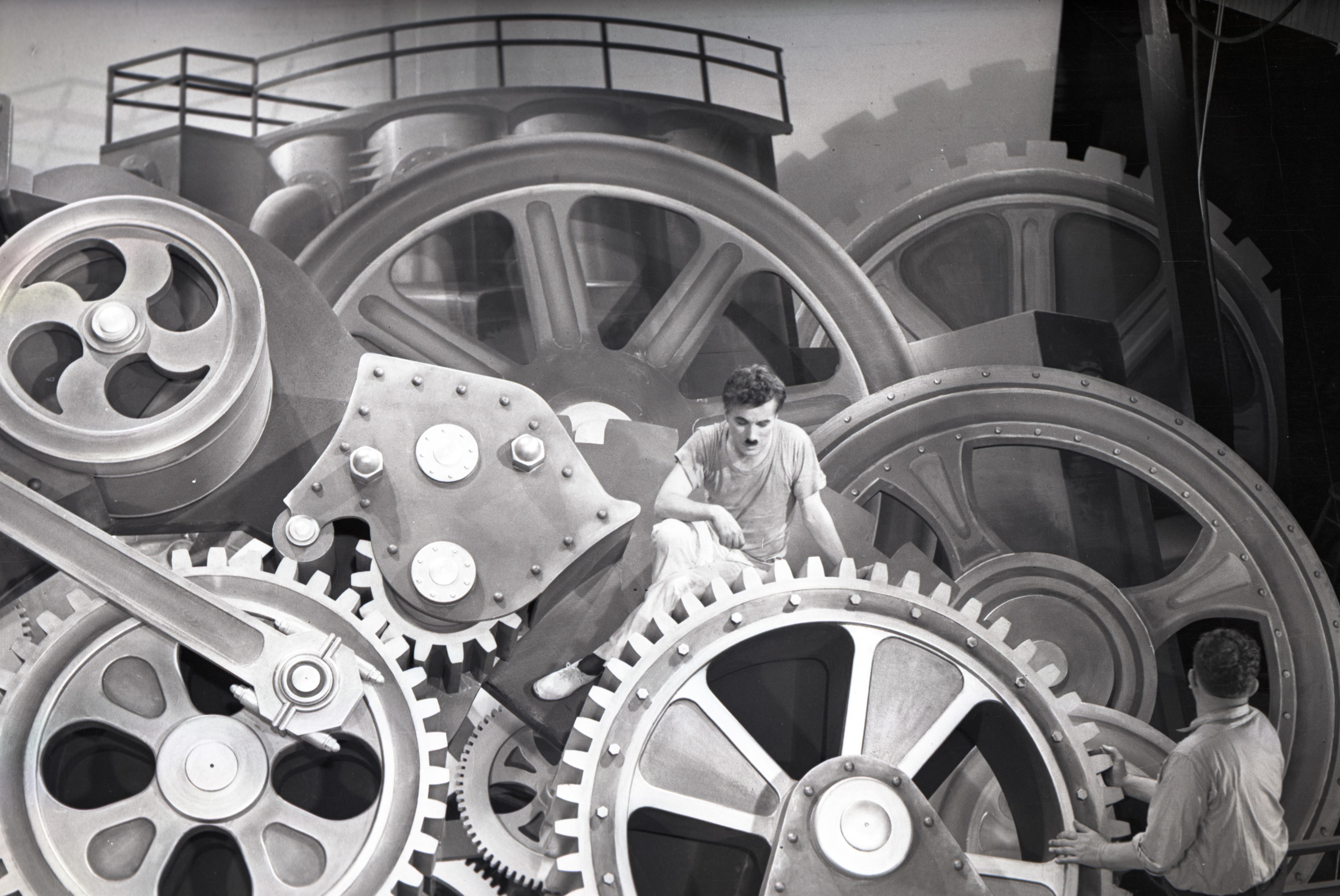
It is a film with many other modern parallels, ones that Chaplin’s Modern Times draws attention to without underlining too severely. The film’s inspiration came as a result of Chaplin’s years in the wilderness following City Lights, in which he observed the impacts of The Great Depression wreaking havoc across America and had semi-radicalising discussions with Mahatma Gandhi and Albert Einstein, among others, on the subject of modern technology. The Tramp, by his very nature, was a symbol of the working man, an everyperson whose blank slate personage allowed for Chaplin to converse easily with his audiences on the issues he cared most about. His rage about the cruelty and inhumanity of capitalism, which would continue apace with his later talking pictures like The Great Dictator and his late masterpiece Monsieur Verdoux, are deeply felt in the modern day. Those same politics saw Chaplin branded as a Communist and outcast from Hollywood machinery — long before that, The Tramp was chomped up in the gears of industry by an uncaring upper class. As such, Modern Times is a powerful and moving farewell to the silent era and to The Tramp, but it is also distinctly of-the-moment, in a way that pertains to the late ‘30s and to now in equal measure.
Chaplin’s Modern Times is of a piece with the intriguing history documentaries of Alexandre O. Philippe (Chain Reactions, Lynch/Oz, 78/52), the Swiss filmmaker whose cinematic essays are technically and structurally assured enough to be worthy objects of admiration in their own right, even as they are dedicated to deconstructing other, greater cinema masterworks. At under an hour in length, it is an easy watch for any viewer — I doubt many would come away without a renewed faith in the enduring power of true cinematic artists, and moved by the care and thought Chaplin put into all his work. The film spreads across an especially wide canvas in its short runtime, providing plenty of space for appearances from Hollywood notables of the era in every shape and size, from conservative censorship czar Will Hays, to major filmmakers like King Vidor and David O. Selznick, to silent stars like Mary Pickford. I often find immense resistance to the Silents in young or new-to-the-game cinephiles, who are not accustomed to their slower and dreamier rhythms. They do themselves a disservice by steering clear — these are films of elemental complexity and power, ones with much to teach us. Indeed, the tools and foundations of cinematic language began here. Most are still vital to a film’s success. Modern Times was one of the last, one that existed on the cusp of a new era — few have more inside them from which to learn.
Beyond The Screen – a Rialto Documentary Event – Every Thursday Night in June – Exclusive to Sky’s Rialto Channel.