There is a particular pleasure in watching a television series that knows exactly what it looks like, but never mistakes beauty for meaning.
Carmen Curlers, created by Mette Heeno, is a warm, witty and wonderfully textured drama set in the Denmark of the 1960s – a decade that arrives not as polite nostalgia, but as a restless little storm of colour, ambition, class anxiety and social change. It would have been terribly easy to make the whole thing look like a vintage catalogue, all perfect dresses and obedient wallpaper. Heeno, thankfully, has no interest in embalming the past.
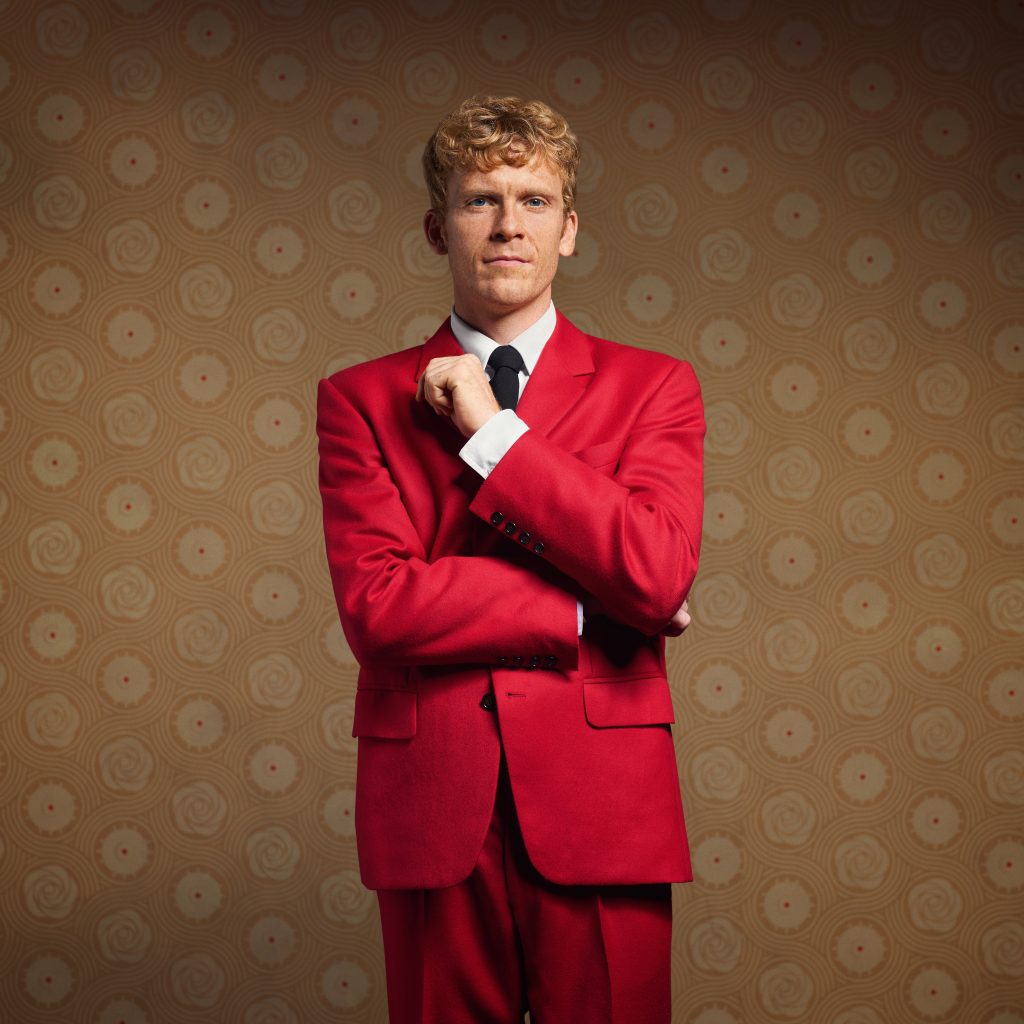
Her first image for the series was not a hair salon, nor a gleaming domestic appliance, nor a woman gazing into the mirror with lacquered hope. It was Axel Byvang running like crazy – sweaty, breathless, faster than anyone, running away from his past and towards adventure. Almost flying.
Axel is the series’ restless founder figure, inspired by Arne Bybjerg Pedersen, the real Danish entrepreneur who founded Carmen Curlers in 1963. Pedersen’s own story has the improbable velocity of fiction: from Danish business success to selling the company to Clairol in 1969, then moving with his family to Queensland, Australia, where he became a cattle farmer.
That sense of movement is the key to the whole series. Carmen Curlers is about people racing ahead of themselves, chasing money, status, reinvention, escape. It is not simply a story about a product. It is a story about the desire to become someone new before the world decides you must remain who you were.
“Carmen Curlers is not simply a story about a product. It is a story about the desire to become someone new.”
The 1960s can be dangerous territory for drama. Too often the decade is treated as a dressing-up box with a soundtrack. But Heeno grounds the glamour in dirt. One storyline is rooted in farm life and hard labour, giving the show grit beneath its polish. The costumes are largely vintage. The furniture and objects have lived before. Almost nothing feels newly purchased for the camera. This matters, because the world of Carmen Curlers feels inhabited rather than arranged.
And then there is Birthe. Scruffy, carefree, fallible, and marvellously alive, she gives the series its necessary disorder. Around her, others may be polished, styled, arranged for ambition. Birthe arrives with morning hair and earth on her shoes. She is not there to decorate the period. She is there to disturb it.
“The world of Carmen Curlers feels inhabited rather than arranged.”
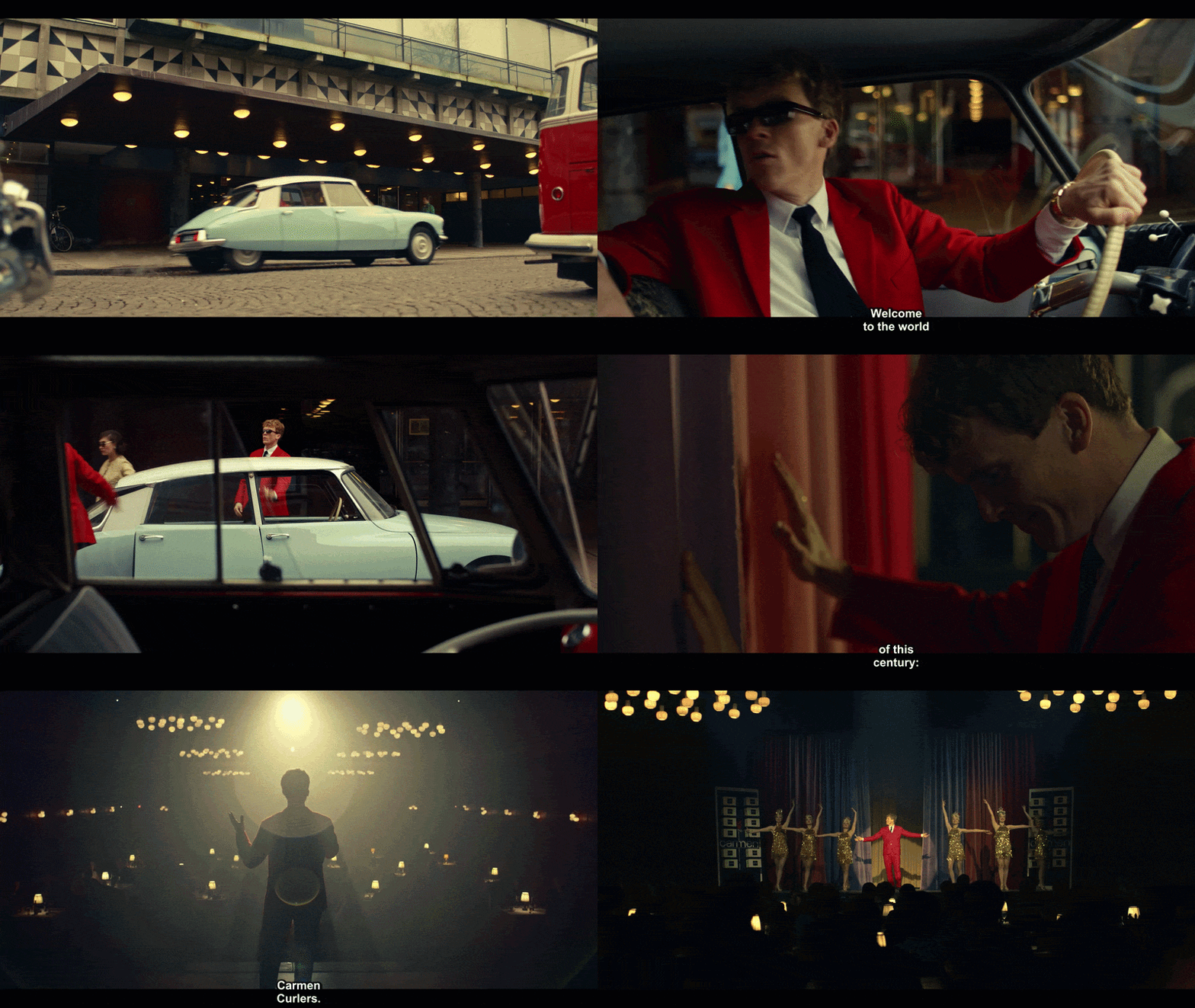
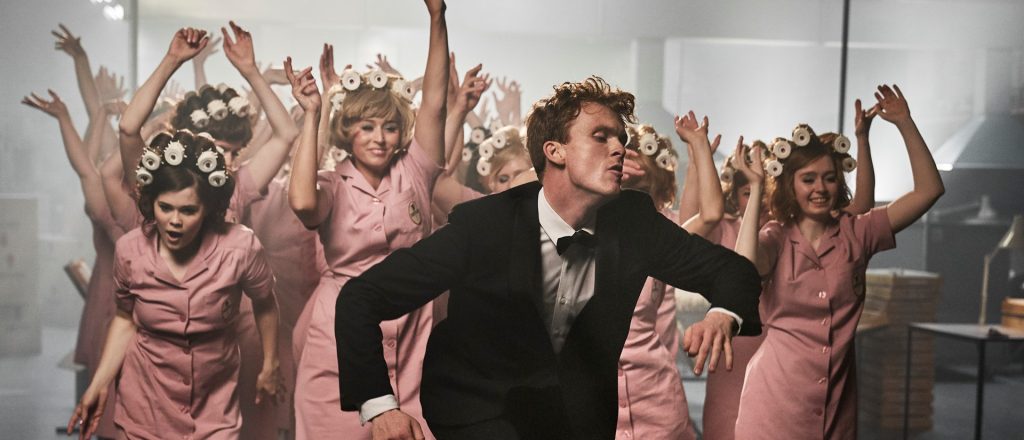
Heeno describes the sixties as colourful, dramatic, restless and chaotic, and she reflects that through split screens, flashbacks, dance sequences, voice-over and archive material. The result is bright on the surface, but not light. Beneath the visual pleasure sits pressure, pain and the unmistakable sound of a society rearranging its furniture.
The balance is delicate. Too much style and the human story evaporates. Too much seriousness and the show loses its fizz. Heeno’s rhythm is beautifully summed up in her own motto: “two laughs and a tear.” It is a perfect dramedy principle, and a useful philosophy for life if one is planning to survive it with any elegance.
She once imagined the show as a kind of Scandinavian Tarantino – but with more heart and less violence. A delicious phrase, and somehow exactly right. There is energy here, visual play, movement, attitude, but also tenderness. The handheld camera brings us close to the characters. The dance sequences add poetry. Across seven directors, the series maintains a world that is stylish without becoming smug.
“Two laughs and a tear: a perfect dramedy principle, and a useful philosophy for life.”
The spaces are crucial. Hair salons, homes, factories and offices are not simply locations; they are declarations of class, power and appetite. A farmhouse tells one story in 1963. A CEO’s home tells another. By 1969, as fortunes rise and tables turn, the rooms themselves begin to confess. Money changes people, yes, but first it changes the curtains.
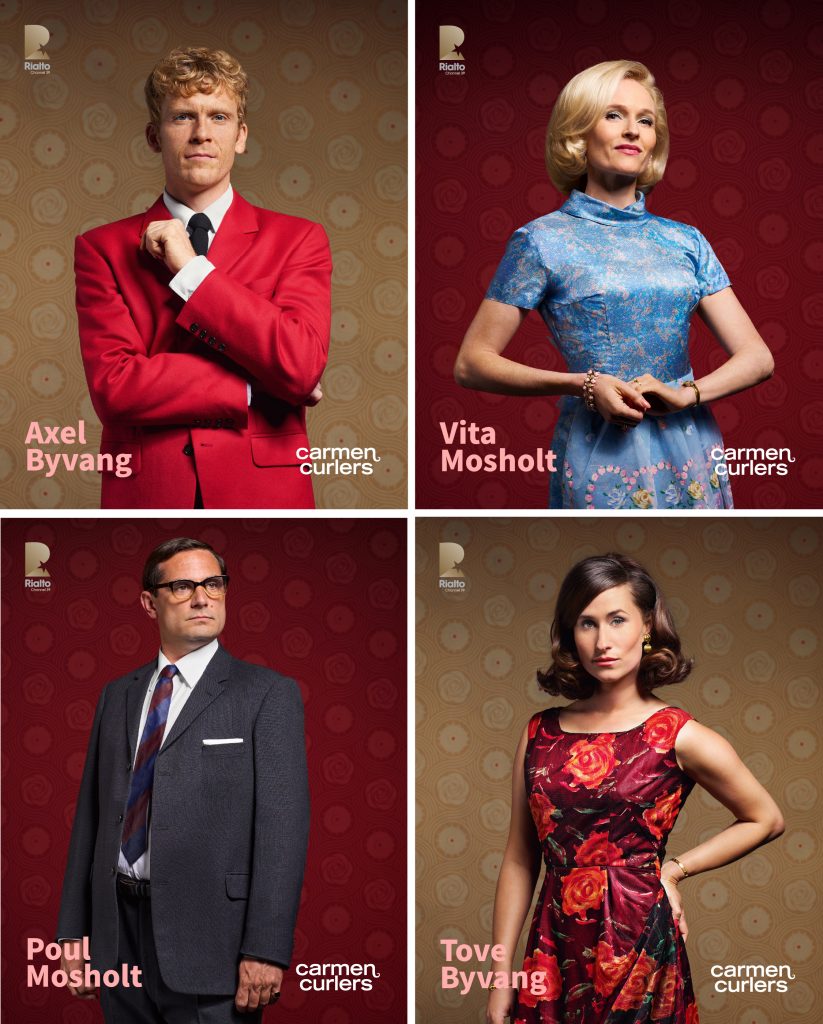
Heeno’s attention to character is what saves the style from becoming empty. She asks the useful, intimate questions: What do they earn? What do they vote for? What do they read? What do they dream about? What are they afraid of? What music do they play when nobody is watching? From these answers come the clothes, the hair, the furniture, the posture. Style becomes biography.
“Money changes people, yes, but first it changes the curtains.”
This is especially true of the women. Heeno did not want them observed at a decorative distance, trapped as polished period figures. She wanted them contemporary in feeling: sweating, working, failing, changing. These women have ambition and bad mornings. They get dirty. They make mistakes. They are not icons of an era; they are people moving through expectation, desire and work.
Birthe’s journey makes this visible. She moves from scruffy farmer’s wife to boss lady, and her transformation is written through dresses, make-up, hair and confidence. But the point is not that she becomes more elegant. The point is that she becomes more herself.
For all the hair, colour and cleverness, Carmen Curlers finds its richest drama in ordinary rooms. Heeno is not interested in explosions or car chases. She prefers the charge between two people: the look, the silence, the small betrayal, the moment a dream becomes too large to hide.
“Style becomes biography.”
In my view, Carmen Curlers understands that glamour is never just glamour. It is pressure, performance, hunger, hope and occasionally a very good dress.
Heeno hopes audiences fall in love with the characters and surrender quickly to the story of the crazy, restless sixties, where anything feels possible.
And they do.
Because this is a series about invention in every sense: the invention of a product, a business, a fortune, a future, and finally the self – which is always the most dramatic and least tidy invention of all.
The hair may be set.
The world is not.
Mette Heeno is a Danish screenwriter, creator and producer whose work moves comfortably between comedy, drama and the deliciously unstable territory in between. A graduate of the National Film School of Denmark, she has written across film and television, with credits including Terkel in Trouble, Splitting Up Together, Snow Angels and Carmen Curlers. With Carmen Curlers, Heeno turns the true story of a Danish beauty invention into a vivid ensemble drama about class, ambition, women at work and the restless glamour of the 1960s — proof that in her hands, style is never just decoration, but character, pressure and plot.