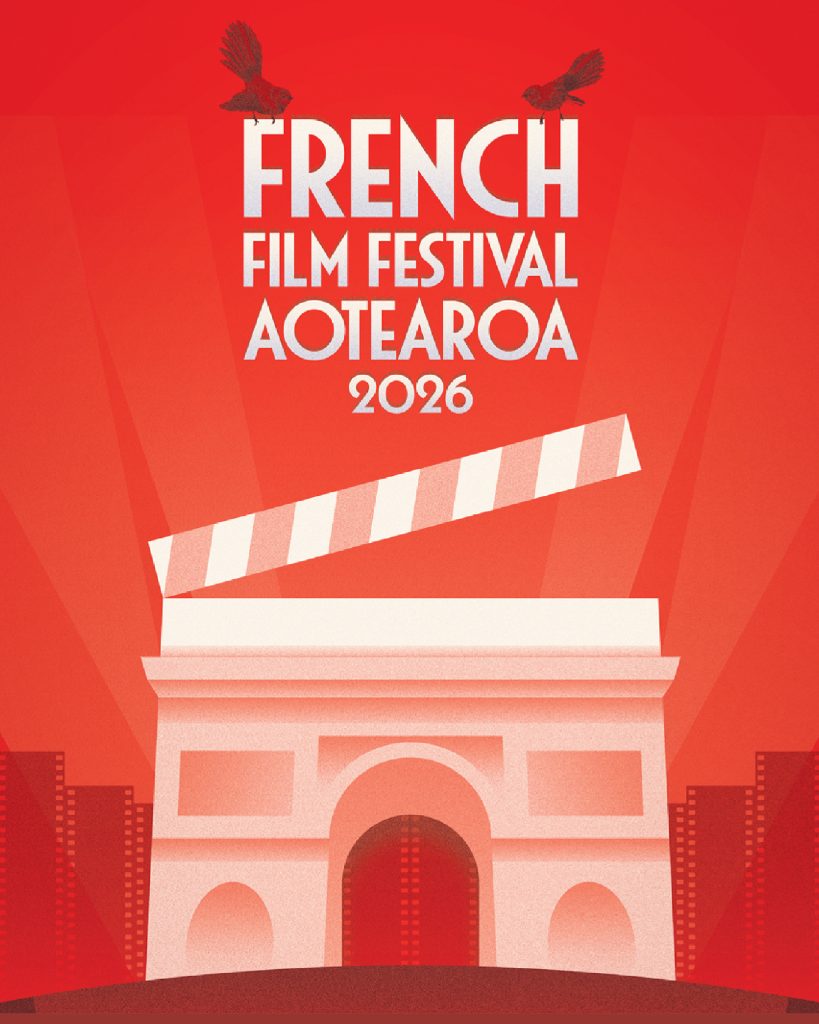
As French Film Festival Aotearoa lights up screens across New Zealand, a weekend viewing of Angelina Jolie’s Couture sparks a larger, slightly dangerous question: what does the rest of the world still want France to mean?
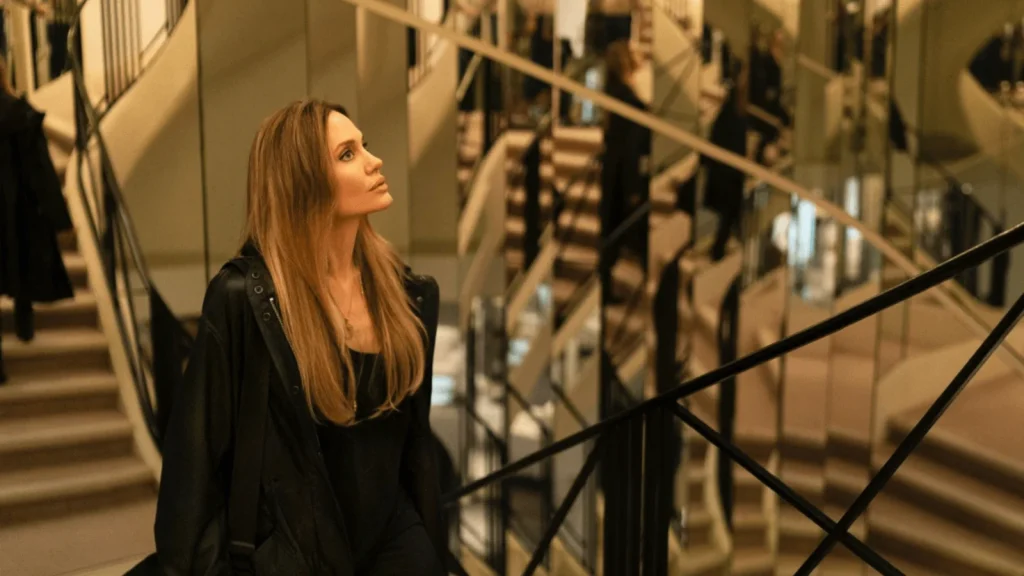
A still from Couture, or a French cinema-style image: backstage fashion lights, a Paris street at dusk, a woman half-turned away from camera, or anything involving silk, cigarettes, mirrors and emotional damage.
Over the weekend, I saw Couture, Angelina Jolie’s French film set inside the immaculate, anxious and faintly murderous world of high fashion.
Jolie gives the kind of performance that does not so much enter the room as lower the temperature in it. She is composed, bruised, beautifully severe – a woman holding herself together with silk, silence and possibly a very expensive grudge.
It may well be a career-best performance, though one hesitates to say such things too loudly in case the fashion people hear and turn it into a campaign.
But what stayed with me was not only Jolie, nor the clothes, nor the delicious spectacle of well-dressed people behaving as if a hemline were a matter of national security. It was the question the film left trailing behind it like perfume in a lift: why are we still so fascinated by French cinema?
More precisely, what does the rest of the world still want France to mean?
“French cinema has never simply been about France. That would be far too sensible.”
The France We Invent
French cinema has never simply been about France. That would be far too sensible, and nobody goes to the French for sensible.
We go to the French for atmosphere, appetite, contradiction and women who appear to have been born knowing how to leave a room.
France, on screen, is not a country so much as a beautifully lit argument. It is cigarettes on balconies, lovers in trouble, meals that become battlegrounds, apartments nobody could afford, and people saying “nothing is wrong” with the exact facial expression of someone about to destroy a family.
Paris, naturally, is the grand accomplice. Less a city now than a collective hallucination in a very good coat. We sit in cinemas in Auckland, Wellington, Christchurch and Dunedin, pretending to be immune to it all.
We are not.
The minute someone walks along the Seine looking melancholy, half the audience starts mentally buying linen.
“France, on screen, is not a country so much as a beautifully lit argument.”
The Festival Feeling
This is the spell French Film Festival Aotearoa casts so well.
It does not merely bring French films to New Zealand. It brings a mood. A temperament. A faintly dangerous belief that life should be examined properly – preferably over wine, under flattering light, and with at least one emotional complication no one intends to resolve before dinner.
French films do not rush to tidy things up. They let contradiction sit at the table. They understand appetite, vanity, melancholy and desire as part of the same long conversation.
“The festival does not merely bring French films to New Zealand. It brings a mood.”
Illusions, Suburbs and the Comedy of Memory
In Just an Illusion, Eric Toledano and Olivier Nakache, the award-winning directors of The Intouchables and A Difficult Year, turn to the suburbs of Paris in 1985.
It is a heartwarming, brilliantly tuned comedy that reminds us France is not only postcards, couture and people smoking near windows. It is also memory, family, embarrassment, neighbourhoods, bad timing and the exquisite comedy of trying to become yourself while everyone around you has an opinion.
That is the thing French cinema understands: even ordinary life is theatre if you frame it correctly.
“Even ordinary life is theatre if you frame it correctly.”
Saints, Sinners and Bad Timing
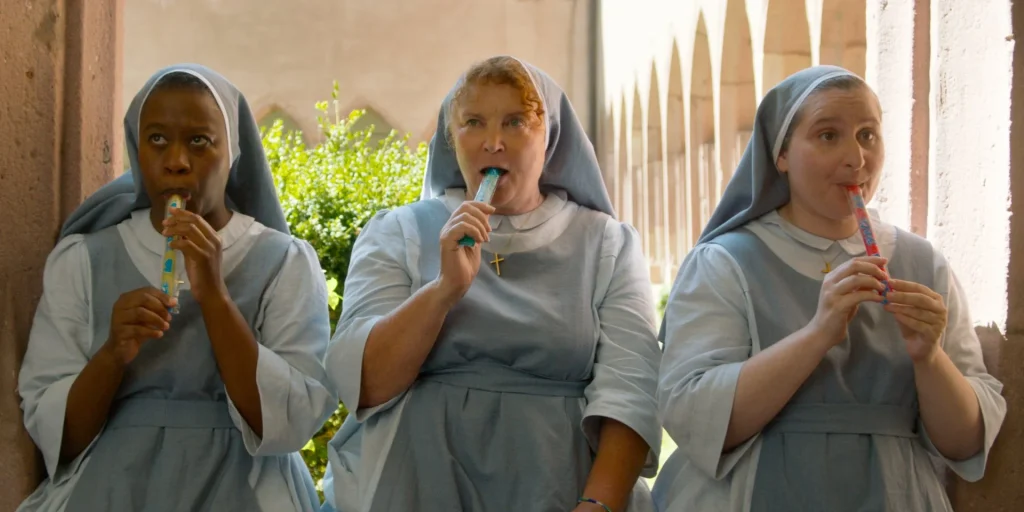
Then there is A Nun in the City, a heartwarming comic story where faith, freedom and past love collide – which is, frankly, very French.
Where else would a nun, a former romance and a crisis of conscience be treated not as melodrama, but as a perfectly reasonable afternoon?
The sacred and the ridiculous sit side by side in French films, often sharing a cigarette. The heart misbehaves. The past arrives without knocking. Nobody makes a clean decision when a complicated one will do.
“The sacred and the ridiculous sit side by side in French films, often sharing a cigarette.”
The Myth of the French Woman
And hovering over all of this is the great myth: the French woman.
Muse, mystery, marketing department.
She has been sold to us as effortless, which is usually the most exhausting thing a woman can be asked to appear. She eats bread, wears black, withholds explanation, and somehow becomes an international lifestyle category.
But French cinema, at its best, knows the myth is both seductive and suspect. It plays with the image, then smudges the lipstick. It asks who created this woman, who profits from her, and who gets trapped inside the fantasy.
“The French woman: muse, mystery, marketing department.”
Why We Keep Coming Back
Perhaps that is why we keep returning.
French cinema flatters our vanity while quietly insulting our intelligence – and we adore it for both. It tells us love is absurd, beauty is never innocent, taste is a weapon, and suffering, if unavoidable, should at least be well composed.
It teases us. It exposes us. It gives us exactly enough glamour to forgive the wound.
“French cinema flatters our vanity while quietly insulting our intelligence – and we adore it for both.”
Over on Rialto View
Over on Rialto View, our French Films collection continues that conversation at home.
It lets the festival mood linger a little longer: the dramas, the women, the outsiders, the lovers, the artists, the saints, the frauds and the exquisitely dressed catastrophes.
Because French cinema, at its best, does not offer escape.
It invites us to look at life properly – then raises one eyebrow when we pretend we understand it.
“French cinema does not offer escape. It invites us to look at life properly.”
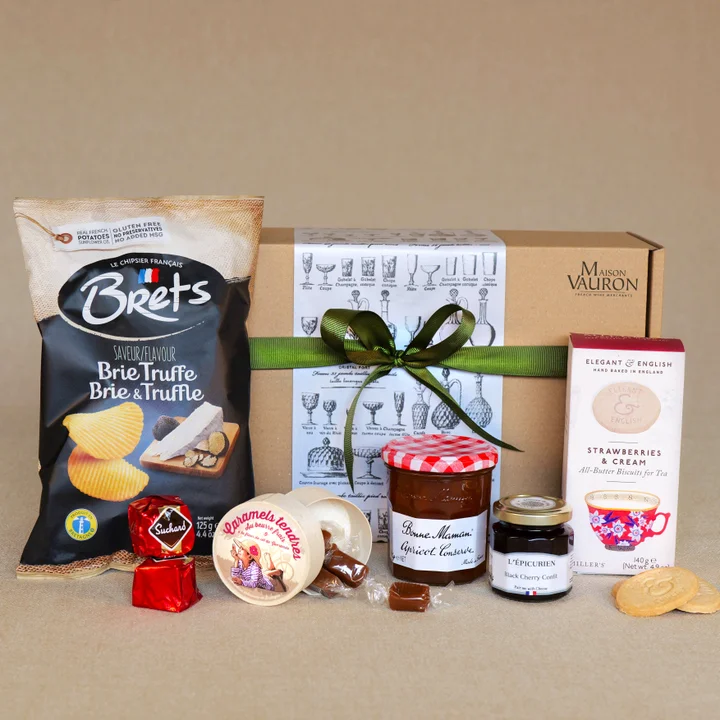
To celebrate Rialto View’s French Film Festival Collection, subscribers have the chance to win a beautifully presented Maison Vauron gift box — filled with French confections and sweet treats, plus Bret’s Brie & Truffle chips for a very French savoury twist.
How to enter:
Sign up to the View Mag EDM and you’ll go in the draw to win.