Director: François Ozon
Country: France
Writers: Albert Camus, François Ozon, Philippe Piazzo
Actors: Benjamin Voisin, Rebecca Marder, Pierre Lottin
Written by Tom Augustine
Prolific French filmmaker François Ozon’s adaptation of Camus’ enduring classic, releasing next week, is a fairly direct translation to the screen, but one with undeniable aesthetic and sensory pleasures. Sumptuously recreating colonial Algeria in shimmering black and white, Ozon largely ensures the mysterious profundities of Camus’ novel endure.
I read Albert Camus’ 1942 novella The Stranger for the first time this summer. It was about as dismal a summer in Aotearoa as I can remember, humid and stormy for pretty much the entirety of the Christmas and New Year months, standing in sharp contrast with the arid desert heat of Camus’ story. At near or just over a hundred pages, depending on the volume, the book is one of the more accessible of the classics of the 20th Century, in style if not content (though its central, eclipsing ennui is surely understandable by most) — I often recommended it to students at the high school where I taught if they’d already exhausted old standards like The Great Gatsby and Of Mice and Men. It helps that The Stranger (or The Outsider, as I encountered it) has a distinct feeling of maturity that teenagers are innately drawn to — its nihilism is the kind of initially shocking perspective that younger readers find radical and fascinating. In Camus’ work, it frequently, legitimately is both of these things — his doomed, remarkably modern protagonist Meursault is one of the most vividly rendered figures in literature of the era, while also being a fundamentally impenetrable figure, an unknowable, at times nearly alien being. This past summer was one of upheaval for me — there were many changes in my life, and it passed in something of a daze that suited The Stranger perfectly; you read the book quickly, but Meursault walks alongside you long after, no matter the weather.
It was not my first Camus, but I must admit that The Stranger was my first experience with François Ozon, the prolific French filmmaker behind films like 8 Women and Swimming Pool, and more recently Everything Went Fine and When Autumn Falls. Even those who watch films for a living have their blind spots, and Ozon has long been one of mine, a filmmaker of solid if not universal renown whose stately-seeming French projects had the sheen of respectability coupled with, if I’m being honest, an occasional funk of mustiness that put me off. The lure of seeing such a richly composed adaptation of this sacred text, so close to my having read it, was an irresistible one — what results is a film of occasionally glaring fidelity to the source material, a sumptuous experience that translates page to screen well, even if it fears to range further afield that Camus’ original vision. It is a film with an intensely studied, artfully composed approach — occasionally, such rigorous formal control can feel suffocating, but in the telling of this particular story, it mostly illuminates the mysterious contours of this tale, where self-consciousness on the part of the filmmaker mostly stands in contrast to a character study of a man so sure of himself that it leads to his doom.
The narrative itself is famous for its simplicity. Algiers, 1938. Young, handsome office drone Meursault (a superbly unreadable Benjamin Voisin) is adrift in a life of pleasant simplicity — he wants for nothing, though he has very little. Most things in this life are of ‘no consequence’, whether it be material possessions, friendships or the possibility of romance. His mother dies at a nursing home nearby — he attends the funeral without shedding a tear. He begins an affair with Marie, a pretty young Frenchwoman, and contends with fellow locals, all of whom are either down on their luck or the kind of person with whom you’d avoid going down a dark alley. On a trip to a friend’s beach house, a tense encounter with a local Arab contingent, angry at Meursault’s friend Raymond’s treatment of one of their women, leads to Meursault performing a cold-blooded act of murder, an act that will come to define the rest of his life. What’s fascinating about The Stranger, both novel and film, is the way in which this is told — rooted resolutely in the perspective of Meursault, we come to know his worldview, which is one of pervading nihilism, unable to contend with the absurdity of the matter of his own existence. As Meursault is tried in legal court and the court of public opinion, Meursault’s seeming inability to do anything but tell the unfettered truth, even in his own defense, is simultaneously enraging and perversely admirable — what we are invited to take away from Camus’ story is less immediately knowable, and may vary from person to person.
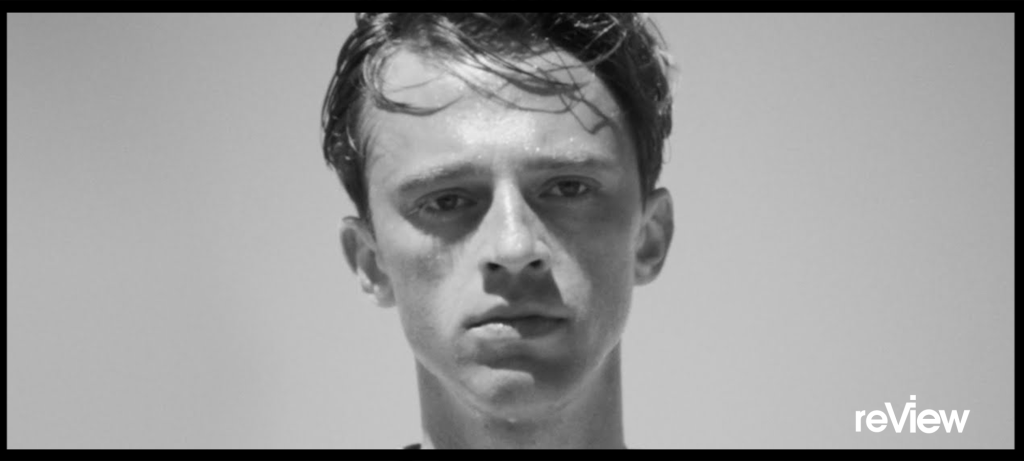
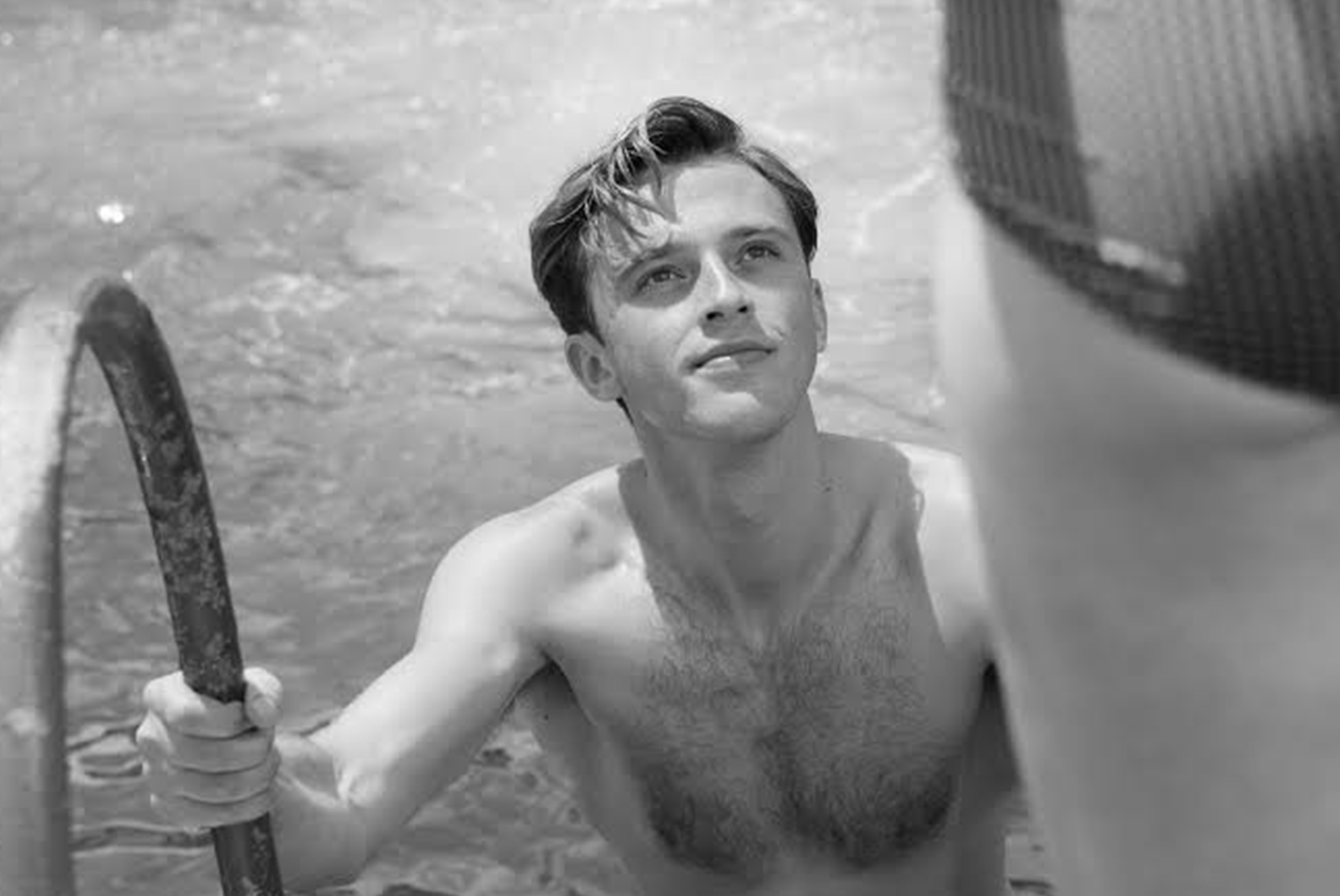
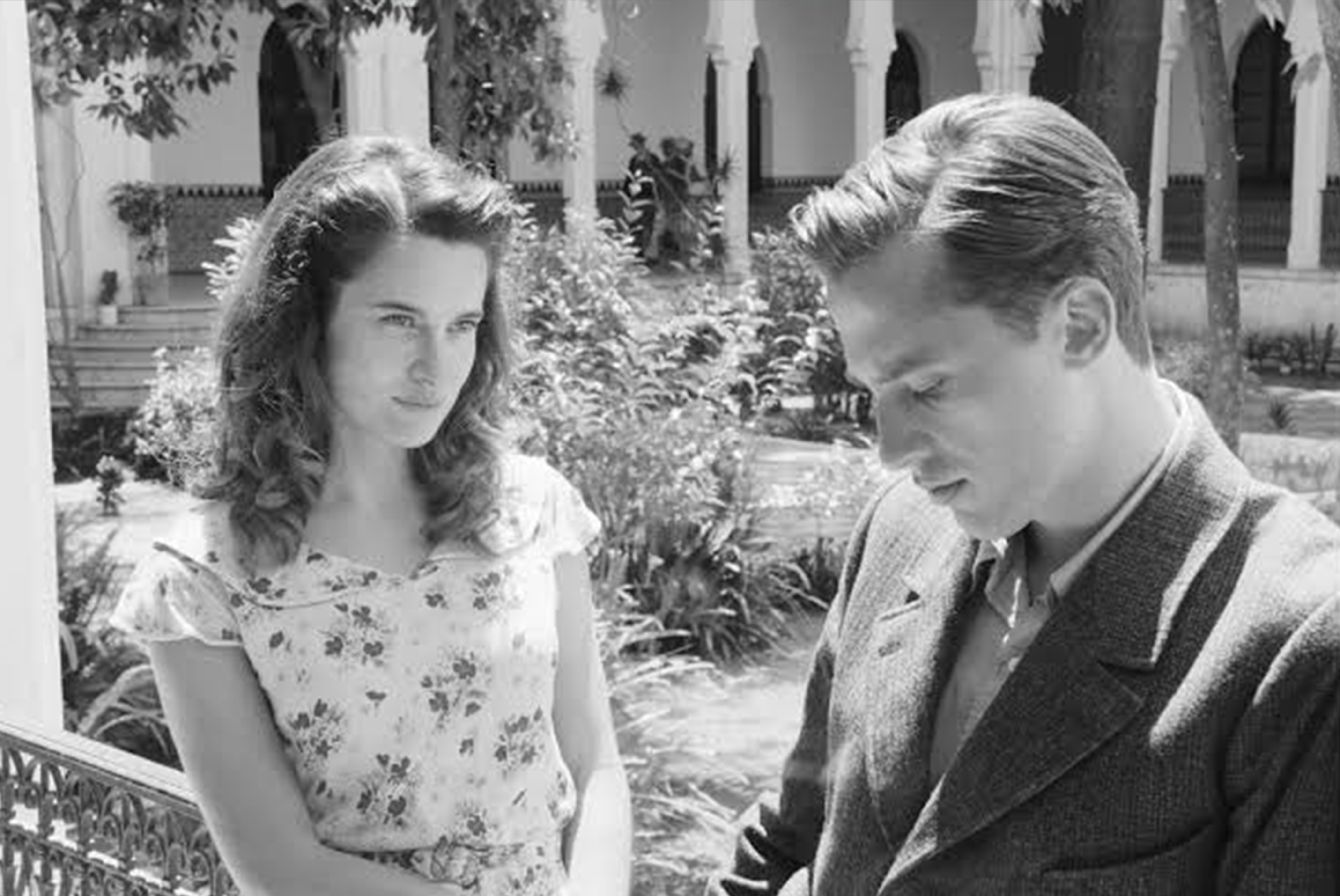
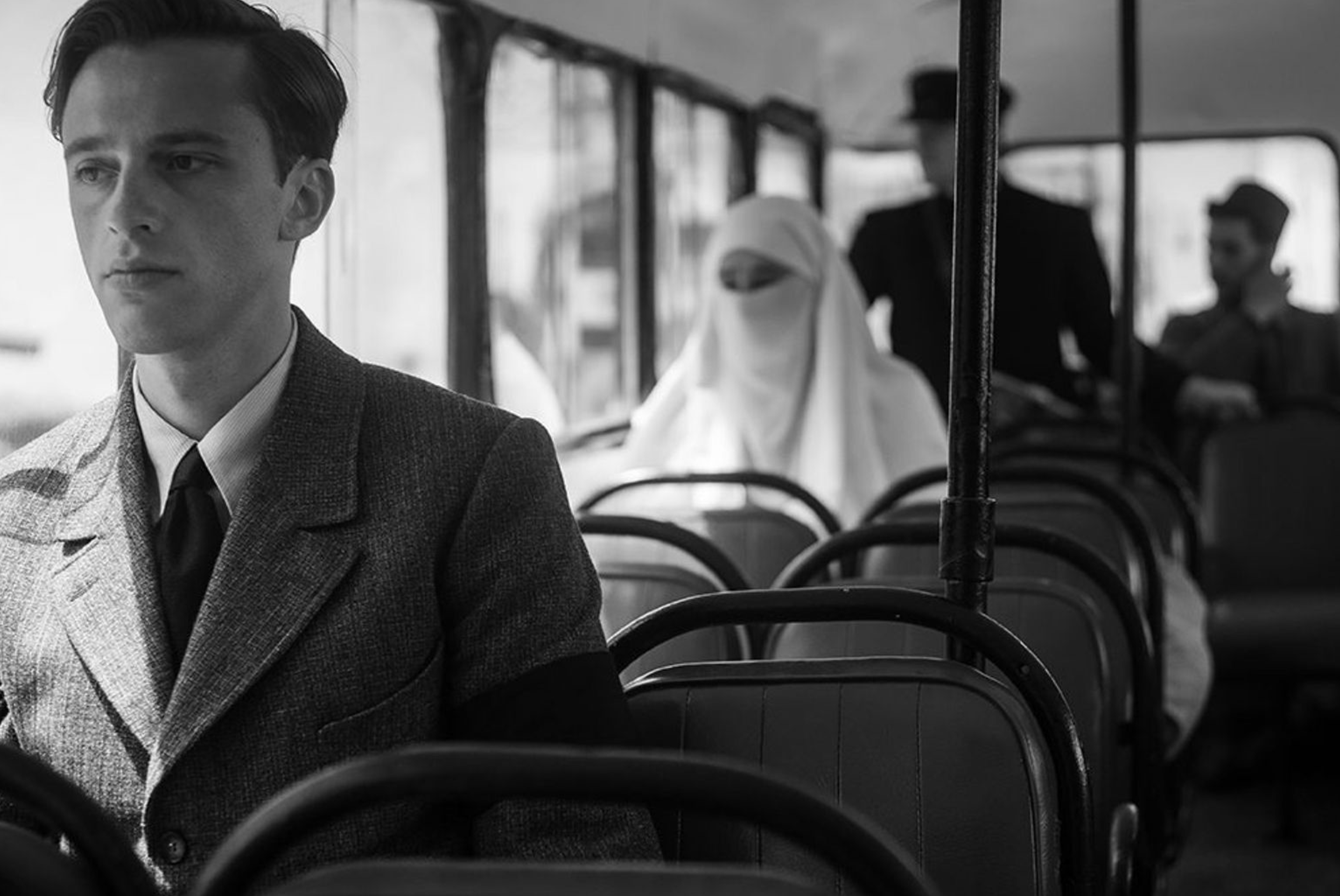
On the one hand, Ozon’s sledgehammer simplicity in the attempt to render Camus’ words on screen is a blunt tool beating away at a text of considerable depth. On the other, it’s a boon: if Ozon is not especially nuanced in what he himself is bringing to the story, that is all the better for a character who sees no nuance in any situation, because no situation has any real ‘meaning’ to begin with. Thus, Ozon himself largely fades into the background, instead providing us with lush recreation of 1930s Algeria, framed in black and white so crisp that its textures linger in the memory long after the credits roll (hilariously set to The Cure’s ‘Killing an Arab’, famously drawn from The Stranger itself, in an amusing reflection of the film’s literalism). He is aided by a strong cast — Voisin is a wonderful find, inhabiting the handsome blank slate of Meursault in a way that ensures we are endeared to him without knowing him especially well. Rebecca Marder and Pierre Lottin, as Marie and Raymond respectively, operate as angel and devil on Meursault’s shoulder, while arthouse cinema heavyweight Denis Levant makes a brief but exceedingly welcome appearance as Meursault’s bedraggled, dog-beating neighbour. Swann Arlaud, so strong in Anatomy of a Fall, provides The Stranger’s only truly unwieldy and poorly executed scene, an overly histrionic debate between murderer and priest that shows the film’s hand too willingly. Some minor choices Ozon makes bring The Stranger to our times, lacing in a minor erotic frisson to much of Meursault’s interactions with other men, and overtly commenting on the colonial French presence in Algeria, whose violent and uncaring conditions reflect on Meursault’s predicament in a way that Camus perhaps wasn’t willing to elucidate in his time. Ozon has a seductive interest in the seemingly idyllic locale, but he operates from a distance, as though Meursault’s tragic indifference has filtered into Ozon’s own approach. It is, like Meursault, a work of contradictions — a film of very little risk or sense of adventure, but undeniably accomplished, even profound.
The Stranger opens in cinemas 30 July.