Director: David Ayer
Country: US
Writers: Cameron Alexander
Actors: Brad Pitt, Odin, J.K. Simmons, Anna Lambe
Written by Tom Augustine
Shot in Aotearoa, this Brad Pitt vehicle certainly makes the most of our country’s scenic wonder, capturing the high country in ways that maximise its cinematic potential. It’s a shame such grandeur is imprisoned within such manipulative and jingoistic confines, in a film that strives to point your nose in the direction it indicates.
The dog doesn’t die in Heart of the Beast. The film wants you to know that up-front. As the film opens, a car driven by an unnamed Indigenous American woman pulls to a stop on a remote country road, where the dog at the heart of this story stands expectantly, before flashing back to the events that led the dog there. We are aware that this is the film’s ending point in advance — fears that we may have to witness this cute canine expire on screen (and any resulting tension therein) are thus expelled. A discerning viewer may wonder why we need to flashback to the preceding events at all, then — doesn’t such a reveal essentially deliver the information this audience requires? But then, of course, we wouldn’t have a movie. As it stands, we don’t have much of one anyway. In opting for this opening, schlocky faux-teur David Ayer’s woeful film points us, perhaps unintentionally, toward the unsettling reading undergirding this decision.
Does the dog die has become a rallying cry, of sorts: audiences willing to withstand any level of cruelty to other humans, but who draw the line at the death or suffering of a creature that is inarguably innocent. It stands to reason that studios are as painfully aware of the total willingness of audiences to avoid a movie in which The Dog Dies, because of their unwillingness to open themselves to the pain such imagery may spark within them, much like the era of trigger warnings that briefly took hold in the 2010s. Is it cynical of me to assume that Heart of the Beast kneecaps its own potential for dramatic potency by eliminating doubt in its first scene? Perhaps, but Heart of the Beast is itself a cynical film posing as a sincere one, a film of insidious intent that uses a cute dog to paper over what it really has to say. Surely that’s a far worse fate for our beloved pooch to suffer.
Like a lot of divorced dads, Pitt’s newly-liberated ventures included retreating to ‘dude sports’ like F1, and otherwise from society entirely, with a dog in tow that loves him unconditionally. Pitt remains an incredibly watchable star, even as, post-Once Upon a Time… in Hollywood (for which he won an Oscar) his work has become ever-more conservative in both style and content, not dissimilar to Tom Cruise’s long-term efforts to meld his real-world personality and numerous placeholder characters together, presenting to an audience a kind of anonymously ‘movie star’ persona (we see this in other public-minded male stars, too like Dwayne ‘The Rock’ Johnson). When we watch these films, we don’t see Ethan Hunt or… whatever Pitt’s character in F1 was called, we see Tom Cruise and Brad Pitt. This kind of thing stands apart from action stars like Jason Statham and Alan Ritchson, who have a similar blurring of persona and character, because of the notoriety these big-tent stars carry, and the budgets that follow. Both Cruise and Johnson, experiencing the limits of such an approach, are starting to move away from that form — see this year’s forthcoming Digger, and last year’s The Smashing Machine — but Pitt seems to be retreating ever-further into it.
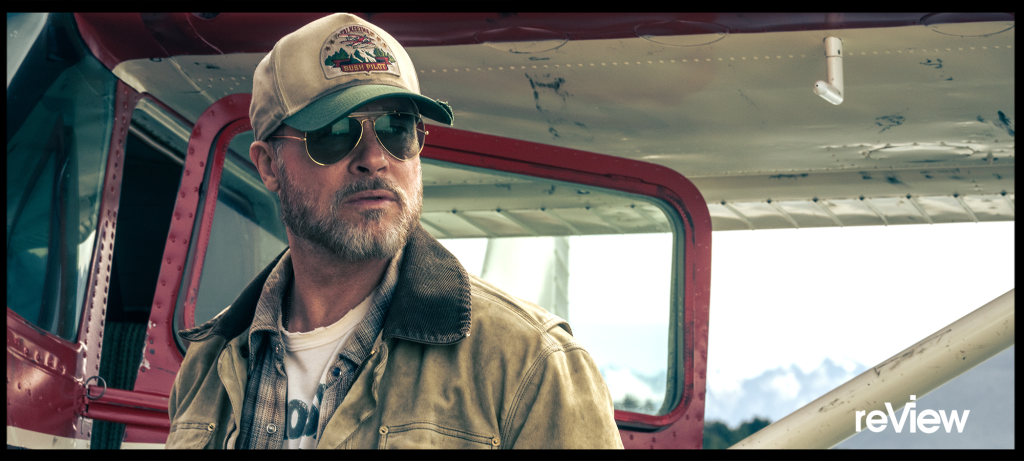
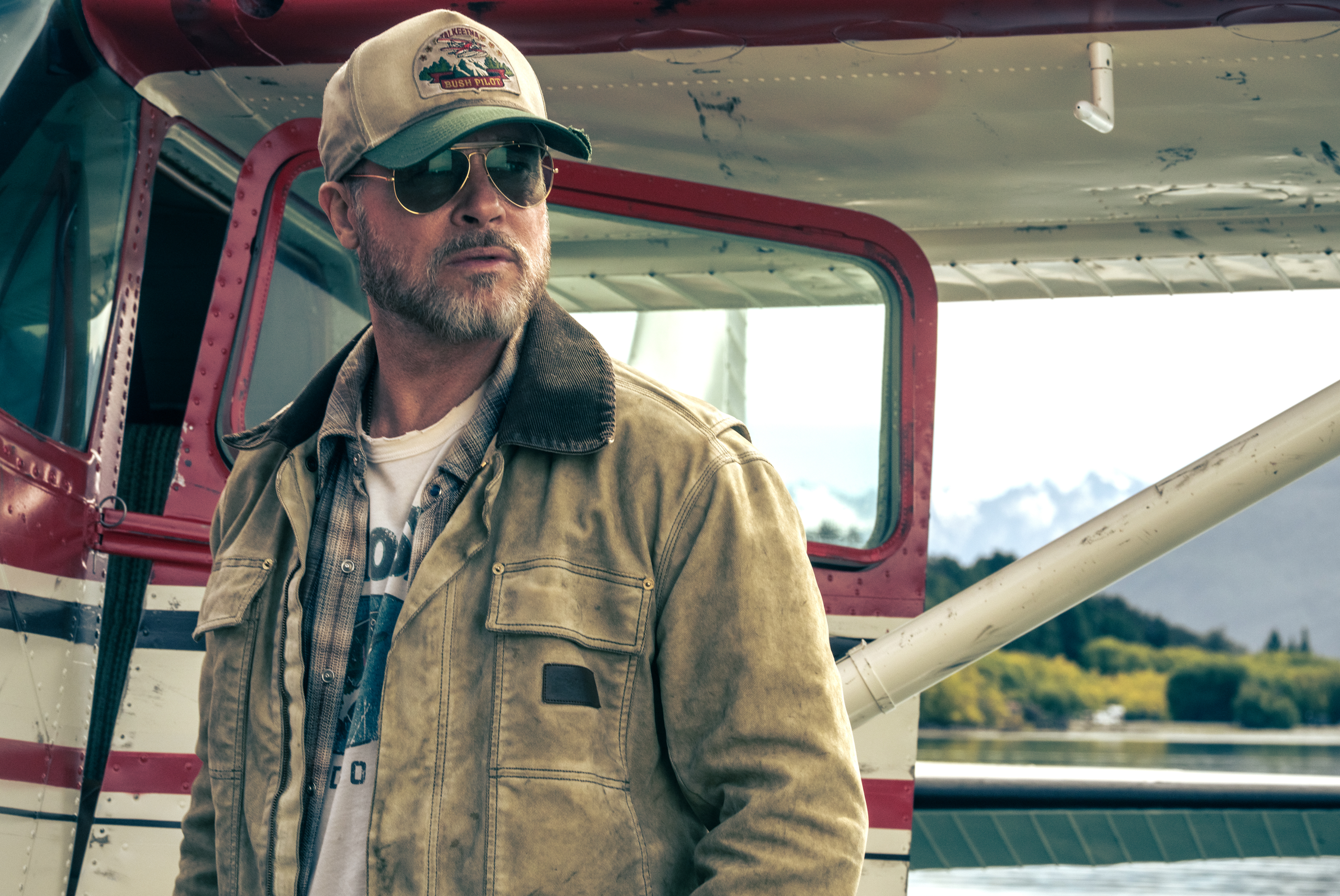
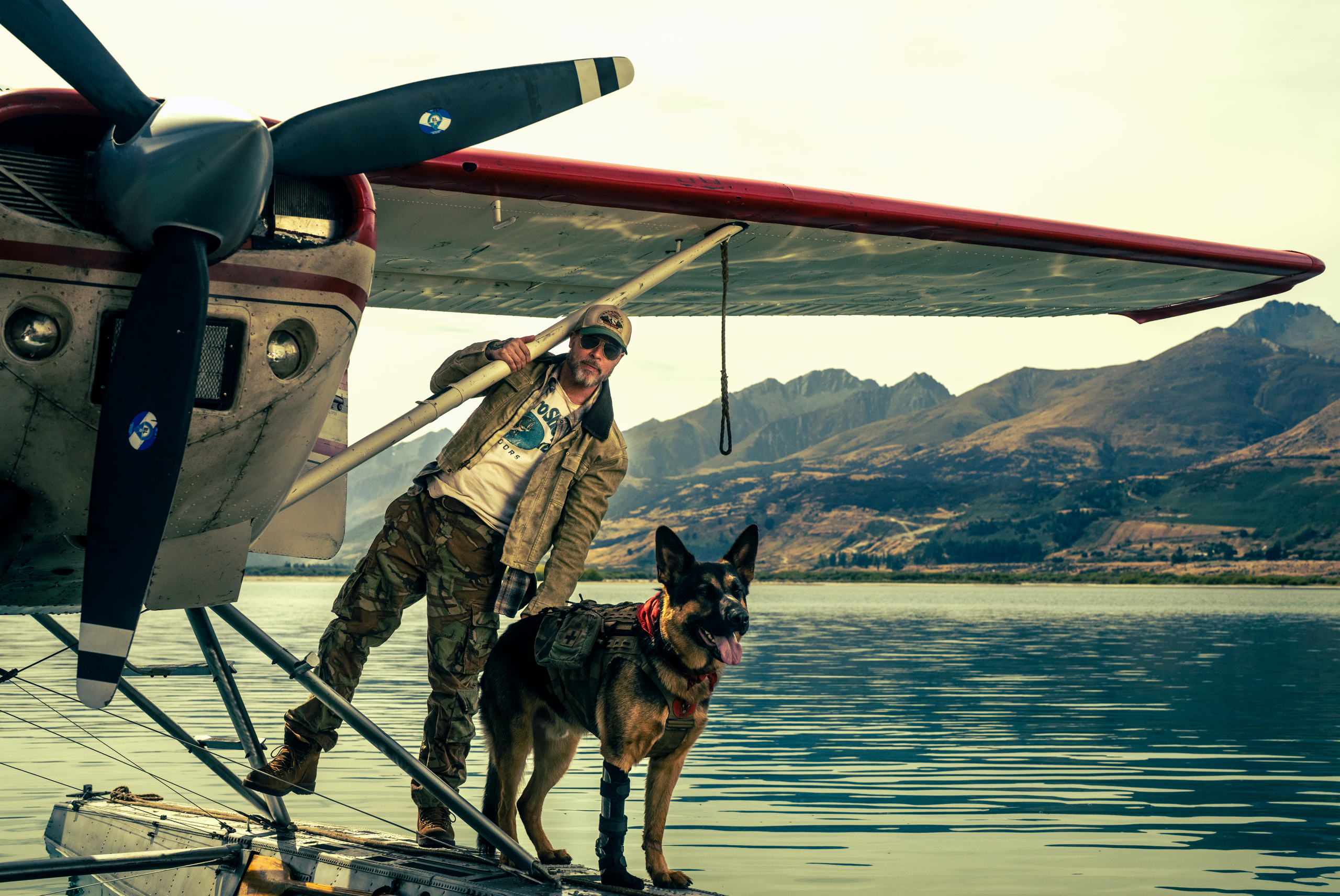
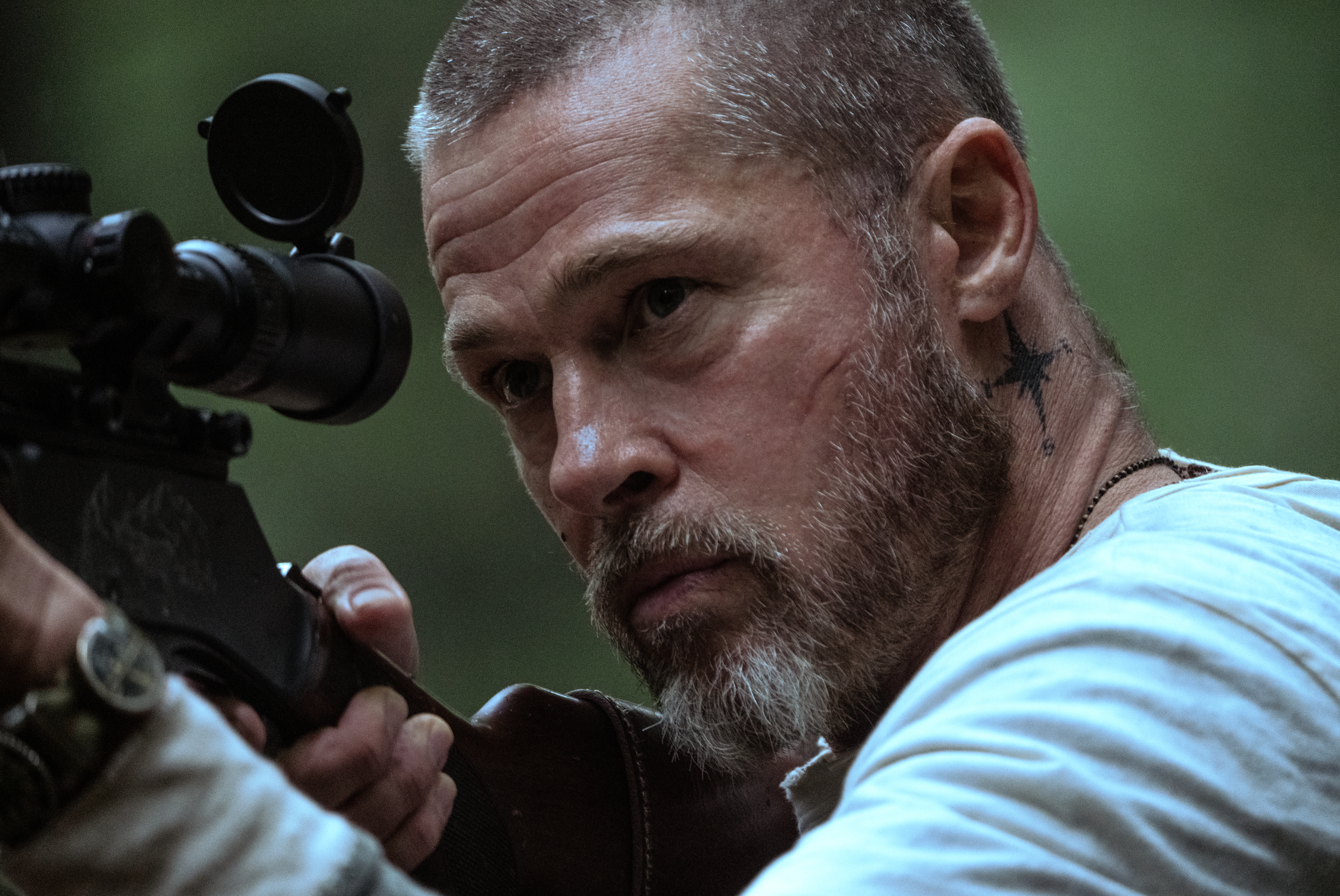
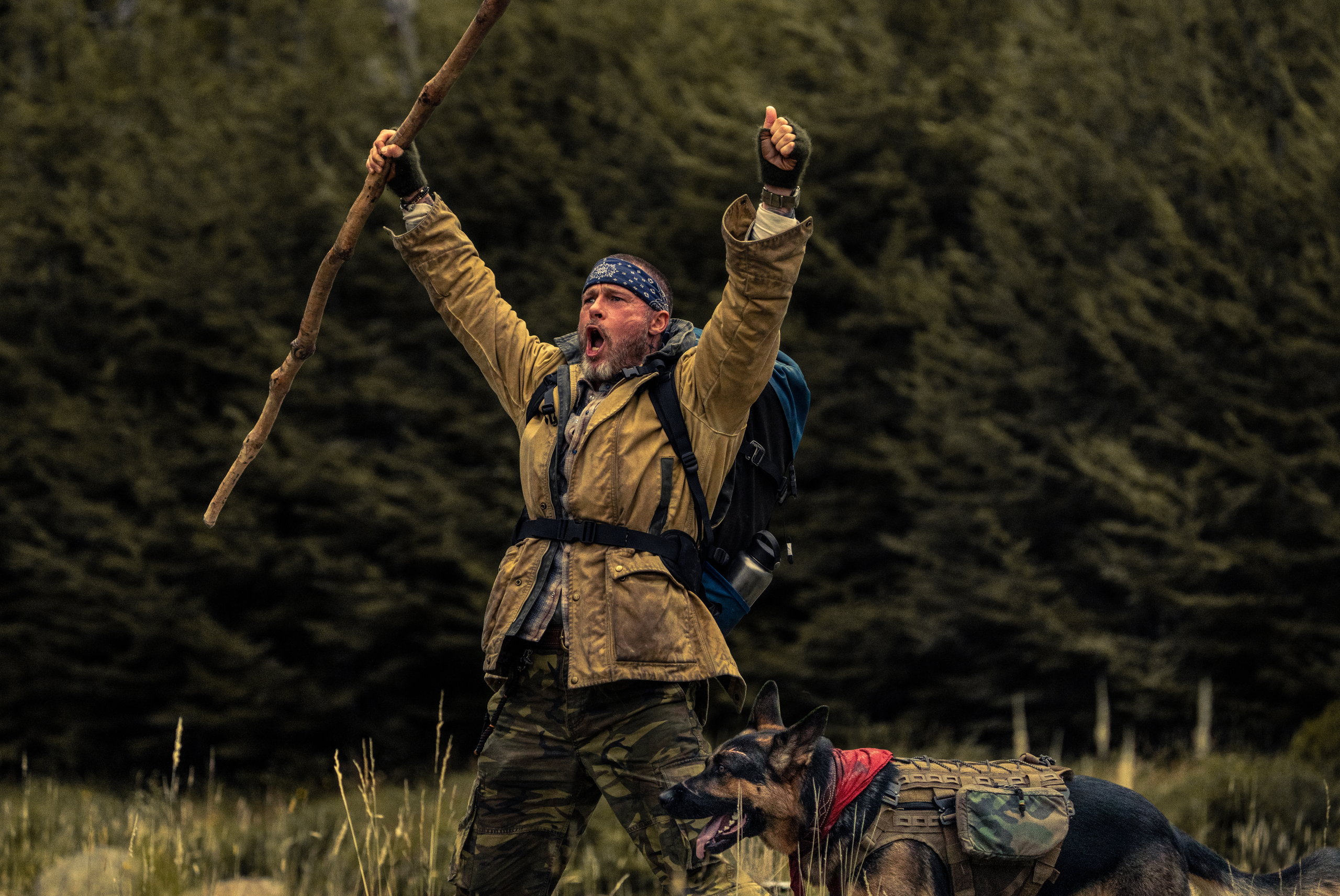
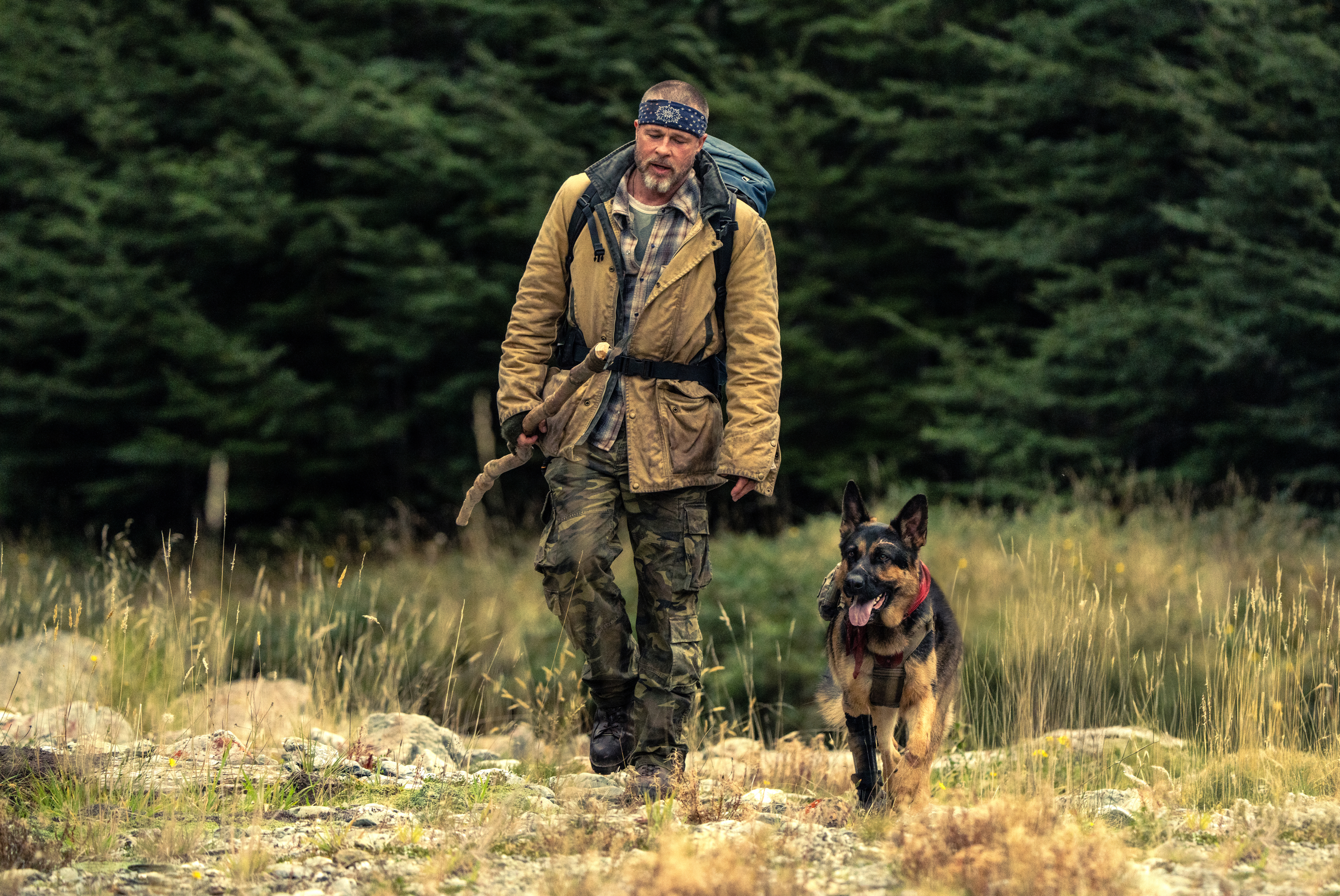
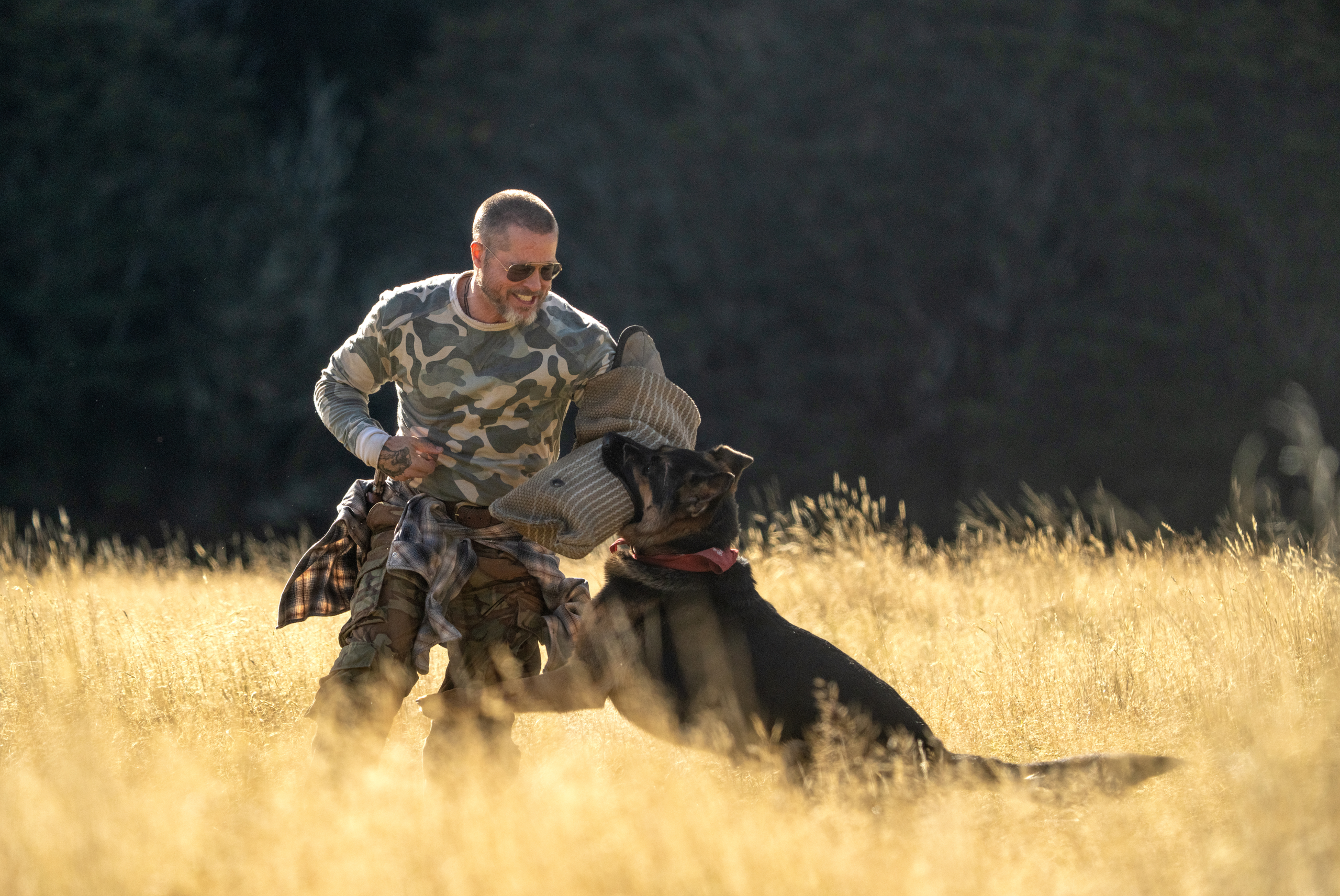
And so we have Heart of the Beast. Pitt plays ‘James Belmont’, a Brad Pitt type who has served decades in combat zones alongside his beloved pup Odin, a combat-trained dog who experiences the same type of PTSD that he does. In hazy snatches of dreamlike recollection, we come to understand that both served in the battlefields of the Middle East: likely Iraq or Afghanistan. Years later, Pitt and Odin, grizzled and war-weary, retreat to ‘somewhere in Alaska’, a land that looks curiously like Aotearoa, flying a seaplane to remote areas to get back in touch with reality. When Pitt experiences a heart attack while flying the sea plane, they crash way-off course, and must shore up their military survival techniques to make it home, relying on their intuitive relationship with each other at every stage. Odin has suffered greatly in the theatre of war, having lost a limb and his teeth, replaced with titanium chompers. Along the way they will encounter grizzly bears, wolves, the elements, and Pitt’s still deteriorating health — but worry not, the dog’s gonna make it.
The story of stoic men and the dogs that help them feel is well-trod territory in cinema, and an easy pathway to an audience’s heart. Everything from White Fang to John Wick to, uh, Marley and Me (okay, not so stoic) to Once Upon a Time…in Hollywood find ample material in this vein — our natural proclivity toward unconditional love for a dog’s open, innocent face bypassing higher intellectual function. Few films lean on such shortcuts, and to such insidious ends, as Heart of the Beast, a film that asks us to bury any and all niggling questions about the history of man and dog onscreen to focus on the love the pair share. Ayer, whose films have always skewed fairly Trumpian, has at least wielded that to intriguing ends in the past — End of Watch, A Working Man, and especially Sabotage, a film that somehow synthesises what it must feel like to interact with hazardous chemicals (in a good way) — and occasionally even stumbles into the subgenre of ‘secretly woke action’ that I hold so dear, as in his greatest film, the modern classic The Beekeeper. Here, such apparently accidental chances at nuance are few and far between.
We cannot ignore the presence of New Zealand in this conversation. The reason for Kiwi audiences to go to Heart of the Beast is to see our country on-screen — any self-respecting New Zealander, one hopes, would grimace at the masturbatory lengths to which the film’s American military love affair goes. It’s true that New Zealand looks fantastic in this — wild, rugged, almost-heaven, West Queenstown. It is so New Zealand that I found myself chuckling whenever the film attempted to assert that we were looking at Alaska. The film is also, bizarrely, of a piece with a lot of male, Pakeha New Zealand writing that prioritises the manly contours of our natural environment over people and their problems. This is the ‘Man Alone’ trope, in which rough-shod Pakeha blokes are encouraged to surrender to the sky their heart of anger amid high country weather. Much of our greatest cinema features elements of, or is in conversation with this trope, from Utu to Sleeping Dogs, The Quiet Earth to Coming Home in the Dark. The best of these utilise the Man Alone to reckon with the colonial scars that said Pakeha man’s presence in this land have inflicted. Suffice to say, none of that is present in Heart of the Beast — the Pakeha man’s place is here, no matter the trials they suffer, and their introspection is of a personal, rather than political kind (the personal of course being the political, but such depth of thought is not present in such a picture as this). The presence of Aotearoa’s scenic wonder here is made perverse, its presence an unquestioning and unquestionably beautiful kind of malignancy one imagines William Hobson could have sanctioned. At the very least, New Zealand’s tourism board will be pleased.
Unconfirmed behind the scenes rumours suggest a clash over final cut between Pitt and Ayer, who reportedly had competing versions, with Ayer favouring a ‘broader’ cut that butted heads with Pitt’s more ‘esoteric’ version, the final result landing somewhere between. Who, then, is to blame for the film’s sinister vein of American war-dog jingoism, culminating in an egregious, extended ‘God Bless Our Troops’ sequence and a heartstrings-tugging plea for the adoption of retired service dogs? The film certainly seems to be of a piece with the worldview of Paramount owner David Ellison, the Trump supporter attempting to reshape Hollywood in his image. Heart of the Beast, whether intentionally or not, reads as ‘Ellisonian’: a reflection of the mood of America’s white, wealthy overseers, centring macho white men, their trauma, their pain, and the means by which they wrest control back. The presence of the dog, then, feels exceedingly manipulative — the sugar that helps the medicine go down. And it does work, still, if my teary-eyed and applauding audience was anything to go on as credits rolled. How such willingness to be led by the nose by such overt, artless propaganda can still exist in an age of war, genocide and billionaire-led doomsday acceleration is beyond me, but then the ability to compartmentalise is one of the citizenry of First World nations’ most prized assets. The film’s stickily sentimental ode to the sacrifices of troops both human and canine belies the facelessness of the people with whom they were in combat. The Middle Eastern populace whose lands and lives were ravaged by such a military presence in the Iraq and Afghanistan wars, and now Iran and Gaza, that our heroes embody on a textual level, do not factor into this story at all beyond a single image of Pitt in military garb carrying an infant out of an anonymously-rendered desert combat area, and an earlier scene in which Pitt informs a fellow traveller played by JK Simmons (whose brief presence is one of the film’s few bright spots) that he shot an insurgent ‘in the head’ for threatening his beloved pooch. Boo-yah. Pax Americana. Such platitudes are dime a dozen in Hollywood, it’s true, but the nexus point that is 2020s Trumpism delivers such falsities to the point of intolerability. A better film that circles around similar conservative touchstones is Ridley Scott’s odd little slice of box office poison, The Dog Stars. The dog dies in that one. Go figure.
Heart of the Beast opens in NZ cinemas 24 September.