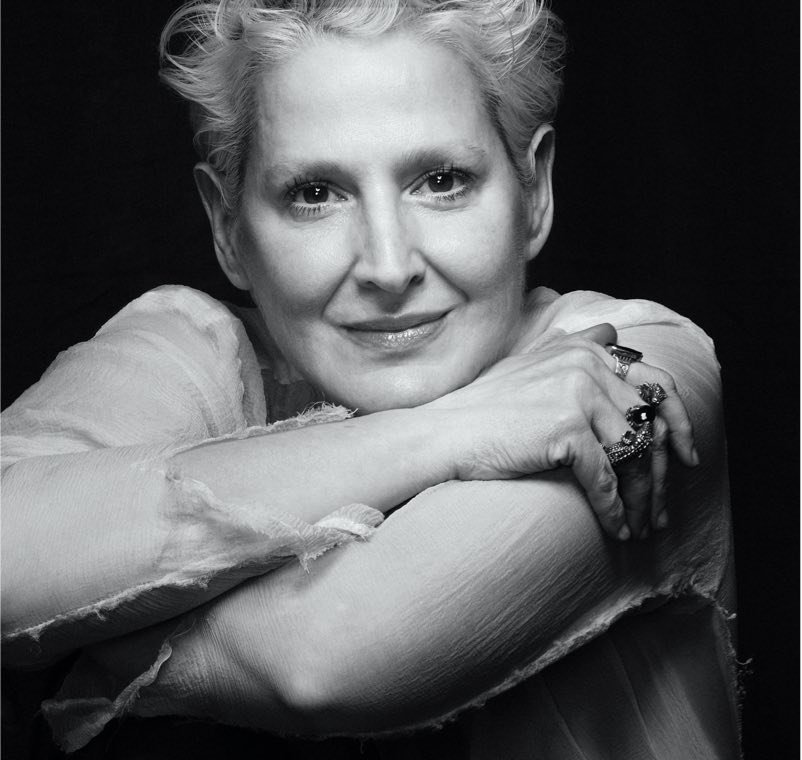
Dotti: The Face Beneath the Face

There is a particular kind of confidence required to do less.

In beauty, as in life, excess is often mistaken for effort. More product. More polish. More evidence that somebody has been very busy making perfection happen.

Dotti, the Australian-born, New York-based makeup artist, has spent years working inside fashion’s most polished rooms. Yet one of the things she became best known for was almost rebellious in its simplicity: making the makeup disappear.

Her long collaboration with Alicia Keys helped turn the so-called “no makeup” look into a global conversation. But the phrase is slightly misleading. Dotti’s approach was never about doing nothing. It was about doing enough, then knowing when to stop.

Skin was treated as something alive. Facials, acupuncture, healthy eating, exercise, oils, masks, cucumber, cooling techniques, even a jade roller all became part of the ritual. The point was not to erase the work.

It was to make the work feel invisible.

And beneath all of that sits the thing Dotti talks about most passionately: trust.

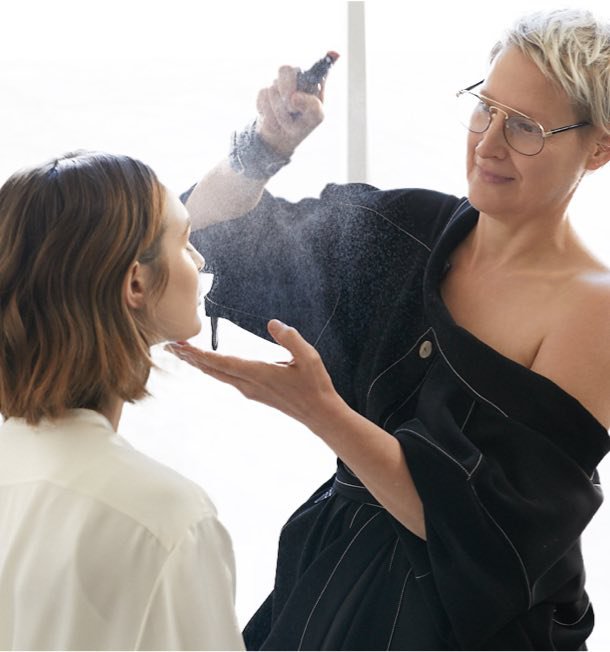
I was lucky enough to catch Dotti during the shoot and steal five minutes with her — which, on a working set, can feel like getting a private audience in the middle of a small storm.

“What can I see?” she asks. “I see fresh skin. I see… trusting.”

For her, a face is never simply a canvas. It arrives with history attached. Mood. Insecurity. Confidence. Exhaustion. The residue of whatever happened before someone walked into the room.

Then, for an hour or two, they place that face in her hands.

That is not a small thing.

“You can see someone fall in love with themselves.”

Dotti works across the full spectrum of makeup. She can do theatrical, heightened, sculpted, full glamour. Or almost nothing at all.

So restraint does not feel like restriction.

Quite the opposite.

For Dotti, stripping things back can be a kind of freedom. Rather than imposing beauty, she looks for what is already there and asks how little is required to let it come forward.

“I wanted to change the language that was out there,” she says. “Women just had to have all of this makeup to make them feel beautiful. I wanted to strip it back.”

There is something quietly radical in that.

Especially in an industry forever inventing new rules about what women should wear, what they should not wear, what age permits, what age apparently forbids.

Dotti has little patience for any of it.

“We’re individuals,” she says. “We should be celebrating individuality, whether it is a full beat, whether it is nothing.”

Exactly.

Beauty becomes considerably less interesting when everybody is following the same instructions.

Artist, therapist, healer, court jester

The longer Dotti talks, the clearer it becomes that makeup is almost the smallest part of what she does.

She describes makeup artists as therapists, artists, healers, court jesters.

That sounds theatrical until you understand the intimacy of a set.

People arrive carrying self-consciousness with them. They dislike their face, their body, their skin. Something has happened that morning. Someone has said the wrong thing. Sometimes insecurity enters the room before the person does.

Dotti reads it quickly.

Then she works to make them feel safe.

On a busy shoot, that can mean becoming protective as well as creative. People are moving in and out. There are lights, cameras, stylists, clothes, opinions, schedules, attention.

A face is being examined at close range.

Her instinct is to soften the room around it.

 

“I want to make sure they feel safe and protected.”

Perhaps that is why her version of beauty feels less like correction and more like restoration.

Not: let me fix you.

More: let me return you to yourself.

What makeup cannot hide

For all the transformative power of makeup, Dotti is very clear about its limitations.

“Makeup can never conceal what you can see in someone’s eyes.”

Nor, she says, can it conceal energy.

You can feel something from a person when you touch them, talk to them, stand inside their orbit. Makeup cannot bury that.

That may be the most interesting thing of all.

Here is a makeup artist whose career has been built on the face, yet who keeps insisting that the face is not really the point.

The eyes matter.

The energy matters.

The person matters.

In my view, Dotti’s “less is more” philosophy is not an argument against makeup.

It is an argument against disappearance.

The best makeup, in her hands, does not turn someone into somebody else.

It lets them come back into view.

And perhaps that is the finest beauty trick of all.

Next week in In My View: we stay behind the scenes and meet Brent Lawler.

Audio player cover
0:00 0:00