Director(s): Park Chan-wook
Country: United States
Author: Donald E. Westlake, Lee Kyoung-mi, Park Chan-wook
Actor(s): Lee Byung-hu, Son Ye-jin, Woo Seung Kim
Written by Tom Augustine
When people think of the Korean cinema boom of the early 21st Century, they will inevitably pay homage to three big names — Bong Joon-ho, Lee Chang-dong, and Park Chan-wook. There are of course other major auteurs fluttering just outside the main circle, most notably Kim Ki-duk, Hong Sang-soo (whose films are arguably as major, but too frequent and small-scale to create that same sense of momentousness) and Kim Jee-woon, but the Big Three are the ones who achieved true crossover success. Their major hits are undeniable — Parasite, Memories of Murder, Oldboy, The Handmaiden, Burning, Poetry and so on — achieving box-office success, awards recognition, and a passionate crossover audience willing to, as Director Bong put it, ‘overcome the one-inch barrier of subtitles’. One of the more impressive factors of this output is the distinctiveness of each filmmaker’s voice, and yet each film evokes an undeniable sense of the place from which they came, and echoes and rhymes with the film of the others. Bong and Park, in particular, enjoy much thematic and stylistic overlap — in their intricate stylisation, the playfulness of their violence, and particularly in their withering assessment of the state of capitalist Korea. Both have had their fair share of misses over the years — Bong’s Korean films are nigh-on unassailable, his international films assuredly not; Park, meanwhile, has found nearly all of his films becoming cult items, but everyone seemingly has one that doesn’t work for them (Lee Chang-dong, being the least prolific and most mysterious of the auteurs, operates in his own rarefied space).
Personally, I’ve always admired Park’s films more than loved them — my first foray into his work being Oldboy, that gateway film for so many young cinephiles exploring Korean cinema, which left me intrigued by its daring, but emotionally cold. Decision to Leave, the rapturously received, Vertigo-esque detective story led by an astonishing Tang Wei, seemed purposefully alienating and difficult to parse — unlike its subject, it was hard to love. I’d always held the kinky, clever The Handmaiden as my favourite Park, but a watch of his early effort JSA: Joint Security Area, a tragic wartime bromance, earlier this year finally added a contender to the mix. His latest, No Other Choice, is unlikely to rank as anyone’s favourite Park — it is a little too academic, the high arthouse mechanics of its construction at odds with its undercooked moral myth making. Yet, watching a Park film always carries reliably distinctive pleasures — few auteurs of his level have such a way with an idiosyncratic image, or such an eagerness to indulge in kink and eroticism. Perhaps what is most damaging within the structure of No Other Choice is the entirely less-common inclusion of half-baked satire — where much of the auteur’s output finds its way to real-world issues naturally through the development of character (as with both The Handmaiden and Joint Security Area), the question of capitalism and the warping effects it has on the psyches of those mired within it is of central, all-encompassing concern here. Indeed, it is material that feels closer to the work of Park’s contemporary Bong than any other film he’s made — but Bong’s sledgehammer approach to subtlety is not one that necessarily aligns to the precision of a craftsman such as Park Chan-wook. In swerving away from complexity, Park’s less savoury characteristics are more apparent, his overemphatic stylisation and shock tactics ringing with that same hollowness that nagged in that initial watch of Oldboy all those years ago. Park’s films are too assured to ever be abject failures — but frustrations remain.
Beloved Korean auteur Park Chan-Wook’s latest film is a devilish anti-capitalist satire, one that largely papers over some overly-simplistic thematic elements with the director’s customary visual flair. It is minor Park, a little too controlled for its own good — but allows space for a masterclass performance from star Lee Byung-hun.
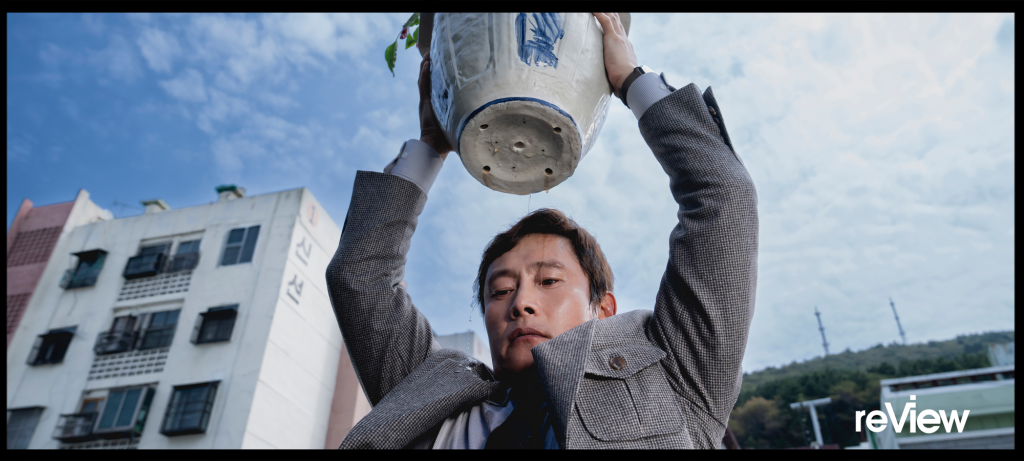
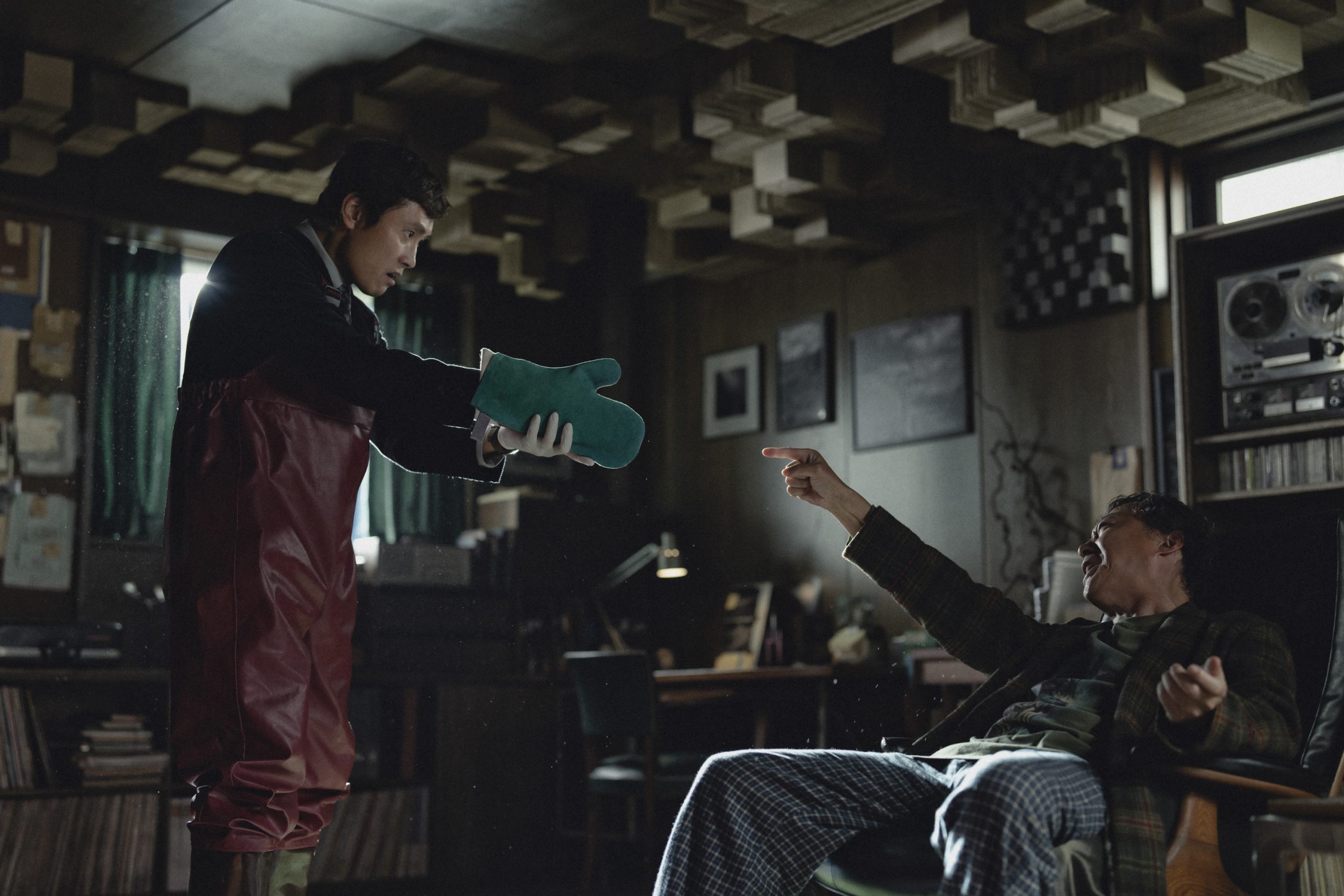
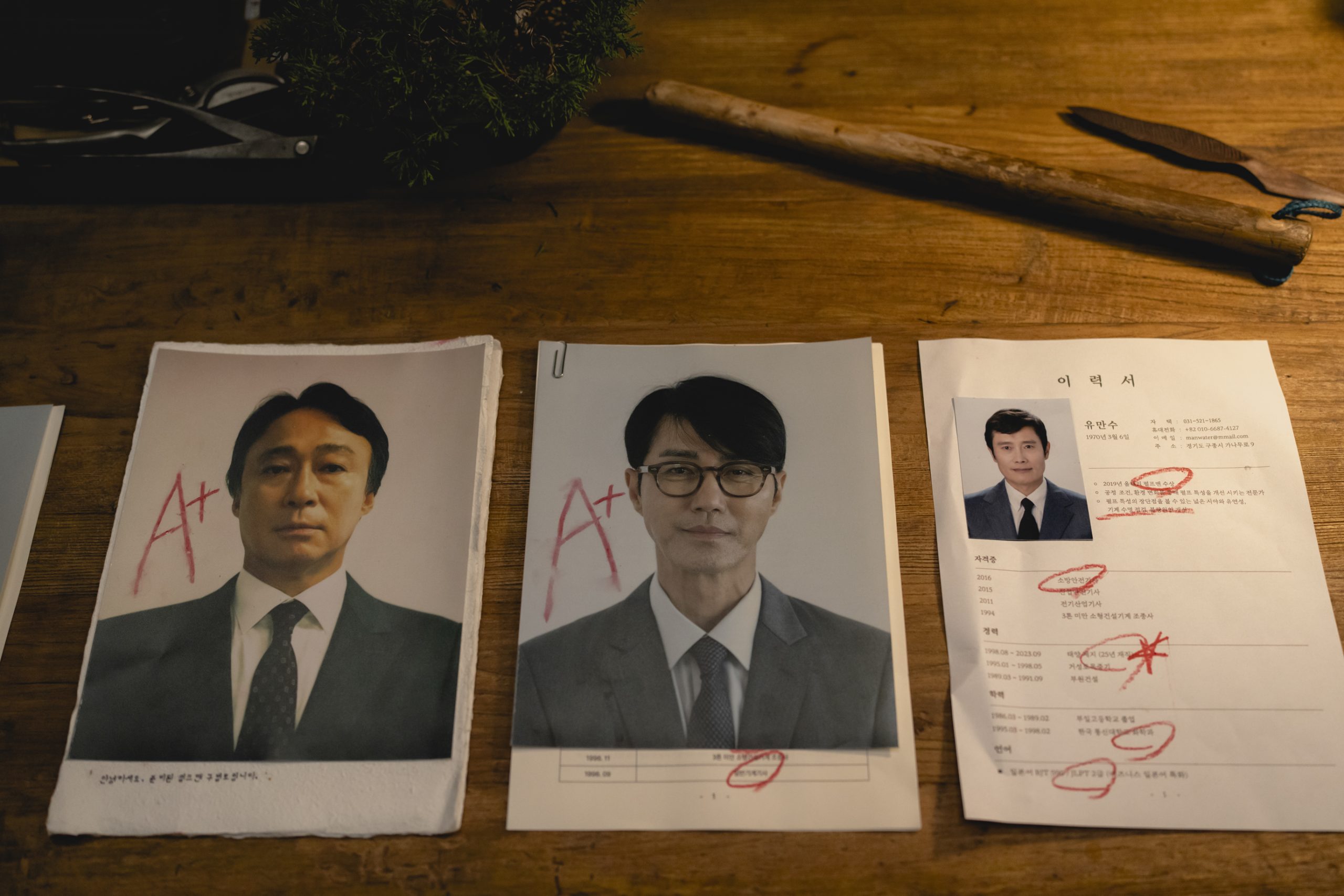
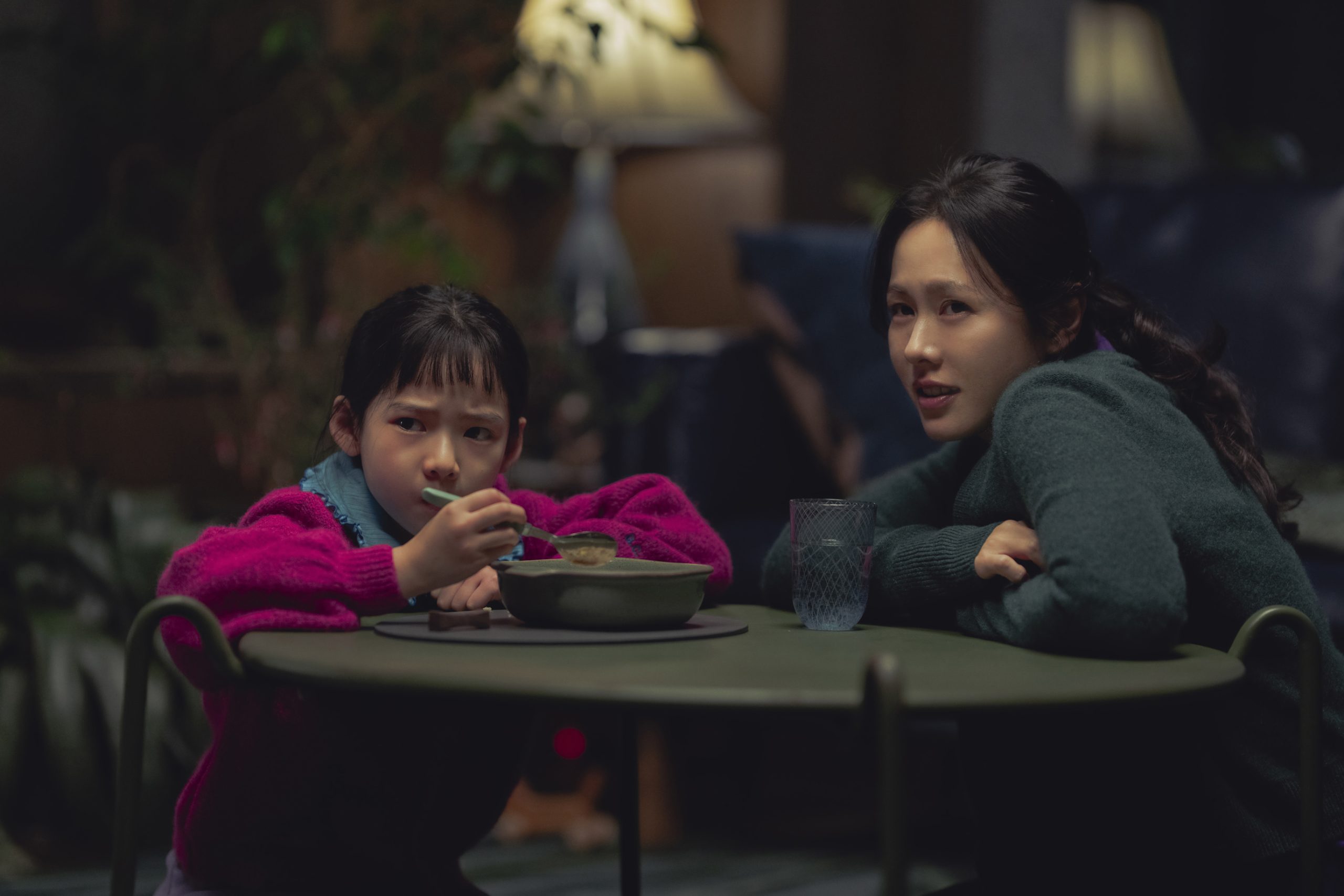
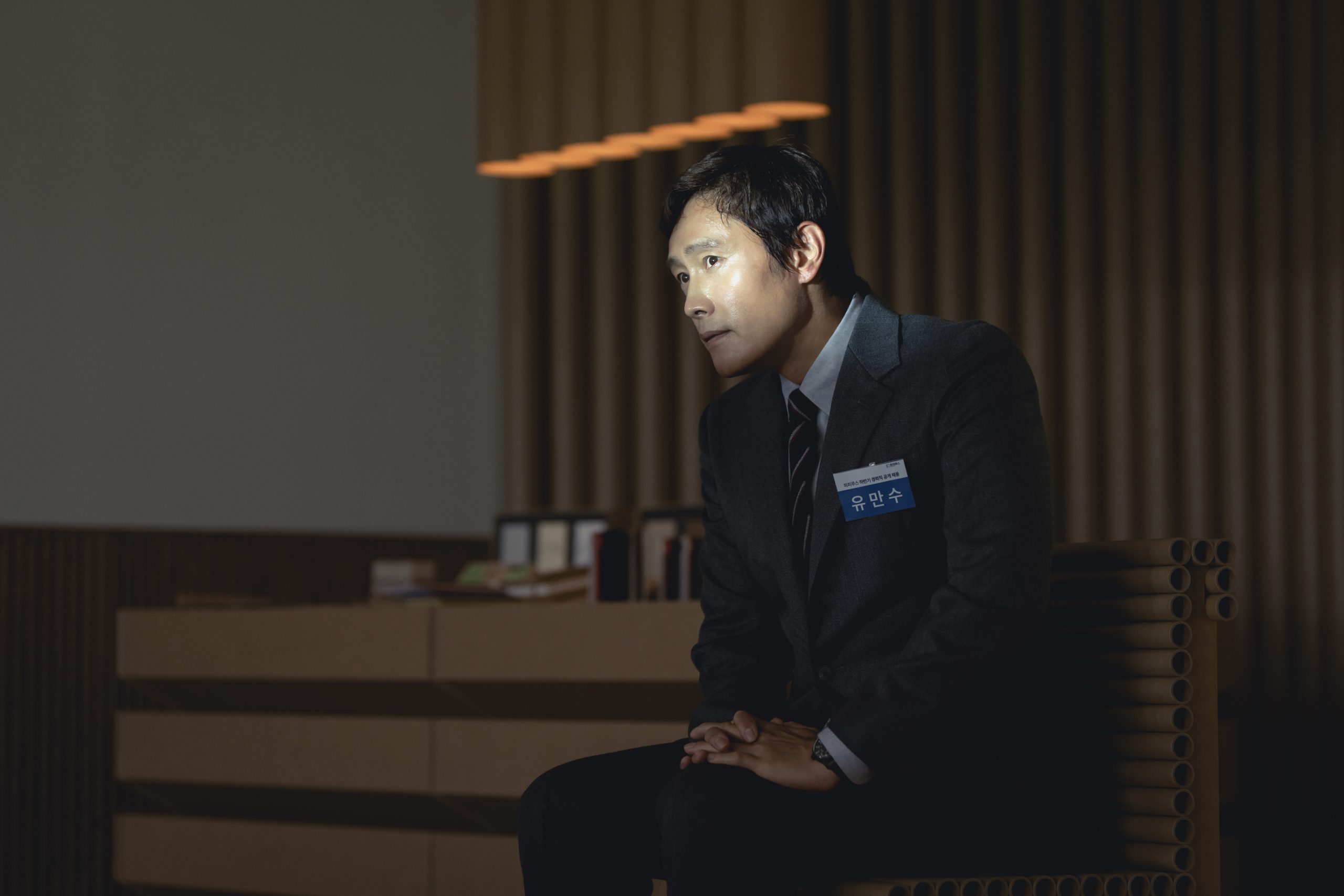
Lee Byung-hun, who stands alongside Song Kang-ho as Korea’s most well-known acting export, headlines here as Man-su, a long-time middle manager at papermaking company Solar Paper. Having attained a baseline level of corporate affluence, he, wife Mi-ri (Son Ye-jin) and their two children live a life of comfort in Man-su’s childhood home, which he has been able to purchase. Man-su’s stability — financial and personal — is fundamentally shaken, though, when an American company buys out Solar, and downsizing finds the company man without a company to which he can pay allegiance. As debts mount and no new jobs appear, Man-su stumbles upon an idea — if he has no competition for new jobs from other paper-makers, then he’ll be the only choice available. Thus begins a twisting, turning murder plot, one which finds Man-su slowly compromising his ethics and morals, eliminating the competition and discovering the ways in which everyone else, also operating in the desperate headspace of late-stage capitalism, is willing to compromise themselves to survive.
Lee, perhaps most known as the mysterious Front Man in Netflix’ Squid Game (though he has also worked with Park before, on Joint Security Area), is utterly captivating here — a truly flawed industry paeon whose entire conception of his masculinity is tied up in his ability to earn. Naturally for Park — but somewhat underwhelmingly for No Other Choice — sexual currency, and the way it intersects with the male ego, are frequently pointed to as being the rot at the heart of modern capitalism. It’s hardly a new concept — The Wolf of Wall Street being one of the more invaluable explorations of said topic — but it also reads as frustratingly simplistic. The other men that Man-su encounters (never is a woman considered a threat in the same way, unsurprisingly, by either protagonist or film) are boorish drunks, liars, cheaters and fools, who Man-su rightly sees much of himself in: tellingly, the only moment of true class solidarity that emerges is Man-su’s desperate attempt to protect the masculine self-image of a cuckolded fellow businessman. For perhaps the first time in Park’s career, it makes for a somewhat plodding, even predictable watching experience. Man-su’s psychological makeup is made entirely clear from the first scene, and the grimy money-fuelled murder plots unfold with minute-to-minute tension and control, yes, but an overarching predetermined endpoint.
The noirish No Other Choice is, in fact, based on an existing novel, Donald Westlake’s horror-thriller The Ax, and was previously adapted into a film by none other than Z director Costa-Gavras. What Park has most successfully transplanted from these earlier texts is allowing us to glimpse the perverse way in which the lead character’s homicidal tendencies take on a chilling plausibility, as though shedding blood to ensure your place on the food chain is entirely natural. We can all see the way in which a bottom line justifies everyday monstrosities on a corporate and governmental level, selling the souls of entire nations by the day — why not our individual ones, too? Are we not, ultimately, the only commodity left to obliterate? Where Decision to Leave’s dynamic camera acrobatics maintained an icy objectivity, though, No Other Choice attempts ruthless subjectivity, an approach Park never quite gets a handle on, in spite of his customarily showboating visual tactics. Most of the sinister implications of the original concept are, in Park’s attempt, remolded into comedy — not necessarily a wrongheaded creative decision, and one that offers Lee plenty of chances to play up a kind of woebegone slapstick that he’s rarely been able to indulge in before — but the usually severe Park has rarely felt so dependent on temporary gratification, rather than genuine catharsis. The director’s now customary aptitude for cruelty is certainly in place, but there are few opportunities for us to graft on to anyone for genuine human connection, to make such bloodletting feel worth the agonising trials that the director subjects us to. The final sequences, in which the inevitability of the film’s thesis is made manifest, are undoubtedly the strongest, but after almost two-and-a-half hours of place setting to reach such a desolate destination, one imagines that a stronger hammer blow could have landed with a little less precision, and a little more room for human feeling. Despite their clockwork construction, Park’s frequently batty, lurid films could never be accused of feeling automated or inauthentic – but why must Park so often be the only human being operating within them?
No Other Choice is in cinemas now.