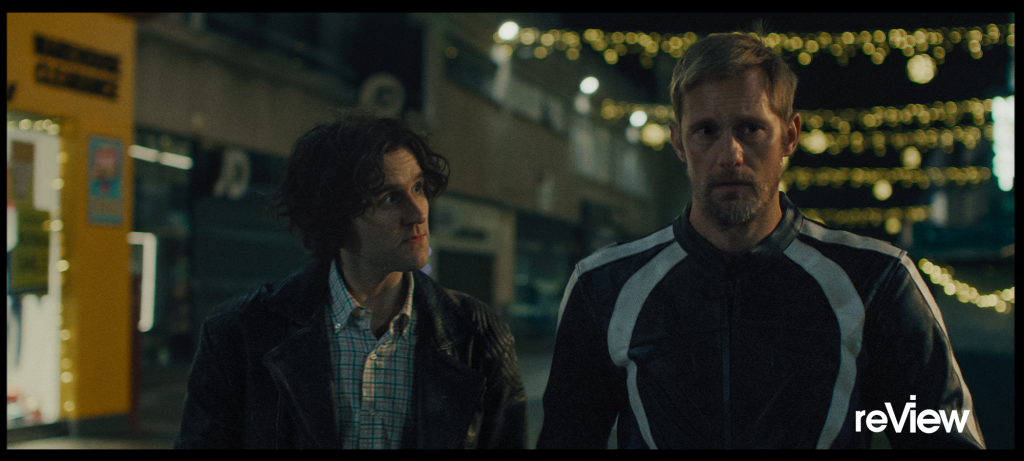
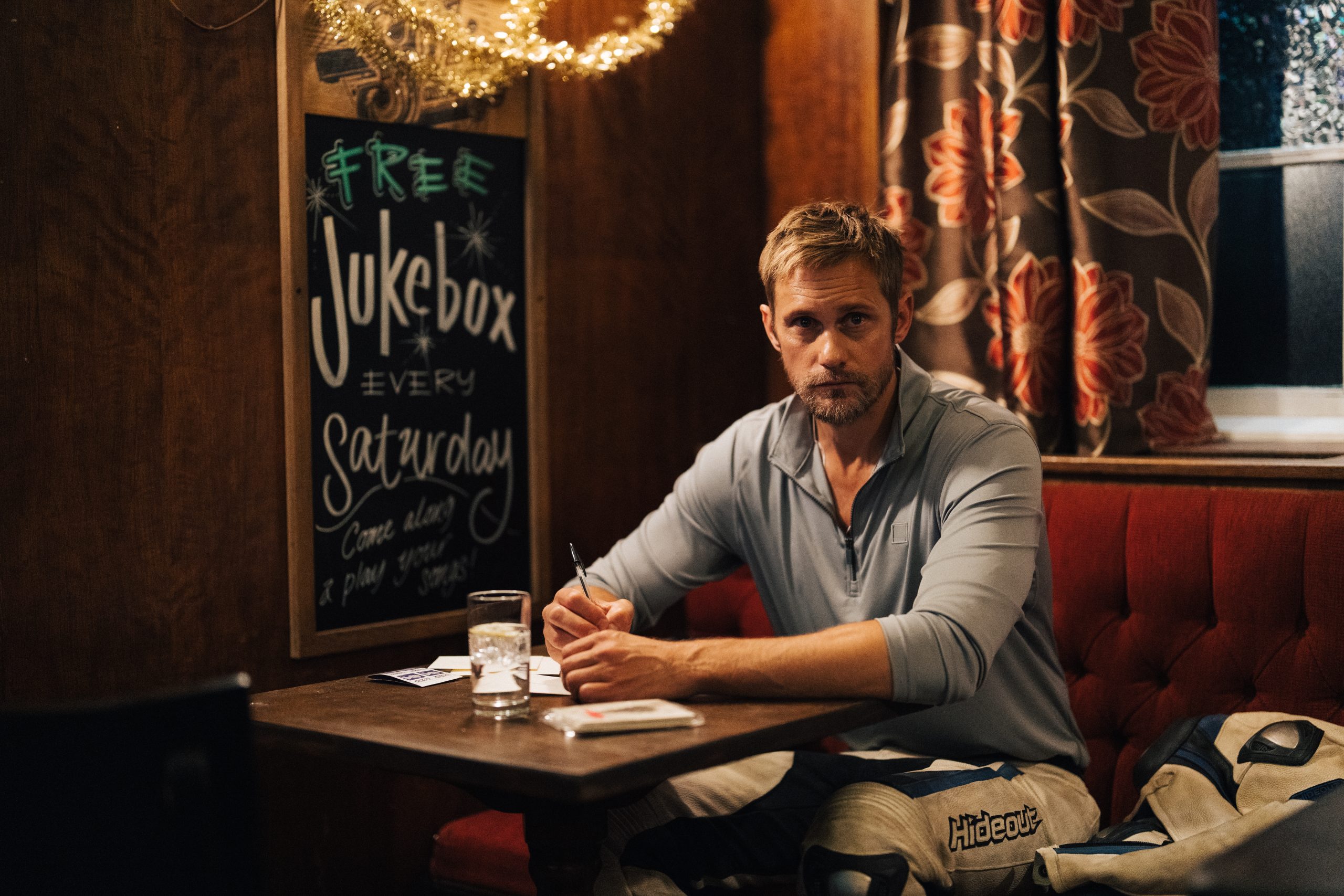
Early on in Pillion, there is a sequence of oral sex that really sets the tone for the film to come. Harry Melling’s Colin, a reserved sexual naif, has been invited (on Christmas Day, no less) for an anonymous rendezvous with Ray, Alexander Skarsgård’s intimidating biker dom. It is an intense, intimate scene — Ray leads Colin into an alleyway and instructs Colin to kneel. Rather than be spurned or uncomfortable with the optics of such a situation, Colin takes part enthusiastically — acting as a submissive to another man has awakened something primal within him. A brief, erotic blowjob sequence later, and Ray wanders off into the night. You could hear a pin drop in the cinema I was watching the film — opening night at the Hollywood Avondale — so rare was it to see so frank a scene of sexual congress in 2026, let alone one of such liberated kink and featuring one of the world’s biggest movie stars. In the silence following Ray’s climax, someone cracked a beer — the loud, echoing sound prompted the audience to burst out laughing. It was a communal response, a breaking of the tension; most of all, it was testament how thrillingly sexy Pillion is right out the gate, while still somehow remaining close enough to the contours of the British rom-com that comparisons to the Richard Curtis canon are not entirely unearned. As a feature debut, it is at once bracingly modern in its reflections on kink and queer sexuality, but nestled comfortably enough within classical structures that less-ingratiated audiences are sure to be willing to go along for the ride. In a world descending into increasing puritanism, it’s a rebuke that somehow takes the form of an embrace.
Harry Lighton’s BDSM-themed debut nestles a gentle heart within good humour and extensive, gratifying raunch. A blend of romcom staples and thrillingly modern conceptions of sex and dating, it marks the arrival of a promising new voice.
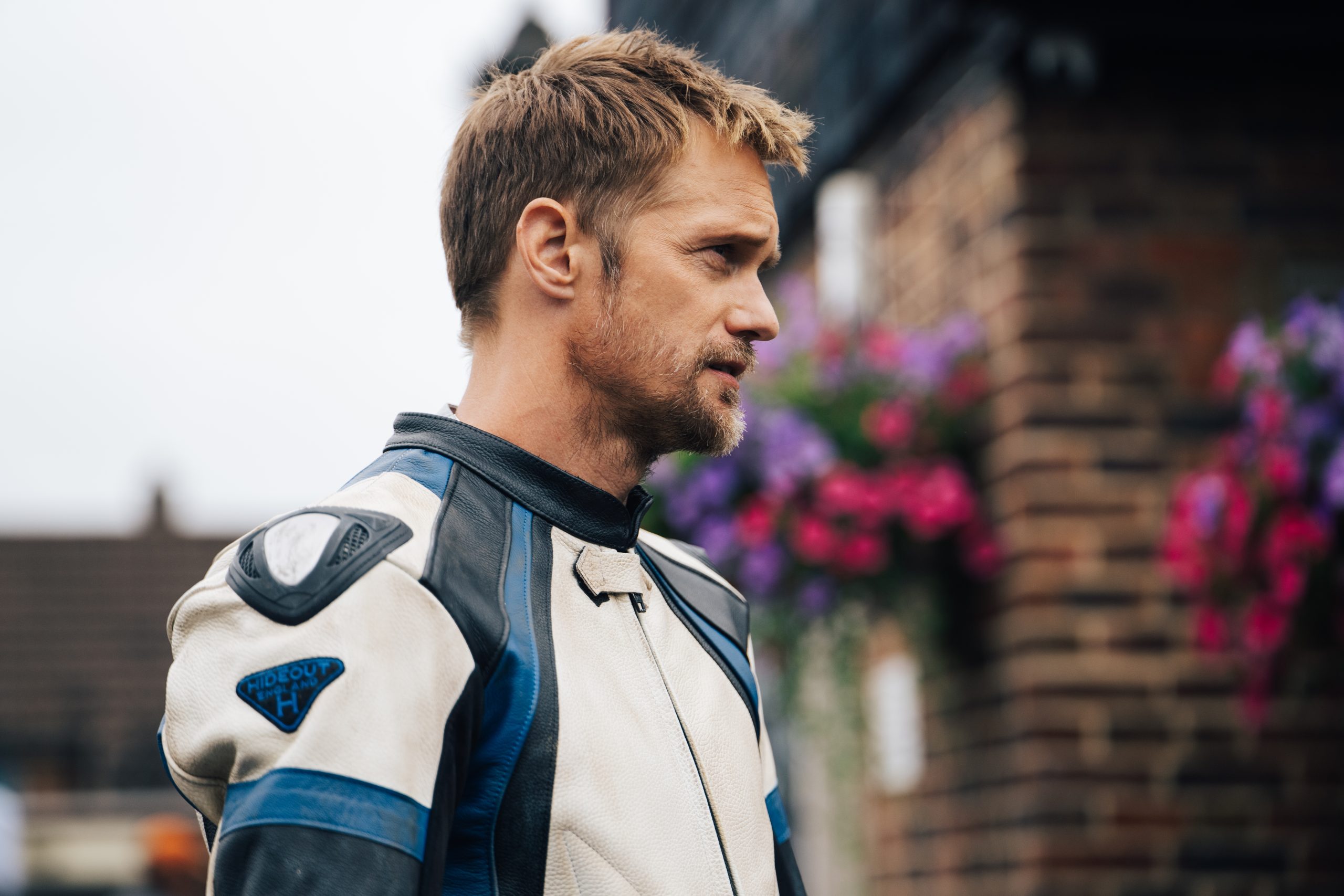
In that regard, it is worth reflecting how far we’ve come with regards to onscreen queer sexuality — LGBTQ+ stories have existed in the movies for nearly as long as cinema itself has existed, it’s true, but stories of optimism and sexual exploration within a society generally (at least, in the world of Pillion) accepting of queer love have only really been mainstream for a couple of decades. Just over twenty years ago, the tortured, relatively tame sexuality of Brokeback Mountain was enough to convince Academy voters to select Crash as Best Picture, notoriously the worst winner in Oscars history. An arthouse film like Pillion is not likely to shatter box office records, but there are sequences of remarkably bold BDSM on display here that might have sparked riots in the days of Ang Lee’s lovelorn masterwork. The comparison is apt not just in terms of the sexuality of its protagonists, though — like Brokeback’s situating of queer love within the traditionally hypermasculine space of the cowboy film, Pillion’s story takes place in another community rippling with laddish signifiers, that of motorcycle enthusiasts. The mysterious, laconic Ray is a deathly serious, imposing figure even within his gang of bikers — clad in white leather and obsessively concerned with the care of his motorcycle, his is from the off a clear projection of impenetrability, a role within which he has become exceedingly, even cripplingly, comfortable. Director Harry Lighton’s very purposeful decision to set his romcom-of-sorts within this space is of course entirely intentional. The group is slowly revealed to be one that is entirely comprised of leather doms and their subs, ones whose hypermasculine performance is an extension of their sexuality, not a contradiction. It is Melling’s Colin, a milquetoast lonelyheart perhaps more aligned with our societal perception of what a young queer man might be, who is decidedly out of place in this world.
Before Pillion, Lighton had been feted for his very fine short film Wren Boys, the memorable story of an Irish Catholic priest transporting his nephew for a prison visit that goes decidedly awry. Between that short and this debut, there is the sense of Lighton as a filmmaker working within crowd-pleasing forms, but presenting them in such a way that trickles of boundary-pushing material might seep in. Think of it as mainstreaming — some transgressiveness may be sacrificed in the telling, but there’s pleasure to be found in recognisable forms. It helps that he has the involvement of Skarsgård, the other great performance from that family in 2025, whose star presence ensures that Ray remains a fascinating enigma. Where Colin is exploring new frontiers, it becomes clear very quickly that Ray’s persona is a defense mechanism — against what, we don’t know, but the push-and-pull of strength and vulnerability, dominance and subjection, is what gives Pillion its comedic and romantic charge. This is, perhaps, a little monothematic — there is little sense of the world outside of the two, with virtually every other character fully invested and driven by the trajectory of Ray and Colin’s relationship. Isn’t first love a bit like that, though, where the world seems no bigger than the parameters of your bond, and all you can see is the other person’s face? Lighton’s style bears some trace resemblance to provocateur-in-chief Yorgos Lanthimos, but is less interested in distancing himself from the characters’ subjective experience. It is crucial that messy, gentle warmth can be felt under the rippling muscles and sleek motorcycle surfaces of Pillion’s most salacious moments — the relationship between the two is peculiar, but certain universal aspects of their experience are likely to be identifiable for anyone who has been in a twisty-turny, kinda-toxic love affair.
Key to this is Melling — the one time Dudley Dursley has matured into a truly unique screen presence, an odd duck, whose character actor presence forms the film’s hook. It is remarked upon by several characters in Colin’s orbit, who are rightfully nonplussed at the appearance of the towering, seemingly airbrushed Ray on Colin’s arm. Per Arrested Development: ‘her?’. Melling sells every step of Colin’s journey, from love-drunk excitement to agonising self-doubt all the way to self-acceptance and a knowledge that being submissive doesn’t mean that you need to be a doormat. In this sense, Skarsgård is the presence that is likely to get people in the door, but Melling is the one that convinces you to stay — there are traces of Hugh Grant’s sweet, bumbling foppishness to Colin, who also is the source of much cringing comedy in the early stages (an example: post-blowjob scene, as Ray walks away with nary a backward glance, prompting Colin to meekly call out ‘thank you!’). Perhaps the best surprise of Pillion is that it ends up in a place that few might expect, one that bucks traditional ideas of what makes a romcom work. Fitting, that. There is melancholy to the later stages of Pillion, and yet we leave the theatre on a high, elated by Colin’s self-discovery, buoyed by hope at the romantic possibilities of this mad world we all share.
Pillion is in cinemas now.