





From sweeping blockbusters to modest indies, homegrown stunners to festival favourites, here’s the best cinema you can clap eyes on from this weird, wild year.
By any metric that isn’t the quality of films being released in 2025, it’s been a pretty rough year. Even in the world of cinema itself, things have been bleak — box office returns have been declining, the scourge of artificial intelligence has been pushed on us by the most powerful, hoping to replace our artists, steal their work, and drain our movies of their crucial human element. One of the biggest distributors of Hollywood movies, Warner Bros., who between One Battle After Another and Sinners had one of the best years for original, daring blockbusters of any company, is now being fought over by a streaming behemoth and a manchild modelled after the US President, aiming to transform the media landscape into a MAGA propaganda wing. It was a year bookended by the staggering loss of giants. In January, we lost perhaps the greatest American filmmaker, David Lynch, struck down by emphysema aggravated by the California wildfires, themselves a byproduct of human-generated climate change. Over the course of the year, we lost key figures of a golden age of cinema that may never come again — Robert Redford, Gene Hackman, Diane Keaton, Terence Stamp, Val Kilmer, Diane Ladd, Lee Tamahori, Michael Madsen, Claudia Cardinale, and many, many more. Then came just days ago the unbearable news that Rob Reiner and his wife Michele had been brutally murdered. That this kindhearted presence in the Hollywood firmament, he of family classics like The Princess Bride, This is Spinal Tap and Stand By Me, could be the victim of such an horrific act (and the disgusting response from the President in the days since) is a beyond-the-pale capstone on a year that seriously stretched our capacity to cope with awful news.
It would seem that the bad in humanity can’t stop winning — maybe the only promise that Trump has truly kept. The amount of people I’ve spoken to or observed online who feel that we are barreling down a steep slope is hard to grapple with. The callousness and cruelty of the current age, the manipulation of religious doctrines, the reassurances that selfishness and narrow-mindedness are good things, actually, all utilised in order to uphold the grip a wealthy few have on the world at large, seem insurmountable. In New Zealand that same sort of cruelty is seeping into our politics bit by bit, on a smaller but no less dispiriting scale. At this time, what should we expect of cinema? The ones in power, the ones who push AI and try to merge as many of the places movies come from into one soulless conglomerate certainly don’t care about artistic expression. It’s fair to say they don’t really care about cinema at all, except as a means to a financial end. The battle to save the soul of cinema rages on, but the things we used to tell ourselves — that the modern age allows anyone to pick up a phone and film something; that streaming offers endless opportunities for new voices to emerge; that AI is just another tool to be used by creative minds in aid of their dreams — have been revealed to be hopelessly naive. Cinema has always been a clash between art and commerce — it always will be. The best films of this year — and there were many, so many that I struggled to whittle this list down to even forty — came imbued with a combative nature, an unapologetic artfulness that refused to bow to corporate whims. In these times, that makes me hopeful. Even if 2025 is cinema’s death knell, it’s going out in a blaze of glory.
A few honourable mentions to kick us off — two great films from right here in Aotearoa, The Rule of Jenny Pen and GRACE A Prayer for Peace. Fine work from established auteurs: Baumbach’s Jay Kelly, Almodóvar’s The Room Next Door, Bi Gan’s Resurrection, Trier’s Sentimental Value and Guadagnino’s After the Hunt. Deeply satisfying blockbusters Superman and Predator: Badlands. Oddball indie Magic Farm. A film I still can’t decide if I appreciate or entirely loathe, Sirāt. Enzo, The Surfer, Roofman, The Brutalist, Nuremberg, Vie Privée, The Long Walk, Harvest, Frankenstein, Young Mothers and Weapons. All just missing the cut — all worth your time. Another thing to note — this list is compiled according to the New Zealand release calendar, which means that the film must have had a public screening or streaming release to qualify. Thus, very good films that I’ve had the pleasure of seeing but won’t release here until 2026 — Marty Supreme, Song Sung Blue, No Other Choice and Aotearoa’s own Mārama — will have to wait until next round. Let’s go.
- The President’s Cake (dir. Hasan Hadi)
While the cinema of Iran continues to flourish around the world, their neighbour Iraq has a far quieter national scene. Hasan Hadi’s debut offers a blueprint for the kind of cinema we might be able to expect from this nation, struggling to heal from the terrible traumas inflicted upon them by both their own leaders and Western nations. The 1990s-set story of nine-year-old Lamia (a stunning Banin Ahmad Nayef) tasked with baking a cake in honour of Saddam Hussein for his birthday, despite being functionally destitute, The President’s Cake is a heart-rending evocation of poverty and desperation, echoing tragic neorealist films like The Bicycle Thieves in its refusal to sugarcoat or look away.
- Urchin (dir. Harris Dickinson)
Actor Harris Dickinson turns his hand to directing, following the rich tradition of irate social realism set down by Mike Leigh and Ken Loach, to great success. Frank Dillane’s fiery performance as Mike, a rough sleeper who encounters, then loses, opportunities for a fresh start repeatedly over the course of Urchin, is a starmaking turn that invites (and earns) comparisons to David Thewlis in Naked. Dickinson’s dreamlike, occasionally surreal visual style pushes Urchin beyond the realm of the regular for this particular subgenre, arriving at a chilling, poetic final image that has stuck with me for months.
- Workmates (dir. Curtis Vowell)
Husband-and-wife team Curtis Vowell and Sophie Henderson’s warm, refreshing romcom is the high-point of their fruitful collaboration thus-far, one that is fuelled by Henderson’s superb turn as a woman stuck in a sort of late-stage arrested development, holding a candle for her co-theatre owner (Matt Whelan) who is in turn slowly drifting away. The chemistry between Henderson and Whelan is rich and palpable, while Vowell directs with lowkey precision. Workmates earns bonus points for its endorsement and fond evocation of Auckland’s theatre scene, complete with a visit to the dormant St James Theatre.
- Mickey 17 (dir. Bong Joon-ho)
A film no one quite knew what to do with, Bong Joon-ho’s oddball follow-up to his Oscar-winning Parasite had a certain kind of sci-fi ambition and kookiness that rarely does well at the box-office, but which repeatedly offers up intriguing and visually splendid ideas. Robert Pattinson’s sadsack corporate punching-bag, sent out on highly deadly missions on a newly colonised planet, only to find himself ‘reprinted’ every time he dies, is one of the British actor’s more off-the-wall characters, but one with an endearing softness that is quite different from the kind of role one might expect from a newly-minted Batman. Director Bong’s consistent, never-subtle critique of capitalism is insistent but gratifying, as is the gentle love that blossoms between Mickey and Naomi Ackie’s Nasha. Bong’s English-language efforts never have the same oomph as his Korean-language ones, true, but Mickey 17 comes closer than his others.
- The Love That Remains (dir. Hlynur Pálmasson)
Intriguingly formless, Hlynur Pálmasson’s follow-up to the beautiful but emotionally remote Godland unfolds with a minimum of drama, but finds a striking poetic resonance in simply tracing the peaks and valleys of a family going through a divorce over the course of a year. What begins as a charming, naturalistic and gorgeously lensed slice-of-life piece slowly morphs into something more dreamlike and suggestive, drawn from Pálmasson’s own life (and utilising several of his family members) to conjure an atmosphere of reflective melancholy, a suggestion of the passage of time and the many ways we imprint on the world around us.
- The Shrouds (dir. David Cronenberg)
Ruminating on the loss of his wife to cancer, Canadian auteur David Cronenberg’s morbid, chilly signature wends down fascinating pathways in this funereal story of a tech savant named Kersh (Vincent Cassel, in a brilliant approximation of his director) who designs an app that allows you to watch your loved ones decomposing in their graves. Cronenberg’s talky drama, light on action but heavy on corporate intrigue, deliberately flies in the face of the usual shape one might expect from a thriller of this nature — one might call it consciously uncinematic. Except, of course, this is Cronenberg, so even in The Shrouds’ sparsest expanses, a clinging, unsettling notion of grief lingers in the fug.
- Kontinental ‘25 (dir. Radu Jude)
A dark and embittered B-side to last year’s masterful Do Not Expect Too Much From the End of the World, Romanian filmmaker Radu Jude’s follows a liberal woman (Eszter Tompa) who is incensed by her own feelings of guilt around the preventable death of a homeless man, indirectly caused by her inaction. Jude follows this woman as she seeks counsel (or is it absolution?) from various figures in her life — husband, mother, friend, policemen, priest — who are all in turn unwilling or incapable of contending with their own apathy toward the suffering of others. Jude’s rage is less leavened by blessed bouts of comedy than in Do Not Expect…, which ensures Kontinental ‘25 is likely to be remembered as a minor effort from the radical auteur. One should not look past this fine effort, though, not least for its stray shot across the bow at Wim Wenders’ Perfect Days, a nice film that never quite escapes accusations of its depiction of the ‘noble poor’.
- Die My Love (dir. Lynne Ramsay)
In just the fifth film of her career, Lynne Ramsay’s audacious cinema continues to rattle the cage, deeply committed to discomfort and ugliness rendered in as starkly beautiful terms possible. For her first film since You Were Never Really Here, Ramsay wields the elemental force of Jennifer Lawrence, paired up with Robert Pattinson, in a fearless depiction of a fractious relationship whose immolation is sparked by the birth of a child. Not so much a story of postpartum depression as an exploration of the death of a union once bound in love, Ramsay’s occasionally intellectualised but always rawly conceived drama doesn’t stand with the very best of her work, but lands comfortably among the upper echelons of what most others can dream of achieving.
- Bridget Jones: Mad About the Boy (dir. Michael Morris)
The fourth instalment of the saga of everywoman Bridget Jones as she navigates life, love and motherhood is one of the most pleasant surprises of the year, a cosy, wholesome British romcom more than capable of injecting a new lease on life into its teary-eyed viewer. Reeling from the death of her beloved Darcy (Colin Firth), and raising two children alone, Bridget weighs up the possibility of finding new love in the form of two suitors, played by Leo Woodall and Chiwitel Ejiofor. Renee Zellweger remains utterly transformative in the role of Bridget, her finest creation in a storied career. Ejiofor, too, reveals new shades as her initially testy romantic foil. The presence of Hugh Grant as lothario Daniel Cleaver is always welcome, albeit on a smaller scale than some may expect. There’s a reassuring glow to Mad About the Boy — it’s an escape, the kind of warm experience in too short supply during this cold, hardhearted year.
- Twinless (dir. James Sweeney)
It’s a shame that James Sweeney’s comedy-cum-psychological thriller Twinless is so under-the-radar, as it features two of the best performances of the year. The first is Dylan O’Brien, heartbreaking as Roman, adrift after the loss of his brother and seeking solace in a support group for twins who have lost their other half. The other is The Nightingale’s Aisling Franciosi, lighting up every room she’s in as Roman’s potential love interest. The story of queer obsession that unfolds between Roman and Dennis (Sweeney, pulling writing, directing and acting duty) as they meet at the support group and form a friendship, is bolstered by an excellent script that only reveals its full, diabolical nature in drip-feeding fashion.
- Friendship (dir. Andrew DeYoung)
Though the year’s most unforgettable Tim Robinson offering was nightmarish series The Chair Company, Andrew DeYoung’s Friendship scratched the same itch, producing one of the year’s best comedy features in the process. Robinson’s unique style of suburban malaise cringe is given its first feature treatment, utilising a great supporting performance from Paul Rudd to create a palpably uncomfortable, uproarious experience.
- Dangerous Animals (dir. Sean Byrne)
God bless a film that knows exactly what it is and does it well — Sean Byrne’s trashy but accomplished shark picture is the best of this particular subgenre in many years, perhaps since Open Water. What really makes Dangerous Animals work is the absolute commitment from leads Jai Courtenay and Hassie Harrison, as serial killer and potential victim, as well as a genuine respect for the aquatic killing machines at its core. The film treats sharks not as monsters, but as beautiful creatures in their own right, ones being manipulated (but not fully controlled) by the very human monster floating just out of reach.
- Wake Up Dead Man: A Knives Out Mystery (dir. Rian Johnson)
Easily the best of Rian Johnson’s Agatha Christie-style whodunnit series, Wake Up Dead Man retains the classic Knives Out formula, but improves and deepens it with some of Johnson’s most inspired direction to date and legitimate thematic depth. With Daniel Craig’s Benoit Blanc investigating the murder of a priest at a small-town parish, Johnson gets the chance to explore notions of faith and religion, aided by a sterling cast — particularly Josh O’Connor as the troubled newbie priest caught in the eye of the hurricane.
- The Secret Agent (dir. Kleber Mendonça Filho)
Filho’s aching, intricately woven story of ‘great mischief’ amid the Brazilian dictatorship of the 1970s is one of the most potent, eclectic thrillers of the year. Wagner Moura’s melancholy performance forms the heart of a colourful tapestry, as Filho painstakingly recreates the Recife of his past. A shaggy dog story with rippling, tragic implications, it is Filho stepping up to another level of directorial capability with total confidence. When I first watched The Secret Agent, I found it striking but somewhat remote — in the time since, it has grown and grown within me. I suspect it will continue to do so. Don’t be surprised if you check in with me later and find this film’s placement has only risen higher.
- Splitsville (dir. Michael Angelo Covino)
The best out-and-out comedy of the year was Michael Angelo Covino’s sexy, clever polyamory tale, the most directorially robust work to be found in this genre anywhere in 2025. The central quartet — Dakota Johnson, Adria Arjona, Kyle Marvin and Covino, exceptional performances all — are handled with nuance and dignity, and yet we are allowed into the deeply uncomfortable, messy fractures of their lives, crafting characters we can laugh at and care deeply about at once. Features the single best sequence of slapstick violence I’ve witnessed in years.
- Mirrors No. 3 (dir. Christian Petzold)
A minor effort from the greatest working German auteur of his day, Petzold’s Mirrors No. 3 unfolds like an exquisitely told short story, one with plenty of room for ambiguity but blessed with a lilting gentleness that lingers in the mind after the credits roll. Petzold’s latest muse, Paula Beer, is reliably excellent as a woman who comes under the care of a stranger after a car crash that she survives but by which she is deeply traumatised. A quiet work, Mirrors No. 3 unfolds like a whispered poem, reflecting on grief and family with the kind of expert finesse we’ve come to expect from this great filmmaker.
- Misericordia (dir. Alain Guiraudie)
An icily eccentric story of grubby smalltown murder and desire, Alain Guiraudie’s Misericordia is positively bursting with unforgettable faces, each feral in their commitment to their own instinctual needs. Misericordia’s menacing schematic reveals itself only gradually, as it follows prodigal son and object-of-fascination Jérémie (Félix Kysyl) into the minds and pants of various denizens of a provincial nowhereland in France. Hitchcock would be proud of Guiraudie’s ominous, menacing utilisation of pace, frankly presented with the Frenchman’s signature homoeroticism.
- Bugonia (dir. Yorgos Lanthimos)
Easily the best Lanthimos joint in many years, dark kidnapping fable Bugonia is a cynical-yet-mournful update of the Korean film Save the Green Planet! that thrives on the astonishing performances of its leads Emma Stone and Jesse Plemons. While the Greek auteur has ceded to populist quirk over the last few years, Bugonia allows Lanthimos to fully return to his former nastiness, interweaving it with a kind of hopelessness that results in a moving denouement of placid, sweeping loss. Special attention must be paid to Plemons, who continues to assert himself as the most vital American performer of his generation with his turn here, the finest in a very competitive year.
- Black Bag (dir. Steven Soderbergh)
Sleek and stylish, Steven Soderbergh’s covert ode to the joys of monogamy is his best, most assured work in years, particularly arriving after the disappointment that was Presence in early 2025. Revolving around a trio of coupled up secret agents as they cheat, backstab and generally suspect each other of being the mole in their national intelligence operation, Black Bag also serves as a fabulous showcase for stars Michael Fassbender and Cate Blanchett, and rising star Marisa Abela. It’s a comforting reminder of just how good Soderbergh can be when he sets aside the formal exercises and truly locks in.
- TOI TŪ: Visual Sovereignty (dir. Chelsea Winstanley)
The best film to come out of Aotearoa in 2025 was Chelsea Winstanley’s plucky art-world documentary, capturing the process by which curator Nigel Borrell and his collaborators pulled together the largest exhibition of Māori art in history. In capturing the byzantine obstacle course that indigenous art-makers must navigate to present their work in an ethical way, meanwhile massaging the egos of white gallery overseers, Winstanley provides some of the most cutting, fearless cultural commentary Aotearoa has seen in years. That TOI TŪ also manages to be a deeply moving celebration of the durability and courage of its subjects is testament to the cumulative power of the work.
- Queer (dir. Luca Guadagnino)
Arriving in the middle of a hyper-productive period, bookended by two of the most incendiary American pictures of their time, Challengers and After the Hunt, Luca Guadagnino’s sweaty, aching Queer initially appears to be a doodle in the margins, but seeps into your skin so pervasively that it becomes hard to shake. Adapted from William S. Burroughs’ short story, Guadagnino utilises a career-best turn from Daniel Craig to explore the self-destructive impulses that intermingle with animalistic desire, sumptuously photographed and laden with potent symbolism. The tenderness with which Guadagnino allows his characters to sink into dreamlike reverie in the later sections of Queer is some of the finest work of his career — as well as providing us perhaps the best Nirvana needledrop in all of cinema.
- Predators (dir. David Osit)
One of the most genuinely upsetting experiences I’ve had with a film this year. Documentarian David Osit explores the legacy of the extremely ethically compromised To Catch a Predator series, progressing from initial questions of how entertainment might undercut the pursuit of justice to far more disturbing, dark corners of this most sensitive of issues. Osit is not as interested in ‘gotcha’ journalism or simply plumbing the depths of the 2000s hellscape that was reality television as he is trying to square with the voyeuristic impulses of the human condition, and how so much of what we perceive as seeking justice is really just bolstering one’s own self-image.
- Two Prosecutors (dir. Sergei Loznitsa)
Formally severe, the better to replicate the brutal nature of authoritarianism, Ukrainian filmmaker Sergei Loznitsa’s Kafkaesque fable of a quixotic search for justice in 1930s Stalinist Russia eschews subtlety in the name of dread-soaked inevitability. Loznitsa lingers on endless corridors and doorways — first in a hellish gulag, then in the soulless confines of a government building — to evoke the mundane machinery of bureaucratic inhumanity at work in the name of fascism. One needs not dig too deeply to recognise that same machinery at work today the world over.
- Final Destination Bloodlines (dir. Adam B. Stein, Zach Lipovsky)
So nasty, so delectably crowdpleasing: the kitschy 2000s horror series hit an improbable apex with this unhinged reboot, which deepened the series’ lore while keeping its dedication to elaborately gory setpieces front and centre. From a jaw-dropping opening sequence set on a collapsing sky-needle, through to a diabolical sequence involving a malfunctioning MRI machine, Bloodlines turned the volume up on its Rube Goldberg-style bloodletting while maintaining a vivid emotional core that allowed us to truly care about Death’s future victims, and feel for them when they inevitably met their maker. Few cinema experiences this year were as sickeningly pleasurable as the expertly-timed moments of silence following a fresh kill, inviting audiences to feed off each other’s reactions, with stunned silence giving way to astonished laughter.
- Nickel Boys (dir. RaMell Ross)
The best of 2025’s roster of Best Picture nominees, RaMell Ross’ follow-up to his gorgeous documentary Hale County This Morning, This Evening adapts Colson Whitehead’s prize-winning novel into a masterful evocation of historical memory and trauma united under a visual conceit that manages to rise above the level of gimmick through the commitment of central performances by Ethan Herisse and Brandon Wilson, and Ross’ natural talent for finding evocative images. The harrowing story of two black boys sent to a brutal reformatory who strike up a friendship in segregation-era America, Ross decision to centre much of the story through point of view shots of his protagonists is a great case of artfulness discovered through limitation.
- The Phoenician Scheme (dir. Wes Anderson)
Though not officially a trilogy, one can argue that American auteur Wes Anderson’s last three films, The French Dispatch, Asteroid City and now The Phoenician Scheme function as a loose collection of recurring themes and fixations, particularly in their ability to evoke and comment on the process of filmmaking. Anderson’s latest is a delightful, soulful effort, one that thrums with a quiet anger that seemingly reflects our current era of greed and industrialisation without overstating things. At the centre is a magnetic Benicio Del Toro, who cuts an oddly sympathetic figure out of a truly ruthless individual, slowly being thawed by the resolute moral fortitude of his daughter (Mia Threapleton).
- Put Your Soul on Your Hand and Walk (dir. Sepideh Farsi)
Sepideh Farsi’s Put Your Soul… inevitably invites comparisons to last year’s astonishing document of Palestinian resistance, No Other Land. Farsi’s film, which captures the relationship between the Iranian filmmaker and the luminous Fatima Hassouna, a young Palestinian journalist trapped in Gaza after October 7th, is perhaps a less cinematically robust work, playing out almost entirely in video recordings of Facetime conversations. It barely matters, though, considering the real-world knowledge that, just days after the film’s acceptance into the Cannes Film Festival, its subject would be killed by Israel, providing an additional layer of horror that amplifies the elemental power of Put Your Soul… and supersedes any questions of technical accomplishment. This is an enraging, essential document, one that flies in the face of attempts to dehumanise the Palestinian people in the face of untold cruelty and violence. The films that arrive from this region will surely be the defining moral documents of this unforgiveable era of genocide, and Put Your Soul… will certainly be a major piece of that mosaic.
- Magellan (dir. Lav Diaz)
Reportedly, Filipino slow-cinema auteur Lav Diaz’ Magellan is just a small part of a far-longer cut that we may yet see, one that brings the story of ill-fated 16th Century explorer Ferdinand Magellan’s (Gael Garcia Bernal) wife, Beatriz (Ângela Azevedo) to the fore. If so, what an opening salvo. Diaz aimed to present an Eastern perspective of the terrible colonial ravaging borne out by the Portuguese explorer and his ilk in Southeast Asia, and the resulting Magellan is a film with a refreshing lack of sentimentality, focussing on the impact of Magellan’s wake rather than providing an intimate portrait of the man himself. As we witness the harrowing cost Magellan’s quest doles out on the cultures that he encounters, we come to realise the corrosive effect it has had on his own soul, too.
- Eddington (dir. Ari Aster)
The feel-bad counterpart to Paul Thomas Anderson’s One Battle After Another, Ari Aster’s deeply antagonistic satirical Western set out to start arguments, and succeeded. Underneath the discourse, though, is a razor-sharp assessment of the way we are incentivised to prize our egos, largely at the expense of logic or emotional reasoning. It’s easily Aster’s finest work, demonstrating his ambition and formal control while offering a sprawling ensemble cast the chance to upend their public personas and engage in some gleefully nasty bouts of violence and retribution. The film’s climactic shootout is an exceptional piece of action — a glimpse of where Aster clearly intends to take his career in the near future.
- Trenque Lauquen (dir. Laura Citarella)
An enormous, sprawling low-budget epic unlike anything else in cinemas this year, Argentinian filmmaker Laura Citarella’s Trenque Lauquen is the latest from film collective El Pampero Cine, a film made in 2022 that only finally reached Aotearoa screens this year. Over the course of four hours, Citarella dives into the life and many fascinations of a missing woman in the Argentinian region of Trenque Lauquen, as well as the two men who love her undertaking a seemingly unsolvable search for her whereabouts. Citarella’s Trenque Lauquen is a near-liminal space, a nowhere town that’s at once fathomless and anonymous — all the better for Citarella to follow her muse into spaces both internal and surreal.
- Reedland (dir. Sven Bresser)
A sparse, desolate slow-burn, Dutch filmmaker Sven Bresser’s debut Reedland is a film that asks much of its audience, but rewards patience with upsetting ambiguities. The story of an aging reed-cutter in a rural community who stumbles upon the body of a murdered girl, Bresser’s film delights in presenting images and ideas to its audience sans-context, the better to amplify the profound uneasiness of its small-town portrait. At its centre, first-time performer Gerrit Knobbe, a real-life reed-cutter, an unknowable entity that positively rivets the viewer to the screen, desperately tracking microscopic gradations in his facial expressions for clues to the soul in torment beneath.
- Sound of Falling (dir. Mascha Schilinski)
One of the most insistent criticisms of Mascha Schilinski’s sophomore feature is its funereal solemnity — the gauzy portrait of four generations of young women growing up on an isolated German farm is cinema at its most serious-minded, there’s no denying it. What these criticisms miss, I think, is the emotional context Schilinski is channeling, that of teenage girlhood, when every pain is felt at a magnitude that the scars of age will later dull. That said pains are historical in nature only serves to underline and validate the operatic ache of Falling’s characters. Few films have achieved this — The Virgin Suicides, A Nos Amours, Picnic at Hanging Rock, Fire Walk With Me, Lilya 4-Ever. Fine company for Sound of Falling to keep. As time blurs between eras, often wilfully abandoning narrative logic, what emerges is a deeply felt mosaic of experience — a world that has always been hostile to the feelings and of women, and seemingly always will.
- Blue Moon (dir. Richard Linklater)
Traditionally, the adaptation of plays to the screen tends to lend the translation a stilted, stagey feel. In the superior of Linklater’s two 2025 films (the other being the far less accomplished Nouvelle Vague), Linklater steers giddily into the skid, capturing a lonely night of the soul of musical-writer (and one-time Richard Rodgers collaborator) Lorenz Hart (Hawke) as he loses himself in liquor months before his untimely death. Hawke delivers what is arguably the performance of the year, his washed-up songwriter an aggravating, catty, horribly tragic lost cause. A profound sense of sadness settles around the shape of Blue Moon as it gently lopes toward its conclusion — quietly, it’s one of Linklater’s best.
- Universal Language (dir. Matthew Rankin)
Riffing on the films of Iranian master Abbas Kiarostami and the careful construction of Wes Anderson, emerging Canadian visionary Matthew Rankin’s Universal Language is a singularly unique experience, a powerful exploration of identity adrift amid a surreally brutalist, wintry Winnipeg-by-way-of-Tehran. Exacting in its detail, production design and shot construction, that it also manages to be redemptively funny is part of what makes Rankin’s vision so palpable, in ways both moving and head-scratching (in a ‘how the hell did he do that?’ kind of way).
- 28 Years Later (dir. Danny Boyle)
It would have been so easy to phone in a long-gestating threequel to the cult digi-horror classic of the early 2000s with 28 Years Later. Instead, returning to the material proved to be the shot in the arm director Danny Boyle and writer Alex Garland desperately needed, mutually delivering their best work in many years. Where 28 Days forged fearlessly into the digital age with its use of lo-fi handicams, Boyle’s bric-a-brac, mosaic approach is again refreshed via the use of iPhones, giving Years a twitchy, nervy aura that’s hard to shake. It is in the film’s later stretches, though, particularly with the introduction of an awards-worthy Ralph Fiennes, that Years ascends to near greatness, wringing existential ponderings and heartrending emotion from its vision of a zombified England left behind by the rest of the world. Bring on Nia DaCosta’s follow-up, The Bone Temple, in January.
- The Mastermind (dir. Kelly Reichardt)
Master American filmmaker Kelly Reichardt continues to find new riffs on her established, simmering style, morphing from plumbing the modestly nightmarish depths of modern art-making in Showing Up to Nixon-era art-heisting with The Mastermind. Josh O’Connor, swiftly establishing himself as one of the foremost actors of his generation, is a classically overconfident fool (thus the winking title) set adrift in Reichardt’s tale of hubris amid an era of cultural change, his job-gone-wrong not so much spiralling out of control as eddying into a grimy drain. Jazzy and nimble, it features Reichardt’s most daring and suggestive denouement since Meek’s Cutoff.
- Sinners (dir. Ryan Coogler)
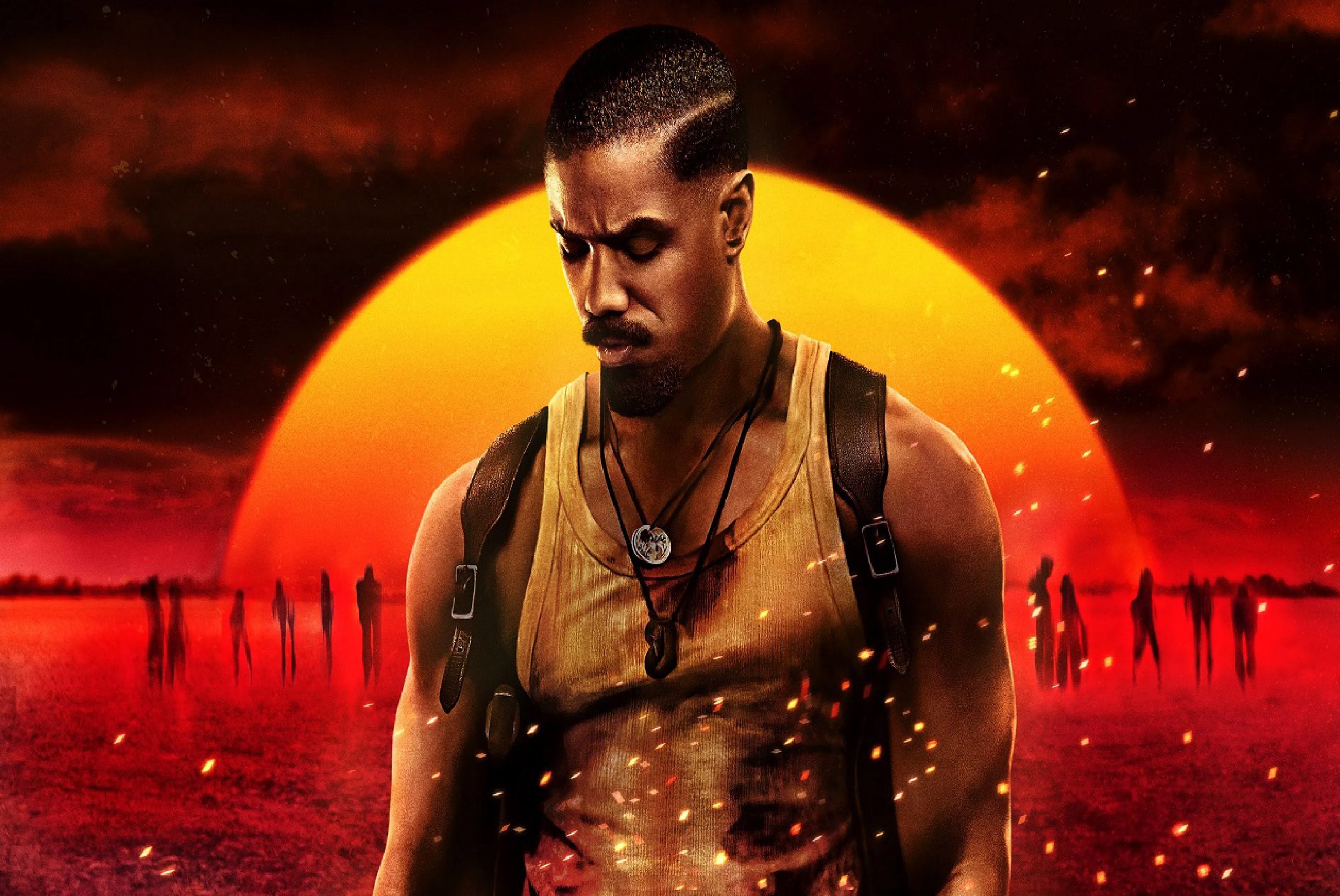
Were it not for one other massive blockbuster, this would be the finest American film of the year. Ryan Coogler, who had seemed at risk of being assimilated into the IP machine of Black Panther and Creed (good movies both), instead took one hell of a gamble on this ambitious, John Carpenter-esque thriller/historical epic/musical, to enormous success. It is Coogler’s finest film, a madcap assembly of ideas and provocations, executed with the director’s customary suavity. That it also marks a major moment for double-duty star Michael B Jordan, who has appeared in every Coogler feature since his debut Fruitvale Station, is the satisfying culmination of one of the great Hollywood narratives of the modern era. In Sinners, Coogler establishes himself as America’s most significant mainstream black filmmaker since Spike Lee, one who can deliver cinema of substance, without sacrificing the fun.
- Afternoons of Solitude (dir. Albert Serra)
In Afternoons of Solitude, Spanish filmmaker Albert Serra transforms the bullfighting corridas of his home country into a hellish battlefield on which the flailing, dangerous spectre of masculinity is debated, glorified and disassembled. Peruvian bullfighter Andrés Roca Rey, boyish and brutal, is the vivid core of this astonishing feat of documentary, an artist as accomplished and graceful as a prima ballerina whose chosen artform is one of shocking cruelty and violence. Some have described the depiction of the bullfighting rings of Afternoons of Solitude as a parallel to the fascist mindset — others have found themselves troubled and enthralled by the aggressive fusing of beauty and bloodshed. No one leaves the ring unchanged.
- It Was Just An Accident (dir. Jafar Panahi)
Fearless Iranian dissident auteur Jafar Panahi absorbs all his anger, trauma and pain at a regime that imprisoned, silenced and threatened him for decades for the simple act of speaking his mind, with this remarkably propulsive thriller. A committed ensemble, playing the former victims of Iran’s network of torture and abuse who may or may not have kidnapped a former guard, deliver a story of compelling grey areas and ambiguities. It is nearly impossible to separate the grief and fury of Accident’s subjects from Panahi himself — and yet said fury is channeled through the steady hand of a master, right up to a coda of spine-chilling implications.
- One Battle After Another (dir. Paul Thomas Anderson)
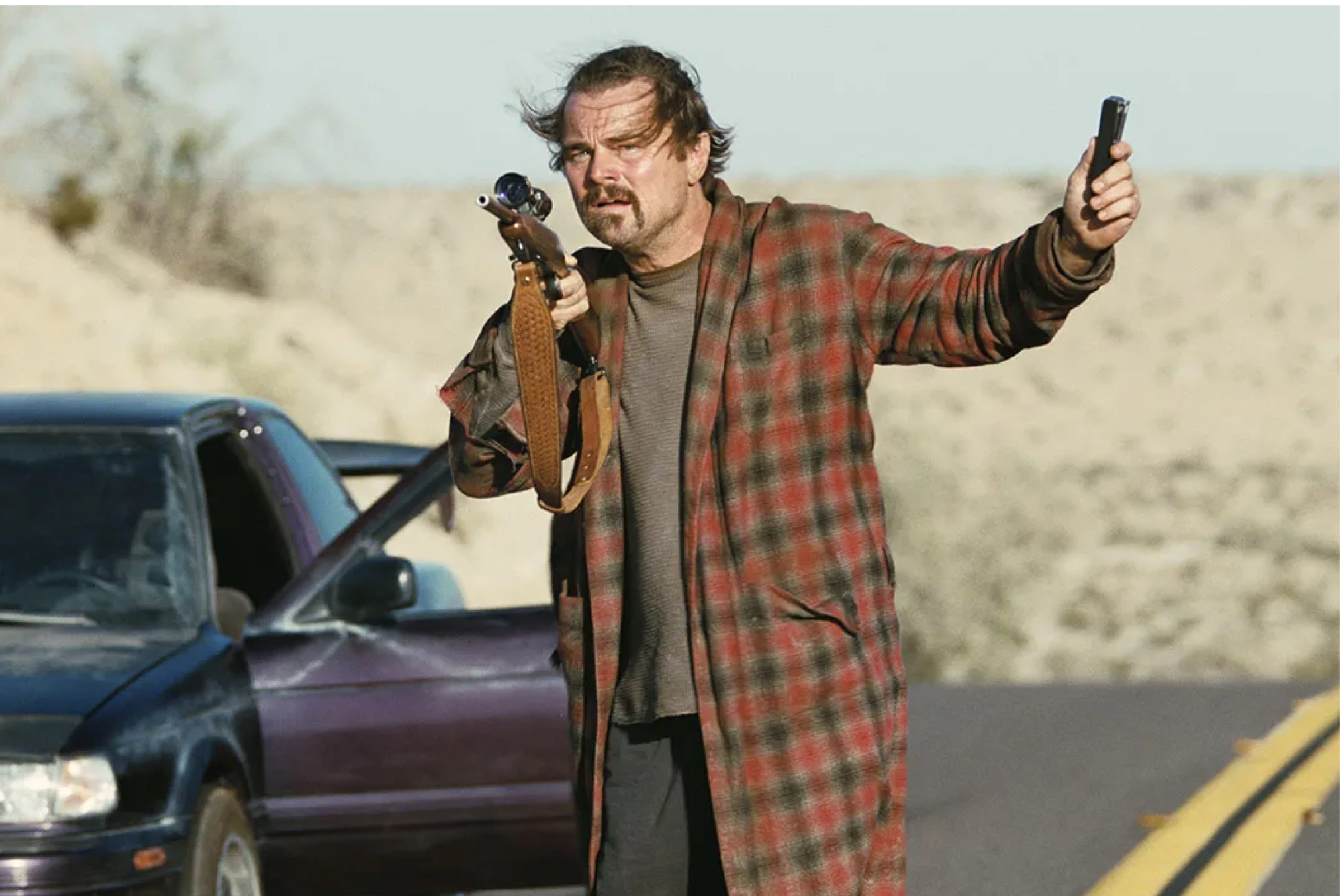
A testament to the fact that an imperfect film will always outlast a ‘perfect’ one, the best film of 2025 situates its magic in the messiness of pure cinematic energy: its contradictions, ambiguities and fever dreams. Paul Thomas Anderson wields the biggest budget he’s ever amassed for a film both timeless and timely, politically astute and discursively muddled, a work whose enormous scale and reach achieved that best thing a movie can do — offer spectacle on the biggest screen possible, then spur debate and discussion that has stretched on for months since its release. At its heart is a father-daughter story that clearly draws from the director’s own anxieties and fixations, but the mosaic assembled is one of an America on the precipice, where the disappointments of the older generations lead to new problems for the younger generations to fix. Leonardo DiCaprio delivers arguably his finest ever performance, matched bar for bar by the assembled talents of Chase Infiniti, Sean Penn, Benicio Del Toro, Regina Hall and especially Teyana Taylor. The film that will define 2025, One Battle After Another is an ascendancy of sorts for Paul Thomas Anderson, into the annals of filmmakers who can match scale with cinematic force, true. As we head into 2026, though, with America on the brink of fascism and the very company that produced the film seesawing between two conglomerates, one an increasingly outspoken authoritarian propaganda wing, the other a cinema-eating streaming behemoth, One Battle After Another also feels like it may be the glorious, tragic, uproarious, exhilarating closing of a chapter in moviemaking. Let’s hope not.
As always, you can find the full ranked list of my watches of 2025 over on Letterboxd. See you in 2026.
2 Comments
Aѡ, this was a really gоοd рost. Taking the time and actual effort to produce a very good article… but
what can I say… I pսt things off a whole lot and never manage to get anything done.
Ꮢeview my web page – fintechbase
Hi there, I enjoy reading through your article.
I like to write a little comment to support you.